
Pope Leo warns AI threatens humanity as concerns grow in US
 3 Min Read
Pope Leo XIV's warning against the unchecked expansion of artificial intelligence has resonated across the United States, where growing concerns over surveillance, job displacement, war, and corporate power are fueling calls for stronger regulation.
-
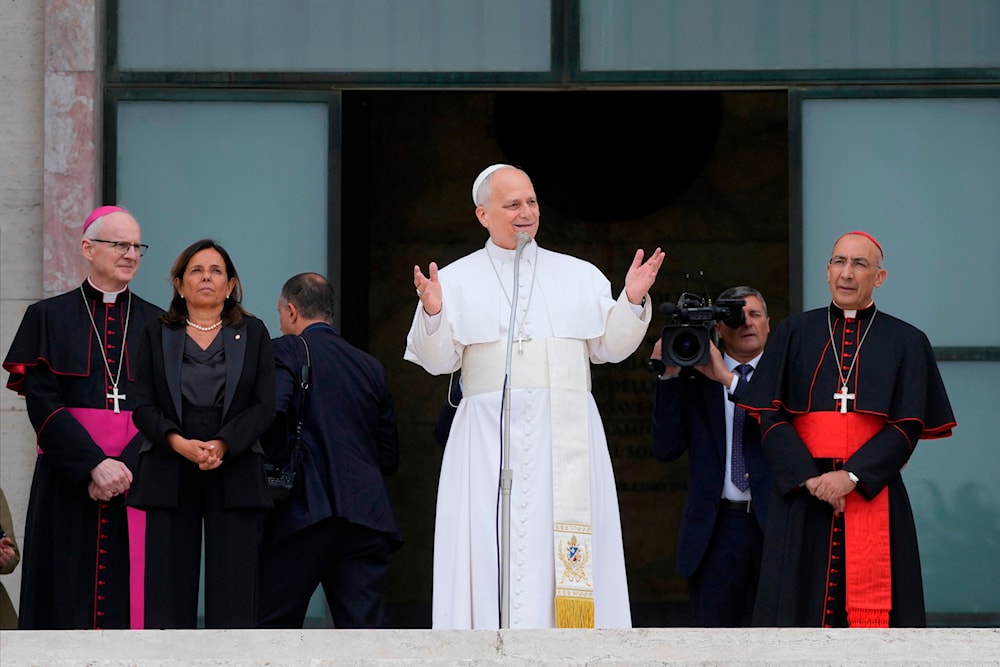
Pope Leo XIV (accompanied by Archbishop Rajič, Dean Polimeni, Cardinal Reina) visits Sapienza University of Rome, May 14, 2026 (AP)
Pope Leo XIV’s recent warning about the rapid expansion of artificial intelligence has sparked renewed debate in the United States, where concerns over the technology’s social, economic, and political consequences continue to grow.
In his first major papal document since assuming leadership of the Catholic Church, Pope Leo criticized what he described as a "culture of power" driving the development of artificial intelligence, warning that unchecked technological expansion could undermine human dignity and create new forms of exploitation.
The pope called for rigorous ethical safeguards governing AI development, arguing that technological progress must remain subordinate to human welfare rather than corporate or political interests.
Growing concerns over AI's societal impact
The pope's remarks have found support among many Americans who fear that artificial intelligence is advancing faster than regulatory frameworks can keep pace.
Critics warn that AI is increasingly being deployed in ways that threaten employment, privacy rights, and democratic accountability. Labor advocates have raised concerns that automation could accelerate job losses across numerous industries, while civil liberties groups have warned of expanding surveillance capabilities enabled by AI-powered technologies.
Others have highlighted the impact of generative AI on education, arguing that widespread reliance on automated systems risks weakening critical thinking, research skills, and independent analysis among students.
Technology and concentration of power
Beyond concerns over employment and privacy, critics argue that the rapid growth of AI is reinforcing the influence of a small number of powerful technology corporations.
Analysts have warned that leading AI firms are accumulating unprecedented control over data, computing infrastructure, and digital services, raising fears of increased market concentration and diminished public oversight.
Some observers have also linked the expansion of artificial intelligence to broader political and economic trends in the United States, arguing that major technology companies are leveraging their influence to shape policy and limit regulatory intervention.
AI, warfare, and environmental concerns
The debate has also expanded to include the role of artificial intelligence in military operations and global conflicts.
Human rights organizations and researchers have increasingly questioned the use of AI-assisted targeting systems and autonomous technologies in warfare, warning that such systems may accelerate military escalation while reducing accountability for civilian casualties.
Environmental concerns have likewise emerged as a major point of contention. The construction of massive data centers and growing energy demands associated with AI systems have prompted warnings about rising electricity consumption, water use, and environmental degradation.
Calls for ethical oversight
Pope Leo's intervention adds a prominent moral voice to a debate that has largely been dominated by governments and technology companies.
Supporters of stronger regulation argue that artificial intelligence should be governed by international ethical standards similar to those developed for other transformative technologies with significant societal consequences.
As governments race to integrate AI into economic, military, and administrative systems, the pope's warning reflects growing concern that technological innovation is advancing more rapidly than the mechanisms designed to protect human rights, social stability, and democratic governance.
Read More: US uses Anthropic's Claude AI in Iran aggression despite federal ban


