
UN chief urges global AI rules, warns of unchecked technology
 3 Min Read
UN chief António Guterres called for global AI governance, warning that artificial intelligence is advancing faster than safeguards and oversight.
-
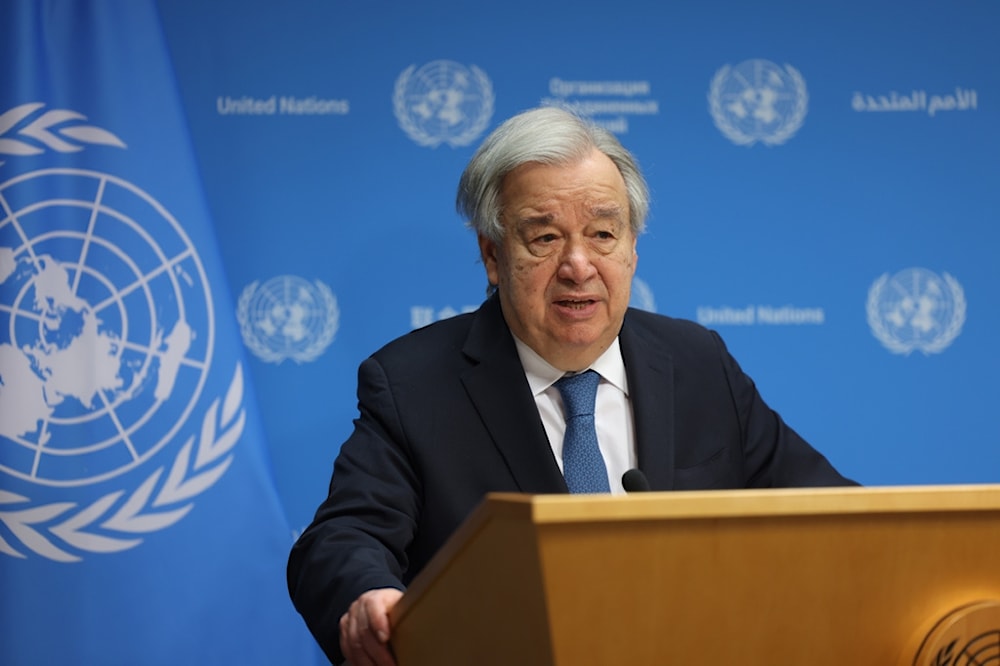
United Nations Secretary General Antonio Guterres speaks about the release of a U.N. report on artificial intelligence during a news conference at U.N. headquarters, Wednesday, July 1, 2026. (AP Photo/Jason DeCrow)
United Nations Secretary-General António Guterres on Monday called for the creation of a global governance framework for artificial intelligence, warning that the technology is advancing faster than institutions can regulate it and cautioning against allowing AI to determine humanity's future.
Speaking at the opening of the first Global Dialogue on AI Governance in Geneva, Guterres said the world is witnessing an unprecedented technological shift without adequate safeguards.
"An experiment is being run on our own societies, without a plan and without consent," he said, adding that AI systems are increasingly capable of writing code, acting autonomously online, and making decisions with diminishing human oversight.
More than 4,000 participants from governments, technology companies, academia, and civil society are attending the two-day conference, which aims to launch an inclusive international dialogue on AI governance.
Guterres warned that AI is increasingly blurring the line between truth and falsehood while encouraging excessive reliance on automated systems. Although he acknowledged the benefits of so-called "vibe-coding," in which users instruct AI through natural language instead of programming code directly, he stressed that "we cannot vibe-code the truth" or "the future of humanity."
UN warns of AI concentration, calls for global safeguards
The UN chief also expressed concern over the concentration of AI development in a small number of companies and countries, warning that many nations have been excluded from decisions that will shape their futures.
While highlighting AI's potential to accelerate development, improve healthcare, and expand access to education, Guterres said these advances must be guided by international standards prioritizing safety, human rights, and accountability.
Among his proposals, he called for common methods to evaluate AI risks, internationally agreed safety standards, and an AI Child Safety Pledge requiring companies to demonstrate that AI systems accessible to children are safe and maintain zero tolerance for sexual abuse. He also said such systems should connect children showing signs of distress to real human support.
To reduce global inequalities in AI access, Guterres announced that he will ask the UN General Assembly to establish a Global Fund for AI aimed at expanding technical skills, data infrastructure, and affordable computing capacity in developing countries.
The secretary-general also renewed calls to prohibit lethal autonomous weapons, describing them as "killer robots" that can select and attack targets without human judgment.
Calling such systems "morally repugnant," Guterres said they must be banned under international law, warning that the current generation may be the last capable of establishing the rules governing the relationship between humanity and increasingly autonomous machines.


