
US approves sale of Nvidia's advanced AI chips to China
 4 Min Read
The US has approved Nvidia's sale of H200 AI chips to China, easing export restrictions under certain conditions.
-
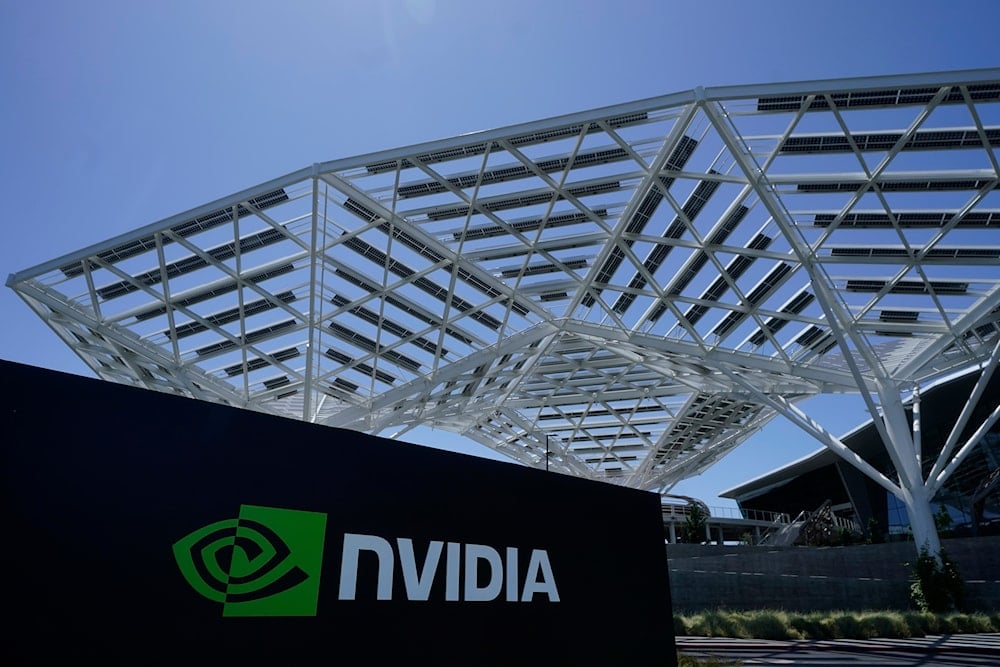
A Nvidia Corporation sign is shown in Santa Clara, California, on May 31, 2023. (AP Photo/Jeff Chiu)
The US government has authorized chipmaker Nvidia to resume sales of its advanced H200 artificial intelligence (AI) processors to China, under revised export rules, the Department of Commerce confirmed on Tuesday.
The H200, Nvidia’s second-most-powerful AI semiconductor, had previously been restricted by Washington due to concerns that its sale could bolster China's technological capabilities, including military applications. The new guidelines now permit shipments of the chip to Chinese buyers, provided there is an adequate supply within the US market.
According to the Commerce Department’s Bureau of Industry and Security, the updated policy also applies to less advanced Nvidia processors. However, Chinese customers must demonstrate “sufficient security procedures” and are prohibited from using the chips for military purposes.
Last month, US President Donald Trump stated that he would allow Nvidia to sell its chips to "approved customers" in China, on the condition that the company pay a 25% fee to the US government for each sale. Nvidia welcomed the decision, stating through a spokesperson to the BBC that the move would support US-based manufacturing and job creation.
The H200 remains one generation behind Nvidia's most powerful processor, the Blackwell, which continues to be banned from export to China. The Blackwell chip is widely regarded as the world’s leading AI semiconductor.
China responds to export policy shift
Commenting on the decision, Chinese embassy spokesperson Liu Pengyu told the BBC that Beijing has consistently opposed the "politicisation and weaponisation of tech and trade issues." "We oppose blocking and restricting China, which disrupts the stability of industrial and supply chains,” Liu said. “This approach does not serve the common interests of both sides."
The decision to ease restrictions on the Nvidia H200 China sales comes amid an ongoing US-China tech war. Nvidia has been at the center of a geopolitical dispute between the two countries, both of which are vying for dominance in the global AI race.
Following Trump's earlier reversal of the chip sales ban in July, Beijing reportedly instructed domestic technology firms to avoid purchasing Nvidia chips and instead prioritize locally manufactured alternatives. The move was seen as part of a broader strategy to strengthen China’s semiconductor sector, although experts maintain that domestic chips still trail behind those produced in the US.
Despite these efforts, local firms are expected to seek access to the H200 chips, at least in the short term, while homegrown alternatives continue to develop.
Nvidia eyes Chinese market amid lower margins
Nvidia CEO Jensen Huang spent much of 2025 lobbying US officials to permit the sale of the company's high-powered AI processors to China. Huang argued that maintaining access to global markets, including China, is essential for sustaining America’s competitiveness in the AI sector.
While the revised policy opens a path to renewed revenues from China, analysts note that Nvidia may face thinner profit margins due to the US-imposed 25% tariff. Still, the company is likely to benefit from the renewed access.
"This tariff model could set a precedent for other sectors," said Marc Einstein of Counterpoint Research, adding: "It will be interesting to see how this approach evolves under future trade negotiations." Meanwhile, concerns remain within the US government regarding the potential military applications of advanced chips sold to China. Officials continue to weigh the risks and benefits of engaging with the Chinese market while protecting national security interests.


