Strait Of Hormuz closure brings Empire to brink
-
 Kit Klarenberg
- 24 Mar 2026 13:20
- 6 Shares
 9 Min Read
The closure of the Strait of Hormuz has triggered a systemic economic and military crisis for the US-led order. The blockade is exposing deep vulnerabilities in global supply chains and the limits of Western warfighting capacity.
-
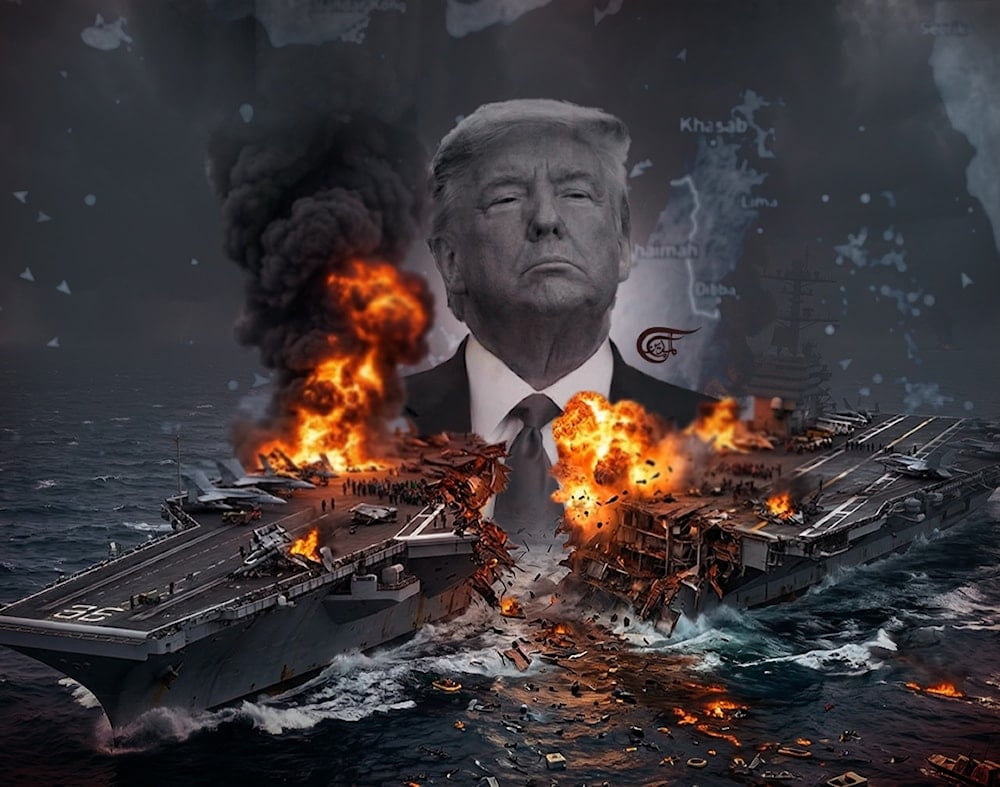
The US and "Israel’s" kinetic strikes on Iran are faltering, and the economic conflict has been decisively lost. (Al Mayadeen English; Illustrated by Zeinab el-Hajj)
Since the criminal Zionist-American war on Iran erupted, the Strait of Hormuz has remained stubbornly closed. Despite Donald Trump’s dire threats, Tehran has brought maritime traffic to a total standstill. The Empire has futilely scrambled to assemble an international coalition to reopen the economically vital waterway ever since, only to be rebuffed. NATO allies have been slammed for making a “foolish mistake”, by refusing to help militarily secure the Strait. In truth, there is no hope it can be forcibly reopened in the foreseeable future.
As Bloomberg reports, while discussions are ongoing among G7 members over potential methods of restarting trade in the Strait, the general consensus among US allies is this can’t happen until hostilities ease, or outright end. Bank of America’s head of research has ominously warned oil prices could rise above $200 per barrel “if disruptions persist for multiple months.” He forecast that if the Strait isn’t reopened within days, its closure could precipitate a global recession.
Tehran imposing a blockade on the Strait was absolutely inevitable, and widely predicted, in the event of war. Even if the conflict ends soon, lasting damage has already been inflicted in many economic spheres, and the effects will be increasingly felt by average citizens in the form of higher prices for essential goods. Global shipping has been thrown into disarray, with major logistics firms cancelling routes in West Asia, producing higher transport and insurance rates, and delays. Again, increased costs will be passed onto consumers.
In all, approximately 11% of global maritime trade passes through the Strait annually, accounting for 20% of the world’s total oil supply. Iran’s blockade, coupled with Resistance strikes on refineries throughout the region, will cause lasting chaos in energy markets and impact availability for years to come. Yet, despite a preponderant mainstream focus on the implications of the Strait’s closure for oil and gas, many vital commodities underpinning the operation of major industries worldwide also regularly transit through in substantial quantities.
Their availability and cost is in some cases likewise wildly fluctuating, impacting agriculture, construction, manufacturing, and in turn many fields of everyday life for countless people. And this is only the beginning. Approximately one third of the world’s seaborne fertilizer supply passes through the Strait every year. Before the war, Gulf states ranked highly among international fertilizer suppliers. Up to 43% of global trade in urea - a fundamental component of food production - flowed from the region.
The price of urea can affect production costs by as much as 90%. Now spring is upon us, and planting season has commenced across the West, urea has abruptly become a scarce commodity. Many farmers are already operating without profit, and grave concerns about how long this can be sustained widely proliferate. The prospect of Western sanctions on Russia - a major producer of fertilizer - being lifted to ameliorate the market bedlam grows ever-more likely as time goes on.
Sulfur is a core element of fertilizer production, and pre-war, the Strait provided up to 45% of the world’s supply. As an essay by elite US military academy West Point cautioned on March 13th, the price of sulfur has to date surged 25%, “squeezing one of the most consequential inputs to modern industrial power.” Sulfuric acid is not only vital for basic economic functions, “but also modern warfighting.” In a bitter irony, the Strait of Hormuz’s blockade will cripple Washington’s defence industry - and ability to maintain its conflict with Iran:
“[Sulfur] is needed for everything from the copper in the American electrical grid to the semiconductors in precision-guided munitions… For military planners and strategists, the looming loss of sulfur is a pre-logistical crisis…Chemicals like sulfuric acid sit upstream of copper extraction, battery-material processing, and semiconductor fabrication, meaning they can determine whether the US military can maintain industrial base production of electrical and digital systems needed to sustain the fight as munitions are expended and combat losses mount.”
Copper provides the “clearest example” of why the Strait’s blockade is “a warfighting problem” of historic proportions for the Empire. The widely-used metal is “embedded in the transformers, motors, and communications hardware” enabling US bases “to operate and defense factories to function.” This quickly translates into “a readiness and resilience problem” for the military. It will take over 30,000 kilograms of copper to replace US radar systems destroyed by the Resistance in Bahrain and Qatar alone.
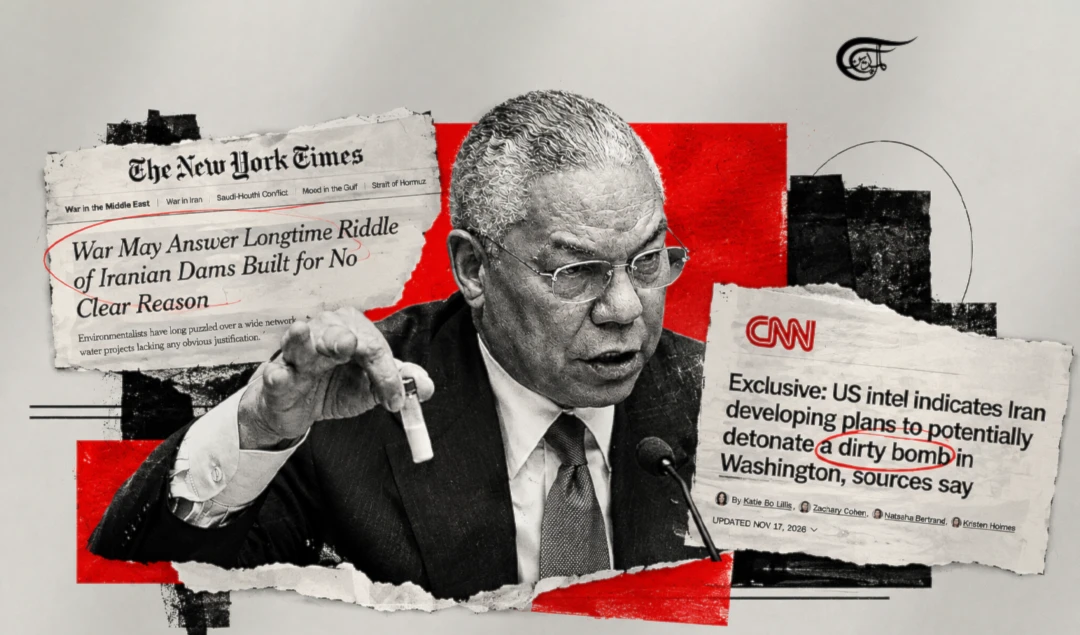
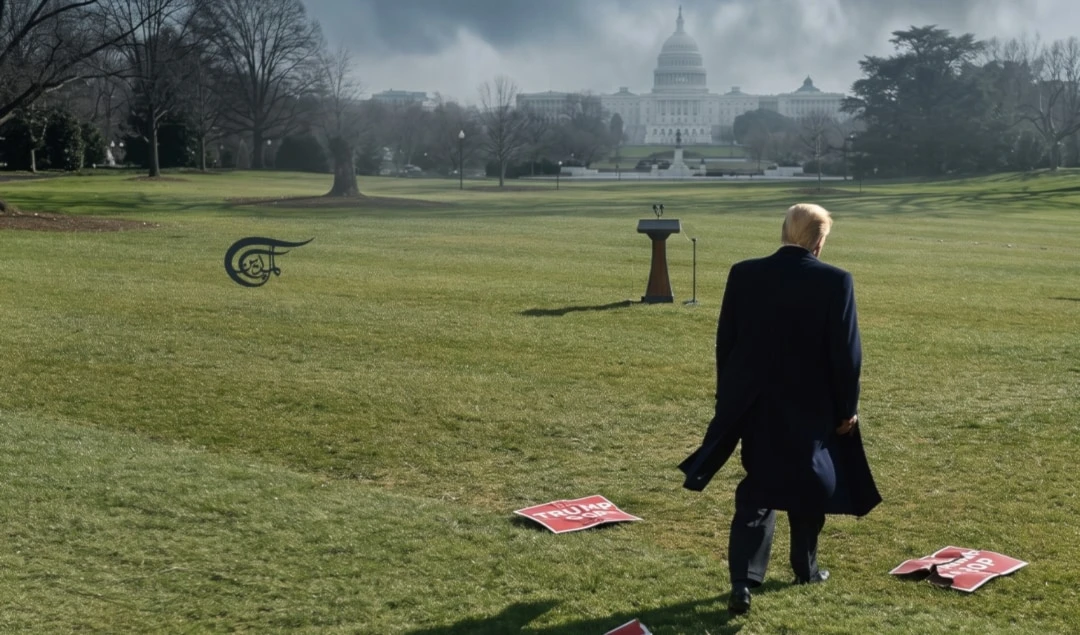
Thousands of kilograms of copper will also be required to fix or replace other damaged US communication equipment, sensors, and radars in Jordan, Kuwait, Saudi Arabia, and the UAE. “Active constraints on American combat power” posed by Iran’s Strait of Hormuz embargo are not restricted to copper supply, however. Similar issues are posed by restricted access to cobalt and nickel, “critical for the high-temperature alloys in jet engines” and crucial lithium-ion batteries powering drones and tactical-level electronics.
Semiconductor shortages will compromise an array of US military utilities, spanning F-35 fighter jet avionics to interceptor and missile guidance systems. Moreover, Washington’s defence industry “cannot surge”, despite Donald Trump’s demands contractors “quadruple” munitions production. US orders for vital war-fighting commodities cannot be “scaled independently in a defense emergency.” America’s supply chains are “fundamentally broken from a defense perspective,” and “utterly ineffective” when global markets tighten. In brief, the Empire’s defence industrial base is “tethered to conditions” Washington itself cannot control - but Tehran now can.
Per West Point, “this has become a paralyzing, real-time problem for the defense industrial base.” The collective “combat endurance” of US-Israeli forces attacking Iran is strictly limited by the “invisible industrial foundations” required to replenish their capabilities, which are now subject to an insurmountable Resistance chokehold. When it is loosened, and on what terms, is entirely for the Islamic Republic to decide. This devastating blow to US military capabilities and procurement capacity comes at a time when the Empire’s bloated warfighting machine is already collapsing.
According to an official US Government Accountability Office factsheet, almost two decades of perpetual, costly conflict has degraded Washington’s military readiness to the extent it cannot “adapt to growing threats posed by major powers” such as China or Russia, or “other adversaries”. Iran, and the Resistance, slot into the latter category. Of particular concern are the US Air Force and Navy - the very military assets now deployed to West Asia, which reap the majority of US war spending.
The GAO reports how US fleets of air and sea craft are ageing and failing, with “a lack of parts, maintenance delays, and other problems” hindering or outright preventing their maintenance and repair. Washington’s facilities for restoring weapons systems and equipment, and naval shipyards, are in “poor condition”. In human terms, the US Navy is chronically understaffed, its massively overworked sailors suffering dangerous levels of fatigue, their “heavy workloads” leading to “fatal ship collisions.”
Elsewhere, a review of whether 15 separate US fighter and ground airplanes met their annual mission capable goals in 2023 found none had done so. The GAO found the Army has “put new equipment into the field before plans for the facilities, personnel, and training” are ready. This is also true of the Navy, which has long-banked on a three-dozen-strong fleet of littoral combat ships, “designed to operate in shallow waters close to shore” to restore its defensive and offensive capabilities, including minesweeping.
However, the Navy “hasn’t demonstrated that this type of ship can perform its intended missions.” A palpable real-life demonstration of the total unsuitability of Washington’s littoral combat ships for “intended missions” is provided by the war on Iran. Three littoral vessels were dispatched to West Asia in 2025, to fill capability and capacity gaps produced by the decommissioning of four Avenger class minehunters deployed in the region for decades beforehand. Since the conflict began, they have vanished from the theatre.
Two have been sighted in Singapore, not merely out of the line of fire, but literally across the globe, right when concerns abound widely Tehran may mine the Strait of Hormuz, and Trump has promised to reverse any attempt to do so with brute force. A Navy spokesperson claims the pair are receiving “maintenance and logistics” support at Changi Naval Base. It remains to be seen whether, and when, they will return to West Asia.
Meanwhile, the Empire is rapidly running out of aircraft carriers, with the USS Gerald Ford having withdrawn from the Red Sea, where it led the Zionist-American war on Iran, following over 300 days of non-stop service. After reports emerged about its onboard toilets hazardously clogging, a fire on the ship raged for 30 hours, injuring sailors and incinerating a significant portion of the crew’s bedding quarters, forcing many to sleep on tables and floors. It is now in Crete, under repair.
For years, it has been ever-increasingly clear the US military is outgunned, outnumbered, and outproduced by an ever-growing number of adversaries, and wouldn’t survive first contact with an actual war. Now the Empire has blundered into a historic, potentially lethal crisis entirely of its own making, and this impotence couldn’t be writ larger. The US and "Israel’s" kinetic strikes on Iran are faltering, and the economic conflict has been decisively lost. The longer this grinds on, the more they will lose.