
Own goals: The 2026 World Cup and the decline of US soft power
-
 Hassan Noureldin
- 25 Jun 2026 23:13
- 3 Shares
 8 Min Read
The 2026 World Cup has exposed, rather than concealed, the decline of US soft power, as high costs, travel restrictions, immigration fears, and Washington’s wars overshadow the tournament.
-
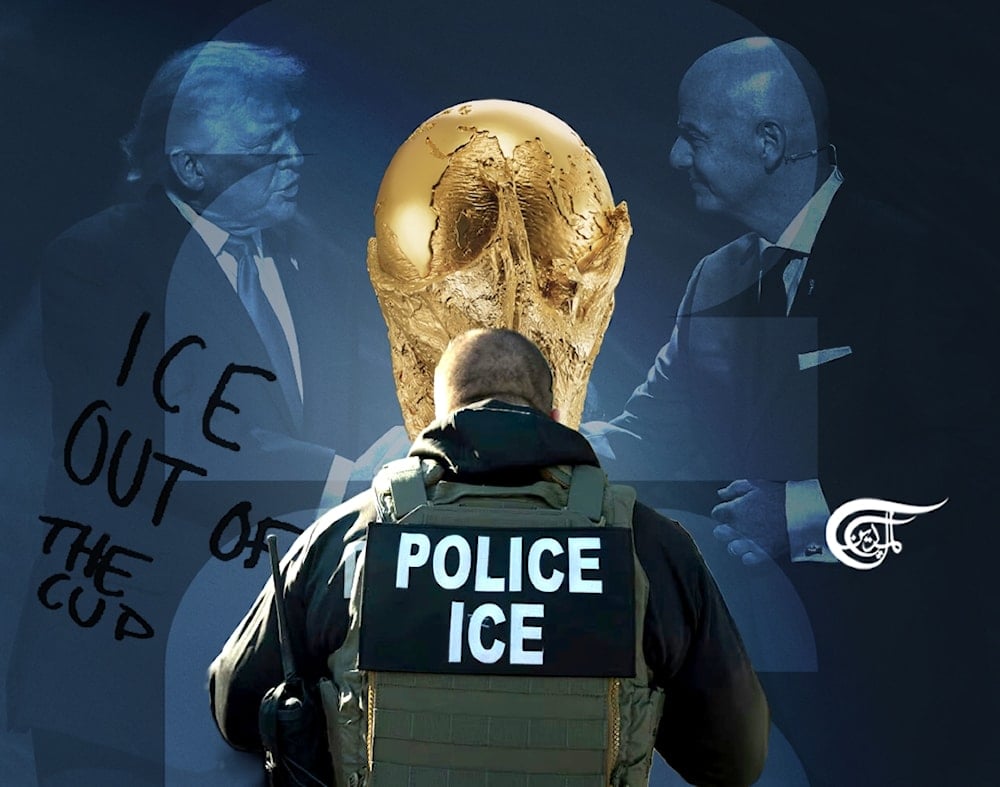
What if this World Cup is a showcase of the new United States of America? (Al Mayadeen English; Illustrated by Mahdi Rtail)
The 2026 World Cup is upon us, and yet for many, it does not feel like it. The buildup to this tournament has been unlike any other in the modern era. Many, especially in the West, had their critiques over the World Cups held by Russia and Qatar in 2018 and 2022, respectively. These critiques ranged from political criticisms to issues regarding human rights and, in the case of Qatar specifically, to the issue of the treatment of migrant workers. For many, these issues overshadowed those World Cups. And yet, the actual hosting of those World Cups went well by most accounts. This time around, there is a real worry that this will not be the case.
The anti-Sportswashing tournament
The 2026 World Cup is hosted by 3 countries: The United States of America, Canada, and Mexico. The US will host the most matches among the three, and the US itself is facing the major brunt of criticisms regarding this tournament, along with FIFA. The exorbitant cost of match tickets and public transportation has been a main talking point for many fans who wanted to go to the World Cup. This tournament will be set to the backdrop of major concerns regarding travel bans on fans from various qualifying countries, fear of Immigration and Customs Enforcement (ICE) raids being done in stadiums, and the US being an aggressor in a war against Iran. The latter is an unprecedented situation in which a World Cup hosting country was at war with a country that has qualified for the World Cup. All these issues have been PR 'own goals' for the US, pun intended. The 2026 World Cup has been the opposite of sportswashing and is a microcosm of the gradual loss of soft power by the US.
What is Sportswashing?
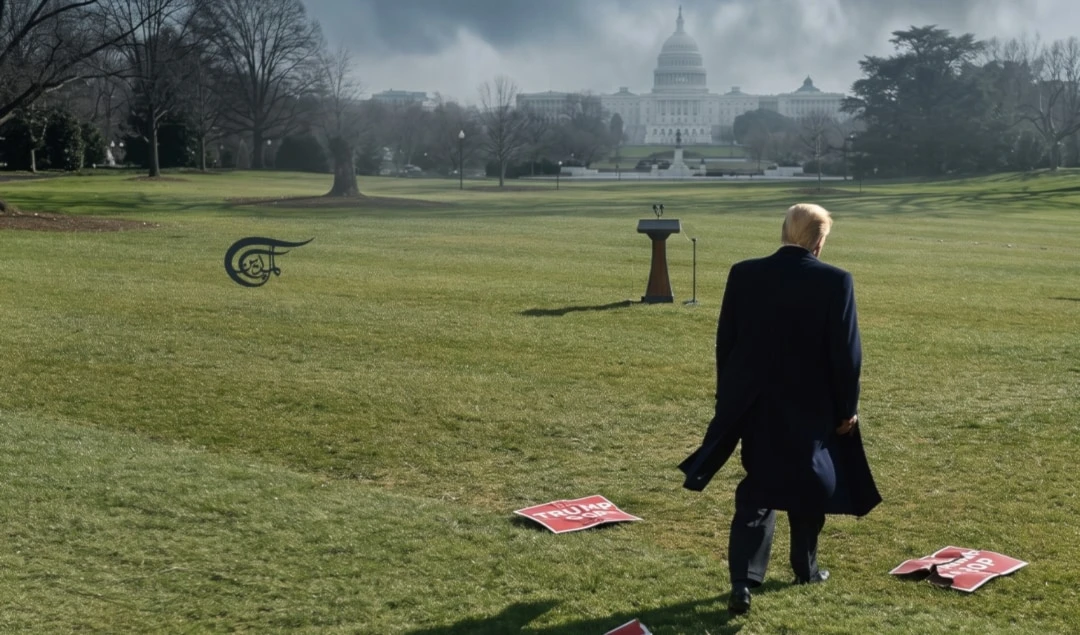

Sportswashing is defined as “the use of an athletic event by an individual or a government, a corporation, or another group to promote or burnish the individual’s or group’s reputation, especially amid controversy or scandal”. This term has been used in recent years to describe state-backed ownership of football clubs such as Manchester City and Paris Saint Germain by the UAE and Qatar respectively, and the hosting of the 2018 and 2022 World Cups by Russia and Qatar, respectively. The key element is that these sporting endeavours are used as a means of soft power and a way to improve a country’s reputation. This can be seen in the treatment of fans in the World Cups in 2018 and 2022. In Qatar, fans who went to the World Cup were allowed to use public transportation for free.
Contrast that with the cost of public transportation for fans in the US and one can see the difference. Rather than making it more affordable, prices have been jacked up. New Jersey Transit, for example, announced that World Cup match goers will be charged $150 for a return rail trip from New York's Penn Station to MetLife Stadium, the stadium that will host the World Cup final, among other matches, in New Jersey this summer, while tickets are ordinarily priced at $12.90. Due to the backlash by many fans, the price was eventually lowered to $98. The same thing can be seen in Boston, with the usual cost of going to the stadium being $17.50 USD to the $80 World Cup rate. There are similar issues with parking prices as stadiums in the US tend to be built outside of cities, and many need cars to go there.
Match ticket prices
Match ticket prices have also been a major source of controversy. This is a FIFA issue, as FIFA sets match ticket prices, but the comparison remains. For the Qatar 2022 tournament opener, the most expensive Category 1 tickets cost $618, and the cheapest Category 4 seats were $55. Standard group matches had flat rates of $220 for Category 1, the highest tier, and $69 for Category 3, a mid-tier, with local residents able to buy the lowest tier Category 4 seats for just $11. At the 2026 opener, Category 1 tickets soared to $2,735, a 343 percent increase, and the least expensive Category 4 tickets jumped to between $370 and $560, a nearly 1,000 percent rise. For standard group matches in 2026, Category 1 tickets now range from $450 to $990, depending on team popularity, while the absolute minimum entry price, formerly $11 for Category 4, rose to $60, though these lowest-tier tickets are highly restricted.
A hostile environment
This has led to a sense of hostility towards fans, and this is especially the case for fans who come from countries that have a visa travel ban on them. Fans of Haiti and Iran, more on them later, have a total ban on them. Fans from Senegal and Cote d’Ivoire face major restrictions as well. There are also the fears with regards to the hostile immigration policies of the US under the presidency of Donald Trump and the fear of ICE raids, especially against fans coming from Latin America. We are already seeing some World Cup participants being directly impacted by these strict immigration policies.
The Iranian national team have their training base in Mexico despite their group games taking place in the US. Furthermore, American officials had said that the Iranian players cannot stay overnight in the US but rather will only be allowed in the country for the day of the game. This is a violation of FIFA rules, but clearly nothing will be done about it. Another case is the case of Aymen Hussein, the star striker of Iraq, being interrogated at the airport for 7 hours upon arrival. The most recent incident is that of Omar Artan, who was set to be the first Somali to referee at the World Cup finals, being dropped from the list of officials after he was denied entry to the United States. This does not include fears such as that of the rampant gun violence in the US, which has already borne fruit with a shooting in Kansas City on June 7th, the city where the England national team are based.
The decline of US soft power
This World Cup has been emblematic of a greater shift happening in the world, and that is the gradual loss of US soft power globally over the past two decades. The US is being seen in a more negative light, especially since the first Trump term. Despite an increase in approval ratings during the first 2 years of the Biden administration, the genocide in Gaza has only led to those ratings to decrease once again. The second Trump term has seen a foreign policy blighted by the continuation of the genocide in Gaza, the wars in the Middle East, the hostile treatment of NATO and European allies, such as the plans to take over Greenland, and the haphazard implementation of tariffs, among other issues. This is all in addition to the immigration policies, and we have not even touched upon the subject of this administration being closely entwined with tech companies that have become increasingly aggressive in their pursuit for greater surveillance and curtailing civil liberties.
But what if this is the point? What if this World Cup is a showcase of the new United States of America? The US has become a country defined by greater income inequality and the exorbitant wealth of its ruling class, and by its hostility to the outside world. What better advertisement for such a country than a World Cup that has been criticized for its ludicrously expensive prices and its hostility to any visitor who wants to enjoy it. The US has become a country that is far more willing to let go of its veneer of charm in order not to lose ground in its fight for global hegemony. As for this World Cup? Enjoy the show; although the likelihood is you cannot afford it.


