News from Nowhere: A world gone mad
-
 Alex Roberts
- 10 Mar 2026 19:21
- 1 Shares
 7 Min Read
Alex Roberts argues that Keir Starmer’s refusal to support Trump’s war on Iran marks a rare moment of Western dissent from Washington’s military agenda. The British prime minister’s stance reflects public opposition in the UK and could encourage other leaders to challenge the war.
-
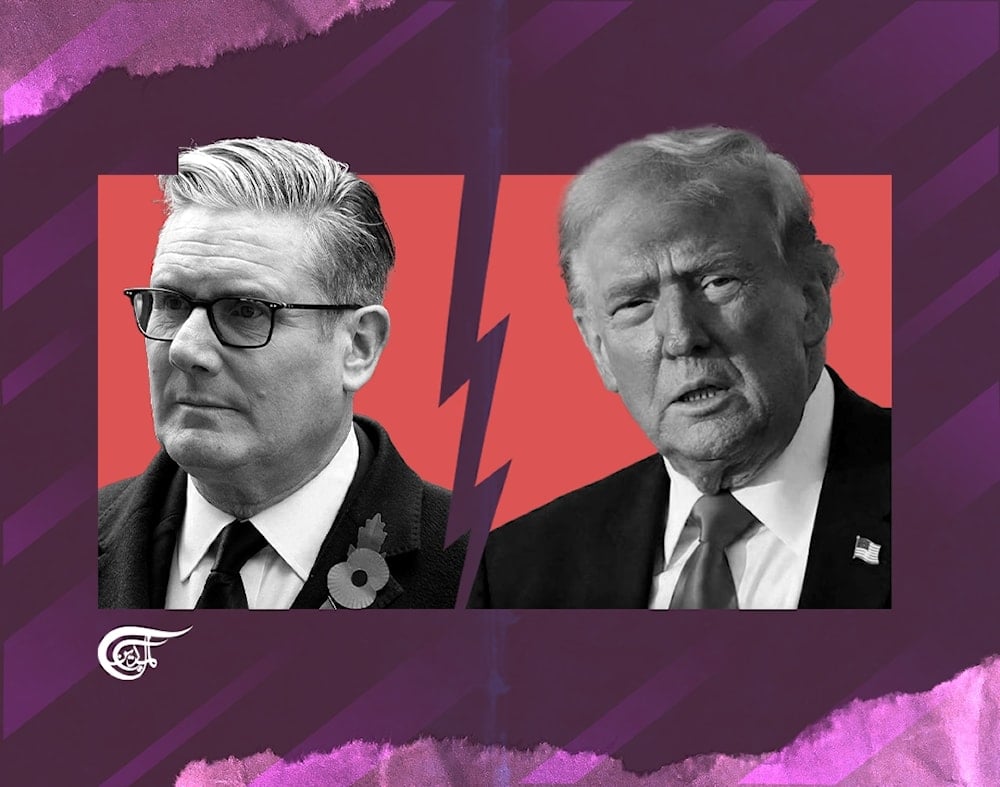
Keir Starmer's small voice may slowly embolden other Western leaders to take a more courageous stance. (Al Mayadeen English; Illustrated by Ali al-Hadi Shmeiss)
It's horribly difficult to imagine what might be going through what remains of the American president's mind at this insanely impossible time.
I heard a priest talking on the radio last week, saying that there are certain senior members of the United States military who appear to believe that Donald Trump has been sent by God to bring about Armageddon, the apocalyptic battle that will herald the new world order, the new era of an absolutist evangelical American heaven on earth.
Mr. Trump himself seems to think that he was saved from the assassin's bullet during his re-election campaign to perform some kind of divine mission. If so, he appears to have caught the messianic madness that propelled Tony Blair to push the United Kingdom to join the United States in its invasion of Iraq 23 years ago. By bringing Mr. Blair on board with his schemes – onto what he calls his Middle Eastern or global 'Board of Peace' – the madman in the Oval Office looks to be showing his true ideological and psychological alignments. It seems more than fateful that America's war on Iran coincided with the convening of the Oval Office's sinister alternative to the United Nations.
The man denied his dream of being awarded the planet's most famous prize for peace now seems intent on wrecking all prospects for peace across the world. Perhaps his generals aren't entirely mistaken as to the apocalyptic purpose he serves. It is terrifying that this vengeful petulant schoolboy brings to mind the words of the English poet John Milton: "only in destroying I find ease".
But there are other, more mundane explanations out there for Mr. Trump's conduct. There have been growing suggestions that his health issues have become increasingly serious. There's a lot of talk about the mysterious rashes which have appeared on his neck and hand, although nobody seems to know what these marks might signify, in medical terms at least. At the same time, his rambling rants have grown more and more demented, apparently unhinged from reality. He regularly boasts about having aced his latest IQ tests, but, when he gives details, these appear not to be IQ tests at all, but tests of basic mental competence. Some doctors have suggested that if he is indeed being subjected to an ongoing series of such tests, this would no longer be to test for dementia, but to check on how far that dementia has progressed. Amid widespread speculation that the Vice-President, or the majority of his Cabinet or Congress, may seek to invoke section four of the 25th amendment of the American Constitution to remove him from office on the grounds of mental incapacity, this moribund leader has suffered recent public incidents which have suggested he is no longer even able to control his own digestive processes.
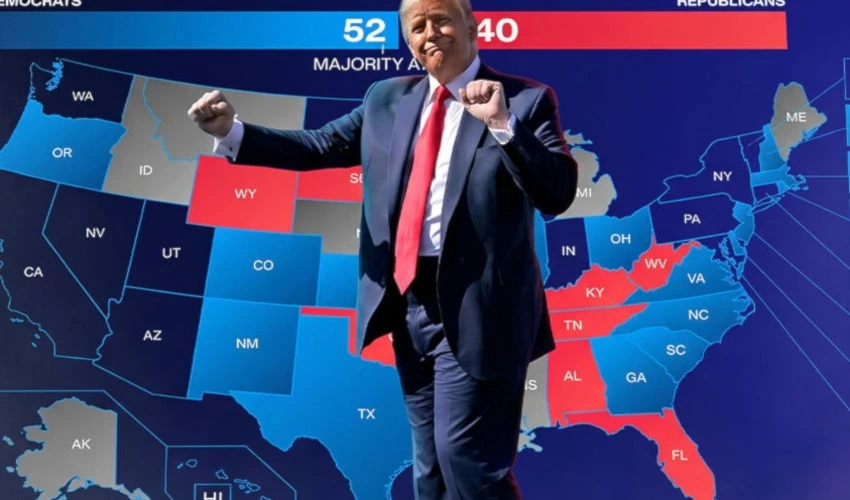
Other commentators have suggested that this illegal offensive may have been launched to distract the American public, in the run-up to this autumn's mid-term elections, from too much close scrutiny of the multiple failures of his domestic policies.
He has been forced to wind down the pace of his heavy-handed anti-immigration actions after they resulted in the violent oppression and murders of peaceful American citizens engaged in lawful actions.
His economic interventions have failed to improve the standards of living of those who voted him back into power, and his flagship tariffs have not only damaged America's domestic economy and its relationships with its closest international allies, but they have also been struck down as unlawful by a Supreme Court dominated by his own conservative appointees.
He has not secured the capitulation of Greenland or Canada to join his new Trumpian empire, and he has been embarrassed by the repeated references to his close association with convicted sex offender Jeffrey Epstein in the files he sought, and to some extent failed, to suppress.
After all, he wouldn't be the first national leader in modern history to wage war overseas in a bid to boost his waning popularity back home.
Many have, of course, said that Trump's war has signalled the end of international law and of the rules-based world order for which he has repeatedly shown nothing but contempt. Others have even supposed that it reveals a conspiracy of global chaos, in which the super-wealthy – the multi-billionaire transnational magnates and kleptocrats who put Trump into the White House again – will wield ultimate power… that this is the dawn of a new age, the dictatorship of the plutocratic patriarchs.
One of those who has, perhaps surprisingly, publicly expressed his opposition to Trump's unlawful war has, of course, been that former human rights lawyer, the UK Prime Minister himself. Although many may well feel that Keir Starmer could have gone much further than his refusal to support offensive military action, his statement to the House of Commons that he does "not believe in regime change from the skies" – characteristically mild though it was – set him directly at odds with Mr. Trump – and prompted the American president's typically puerile jibe that Mr. Starmer is "no Winston Churchill".
Sir Keir's sudden and unexpected ability to show some backbone has not gone unremarked. Of course, the Daily Mail derided Mr. Starmer as a "national embarrassment" who has "wrecked Britain's relationship with our oldest ally" – ridiculing "a prime minister who Trump mocks as no Winston Churchill" – and in that context conveniently forgetting its own historical associations not with Mr. Churchill but with Herr Hitler.
The Daily Telegraph, meanwhile, supposed that the British premier's "lack of support for the Iran war" has led to the "increasingly fraught state of the special relationship" between the United Kingdom and the United States.
But that isn't the whole story of the press and public reaction to Starmer's minor act of resistance. Even the relatively conservative Metro newspaper was prompted by the Prime Minister's decision to stick his head above the parapet to point out that "we are not clamouring to follow America into another Middle Eastern war". And, for once, Keir Starmer appears to have caught the mood of the nation: opinion polls are showing that the people of the UK want to have nothing to do with Trump's war.
Some commentators are even suggesting that by stepping out of line, just ever so slightly, and not only surviving the American president's wrath but in fact garnering some respect among his own electorate for doing so, Starmer's small voice may slowly embolden other Western leaders to take a more courageous stance in condemning a war which is so patently unlawful and inhuman that history is already coming to judge it, if only because history may fear it might not have so very much time left.