US proxies vie for their place as 'Israel's' grip slips
-
 Julia Kassem
- 31 Dec 2025 14:53
- 10 Shares
 10 Min Read
As America plans to drop its entanglements in West Asia and renew a focus on China, America’s proxy powers are scrambling for influence.
-
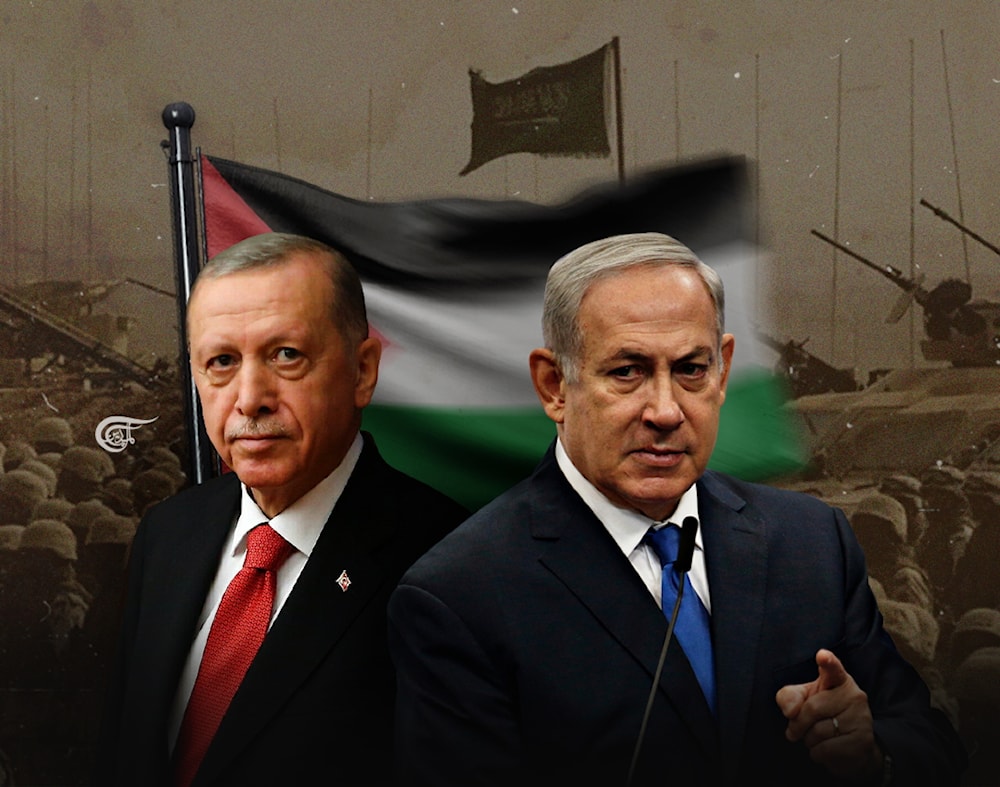
“Israel” vs. Turkey, rising Saudi power, and regional resistance—Palestine at the center (Illustrated by Zeinab al-Hajj; Al Mayadeen English)
Netanyahu’s recent summit with Cyprus and Greece underscored an Israeli inclination to undercut Turkish regional influence and consolidate regional energy control through the IMEC/East Med project, rivaling the Qatari-funded Turkey-Syria pipeline. Playing into Cyprot and Greek historically-charged anxieties about a neo-Ottoman revival, Netanyahu sent this clear message to Ankara at the summit in saying, ‘those who fantasize… they can reestablish their empires and their dominion over our lands…forget it’.
While "Israel" and Turkey – along with the Gulf states – historically operated as US proxy projects in the region, they are now reaching a point of contention for the prime role as the region’s middle-manager as American policy itches to shift eastward. Despite his close friendship and alliance with Trump, Tom Barrack, the business mogul assigned to manage Middle East policy, resembles the Obama-era pivot to Asia policy in action: leverage neo-Ottomanism as a regional overseer playing a role in asserting passive US dominance as the US moves to Indochina. This comes as the Trump administration spells out a recently-unveiled National Security Strategy more focused on China and less on securing energy in the Middle East.
Riparian resources also come into play as a key resource objective in the Middle East. Turkey’s extended hand in Syria culminates a decades-long quest to control Northern Syrian dams and water resources, while "Israel" draws its boundary in Lebanon from a 1920s lobbying attempt from Zionists to the British ahead of the San Remo conference that birthed Sykes-Picot: the Litani River as a “natural boundary” better used by the colonizing Zionists than the “backward” indigenous Lebanese. "Israel’s" eye on the Litani continues the age-old objective of securing a “security boundary” and key riparian resources, now to fuel its AI-driven espionage economy, which is rather water-intensive.
This came as Turkey and "Israel" came earlier this year at the point of conflict in Syria – a battlescape between Zionist and neo-Ottoman visions of regional dominance, operating under a US tutelage now scrambling to mend them together. The US needs to reinforce a joint Turkish-Israeli effort to encircle Lebanon’s Resistance, but both Tel Aviv and Ankara’s growing rivalry may hamper such efforts. As the Qur’an states in Surat al-Hashr: “Their malice for each other is intense: you think they are united, yet their hearts are divided.”
"Israel" is also contending with another rising competitor and growing threat from Saudi Arabia, which, before recently, was regarded as a cohabiting ally that could be affixed into a regional normalization vision. Normalization, a stamp of legitimacy for "Israel" in the Arab and Muslim world, is a tool for the US to faciliate closer and direct cooperation between regional Arab states and the Zionist entity in the process of facilitating a controlled exit of direct US presence in the region, which previously played as a direct curator to disparate regional proxies that posed as foes for their constituencies.
These shifting dynamics are actualized in the disparate positions in the US right, with pundits of Trump’s circle and fanbase quarreling over the future management of US exceptionalism and dominance in the world. Just as Tom Barrack and Bolton spar over weighing a commitment to the Turkish-Qatari axis vs. an Israeli one, with Trump’s current Syria/West Asia envoy advocating the former and Bolton arguing for a traditional neo-con commitment to Zionist primacy, Tucker Carlson represents a pro-Qatari approach, arguing that the US relationship with Qatar – who gifted the US a $400 million Air Force One fleet back in July – is “so much more important” than the US’ relationship with "Israel", reflecting the growing Republican disillusionment with the Zionist entity. Meanwhile, figures like Laura Loomer and Ben Shapiro are pushed to retain support for "Israel" amongst a rapidly critical right-wing base skeptical of continued “Israel”-first approaches to “America-first”: the Republican and right-wing youth, who are breaking from the party’s traditional support for "Israel". Less than 25% of Republicans under 45 support unconditional funding for "Israel", and the vast majority (65%) advocate a candidate that would reduce funding to the Zionist entity.

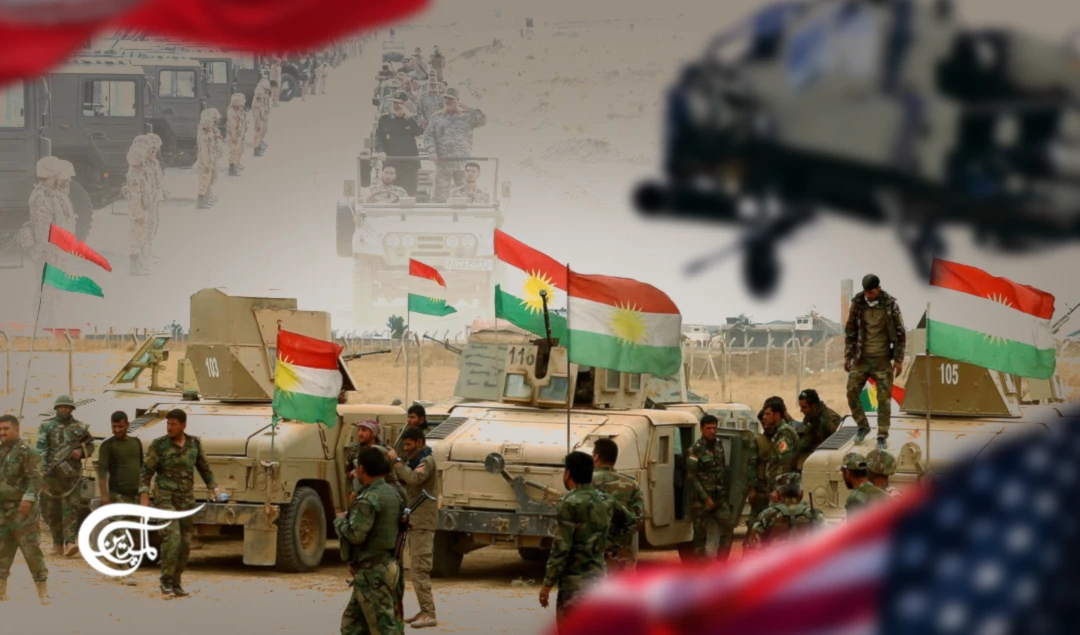
Yes, to many segments of the US right-wing establishment, America’s “greatest ally” is proving itself to be its greatest liability. Picture Trump’s cordial and lavish welcome to Saudi Crown Prince King Salman, eager to welcome $1 billion in Saudi investment – and contrast it with the 5+ unceremonious visits Israeli PM Netanyahu made to Washington to beg for support of green lights amid towering red flags for US sustainability in the region.
"Israel", like Ukraine, is draining the US pockets – a dynamic that defined new Republican resentment against Ukraine in Washington’s latest failed proxy war against Russia. "Israel’s" promise to pave a Trump Riviera over the graves of Gaza residents is less attractive – and realistic – for Trump than working with the Qataris or Saudis, whose lavish gifts and billions in investments in the US are an attractive invitation toward securing reciprocal real estate investments across the Middle East.
Still, the US is desperate to quickly fissure the growing competition and rivalry into continued coordination that can stay on track with Washington’s regional objectives via the "Abraham Accords". Saudi Arabia insists that it will not recognize "Israel" until a Palestinian State is first established – an objective viciously fought, even in paltry, PA-run terms under the international status-quo limited vision for a “Palestinian State” – with "Israel" lobbying the current US administration to completely "annex" the occupied West Bank, remove recognition of Palestine and the Palestinian issue from all international domains, be it UNRWA or their institutional presence by closing the Palestinian consulate in Washington.
Despite the Adelson cash pushing to forcibly extinguish the Palestinian cause and a uniquely Zionist vision of preferred US power play in the region, Saudi Arabia is in a better position to leverage itself against the US, in fact, bending Washington to concessions. Riyadh consistently builds up its own power, shedding off the shackles of US security guarantees and the security-for-oil exchange that defined the old status quo between itself and Washington, shattered in the failed US-backed Saudi-led siege on Yemen. In drawing a new security agreement with Pakistan, challenging “Israel’s” qualitative military edge, and eying nuclear energy, Riyadh is shedding its reputation as a mere US proxy and as a relatively more independent contender for regional power. Since China’s brokering of a detente between Saudi Arabia and Iran in March 2023, a Middle East more reflective of emerging multipolar dynamics emerges and shifts the scene away from a region whose states were pigeonholed into a partisan binary of bipolar power dynamics.
Meanwhile, "Israel" shifts its objectives from regional dominance to mere survival, working to consolidate any chance of future strategic success. While "Israel" has attempted for over two years to pass off tactical successes – such as assassinating leaders in Lebanon, genocide in Gaza, and occupation in Syria – as strategic successes, both Washington and "Israel’s" own public are less convinced. Israeli public opinion has remained consistently confused and disillusioned with the so-called “success” that Netanyahu attempts to pass off in pursuit of quick-victories, which have sunk the Likud party in the mud under a regional war of attrition. The US attempts to bring about the material cooperation in practice that could support the "Abraham Accords" on paper by encouraging the UAE's cooperation with "Israel", as seen in Sudan (with the UAE’s backing of the RSF) and its support for the STC in Yemen. For "Israel", it is an objective existential to its regional survival to ensure that these arenas of cooperation aren’t just symbolic and organizational but strategic, directed in its attempts to prepare a position of advantage for itself in a post-ceasefire renewed battle against the Axis of Resistance. Yet curating the UAE’s construction of a strategic airbase on the Red Sea’s Zuqar Island or commissioning intelligence infrastructure on Mayun and Socotra Islands has done little to compensate for the US failures to secure control of international waterways challenged by Ansar Allah’s resistance.
Against Saudi Arabia, they even represent an added layer of a flexed projection of power in clearing Riyadh’s grip on Yemen, given Riyadh’s recent overtures toward a more coexisting relationship with Iran instead of a previously combative one. "Israel" is running out of chances to prove the existence of its command over strategic depths lost to mishaps that started out as “quick victories” and the loss of its ability to retain the upper hand in conflicts against the Palestinian, Lebanese, Iraqi, or Yemeni resistance. Despite trying to scrape by any kernels of victory in violations of ceasefires or in treacherously leveraging its disproportionate control over global technology and supply chains (like, for example, exploding pagers or infecting phones with spyware), the Zionist entity has led the US in a pattern of successive losses in the region: the loss of key waterway control over the Red Sea, the loss of regional dollar denominated trade, and the loss of ensuring regional security.
This latest stage of declining US imperialism in West Asia, the growing contradictions between different sets of US allies – namely Turkey, the GCC, and "Israel" – and the centrality of Palestine in actualizing regional and global events and dynamics reaffirm the success of Al-Aqsa Flood. Perhaps the Palestinian Resistance envisioned a break to occur as a result of the demonstration of the Resistance’s power in shattering the Israeli illusion of security or the brutality of "Israel’s" crushing attacks on the Palestinians in response. But, as Yahya Sinwar always envisioned, the impact of Al-Aqsa Flood in advancing the growing contradictions between the US regime and "Israel" and the US allies in the region represents a material vision that dwarfs Zionism’s ideological vision, fading into historical oblivion with its dated and fading attempts at reviving a dying colonialism; coincidentally the title of Franz Fanon’s historical recount of the Algerian revolution. Likewise, Western settler-colonialism’s first monumental loss in the Arab and Muslim world in Algeria precedes and has spelled the fate of Zionism, its last.