Sayyed Ali Khamenei's legacy: Solidifying a global resistance conscious
-
 Julia Kassem
- 7 Jul 2026 13:55
- 5 Shares
 13 Min Read
Explore the life, leadership, and legacy of Sayyed Ali Khamenei, from his revolutionary rise in Iran to his role in shaping the Islamic Republic and the Axis of Resistance.
-
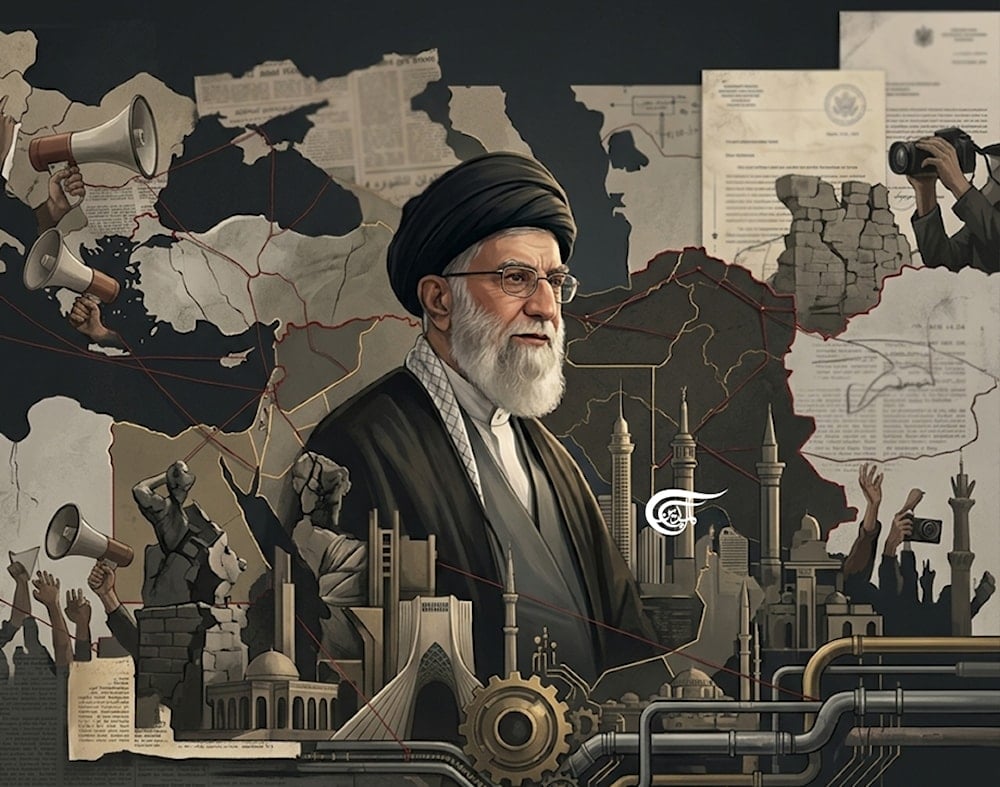
A detailed profile of Sayyed Ali Khamenei: a life of leadership, revolutionary vision, and lasting impact on Iran and the wider region. (Illustrated by: Al Mayadeen English/Fatima Attieh)
When Sayyed Ali Khamenei was appointed to be the supreme leader in 1989, his appointment, however righteous and fitting, was not met by him with joy, satisfaction, or pride, but with tears and his own objection. He surprisingly demanded his own rejection from the post, insisting he ‘wasn’t qualified’ to lead the Islamic Republic and its living revolution.
There was, however, no one more qualified for the post than Sayyed Khamenei, and his reaction was indicative of the asymmetry between his humility and political gravity.
He was the living embodiment of “Red Shiism”, as Ali Shariati had articulated years before, a leader who rejected the docile position of religion as an empty set of rituals rather than the driving force for justice in this world.
Perhaps the Iranian Leader possessed unwarranted shame at his perception of his lack of qualifications, ranking as a Hojjat al-Islam but falling short of being a formal Marja’a al-Taqlid, however, his volumes he wrote, via action, through his own tale of committed organized revolutionary struggle far outweigh mere clerical knowledge, with the greatest testament to the effectiveness of his leadership in preserving the Islamic Revolution and Islamic Republic, overseeing the consolidation and building of the Axis of Resistance, propelling Iran into not just a regional but a world power by standing by fundamental anti-imperialist principles, and making groundbreaking advancements in Iran’s homegrown scientific and industrial sectors.
Under Sayyed Ali Khamenei, the doctrine of Islamic resistance and defense took on new meaning, and Iran built a unique multilayered missile system that included domestically produced ballistic missiles.
Sayyed Khamenei’s institutionalization of the Islamic Republic, strengthening and expanding the IRGC and Basij, as well as national and regional social and charitable institutions, helped delegate and distribute responsibilities and decision-making, ensuring the Islamic Republic outlasts a single leader and better reflects the efforts of its collective society.
Sayyed Khamenei’s focus on defining roles and expanding the Islamic Republic institutions was evident as far back as Imam Khomeini’s initial uprising. In his memoirs, Sayyed Khamenei writes that Islamic activists, including Imam Khomeini himself, who were busy issuing proclamations and leading the revolution, weren’t yet establishing Islamic organizations or institutions.
Directly in line with his predecessor, Ayatollah Khomeini, Sayyed Ali Khamenei’s instrumentalization of Islam as a global revolutionary force broke from the false dichotomy that had positioned religion as antithetical to modernity. By breaking this false dichotomy, they propelled Islam and, by extension, the Islamic Republic forward, in defense, in religion, in the sciences, and in society.
Biography
Sayyed Ali Khamenei was born on July 16, 1939 (28th of Safar, 1358 AH) in the holy Iranian city of Mashhad.
The namesake and town of his birth allude to martyrdom, as it is the town in which the 8th Imam Ali ibn Musa al-Rida was martyred by poisoning.
Born, just like he was martyred to a poor family in a home that was small, humble yet full of warmth to Sayyid Javad Khamenei, who hailed from a Tabrizi clerical family, and Khadijeh Mirdamadi, who the martyred leader recalls as enamoring her children with her ability to recite Quran with ‘a beautiful flow of the verses; instilling in her children a deep knowledge and love for the prophets Musa (Moses) and Abraham.
He was known for his asceticism, owning a small and simple home with the bare minimum of essential furniture, with some reports saying he didn’t even own a refrigerator and walked around in torn shoes.
She was also from a clerical background, as the daughter of Ayatollah Najafabandi Mirdamadi, and instilled in her children a foundational love for the Qur’an and its language, as well as for Hafez’s poetry.
Inheriting his parents’ love for scholarship and religion – having memorized the Qur’an at just 4 – prompted him to channel his stewardship of Islamic knowledge and teachings into their application.
The young Khamenei’s class and social consciousness, understood and mediated through the lens of his religious knowledge, was further solidified by his experiences in poverty & the injustices Iranians had at the hands of the Shah’s Israeli-trained SAVAK.
Religion as a revolutionary vessel for justice
Ayatollah Khomeini was a friend of Khamenei’s father, and the young Khamenei would attend his lectures in Qom, where he moved to continue his religious studies after some years in Najaf.
The young Khamenei’s consciousness and orientation towards revolutionary Islam were sparked alongside Khomeini’s public debut of his revolutionary movement after the Shah’s “White Revolution” reforms of 1963.
The opposition Imam Khomeini had reflected his rejection of bringing Iran’s institutional codes under the operational management of the United States, essentially restructuring Iran’s intelligence, military, and social & economic systems under its control.
In the face of growing social discontent in Iran, intensified 5 years after the CIA-backed coup deposed ex-President Mohammad Mossadegh for moving to nationalize Iran’s oil, the United States intended the White Revolution reforms of 1963 to be both a means of transitioning Iran from a British-ruled feudal society to a US-run capitalist enterprise.
Within this arrangement posed a threat to the role of Islam as the force guiding Iranian society; instead of a Wilayat al-Faqih, as Ayatollah Khomeini envisioned, Iran would have been one of many nations codifying imperialist America as its wali.
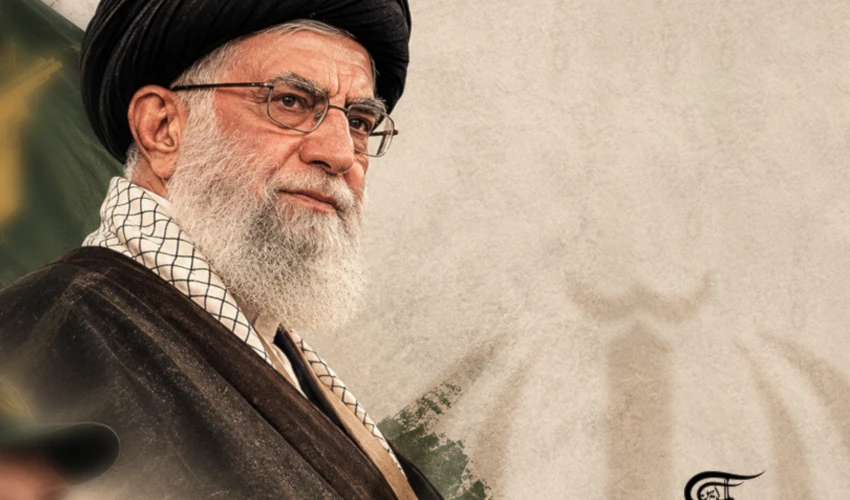
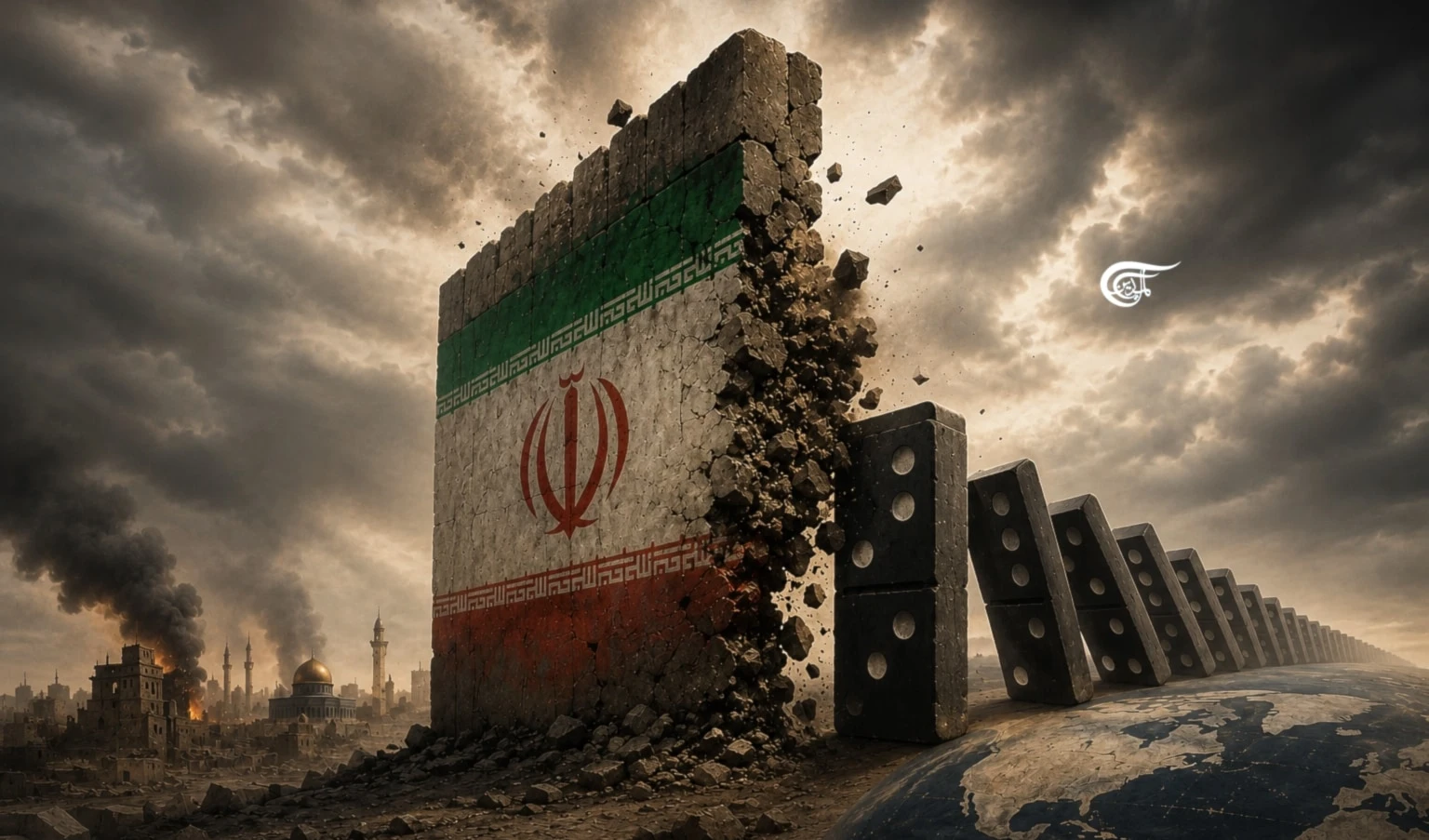
While the Shah wanted to fortify his monopoly of violence and power against his people with “an insatiable appetite for more and newer military equipment,” the United States wanted to construct a path of “economic development and reform as a check against internal upheaval or revolution,” according to the US State Department’s historical documents.
Rejecting such humiliation for their nation, which oscillated between bludgeoning its people through brute force or shepherding them into imperialist control through soft-war tactics, this moment cemented Khamenei’s commitment to joining Ayatollah Khomeini’s Islamic Revolutionary struggle.
It is clear that this consciousness would forever attune Khamenei to a fundamental mistrust in US and Western institutional infiltration of Iran through unequal exchange, one-sided dealmaking, or through Trojan-horselike trade policies that would only bring to Iran into fragile dependency at best and hazardous bioweapons at worst (a lesson learned from France’s exports of HIV-contaminated blood to Iran, among other global south countries like Iraq, Libya and Argentina, in 1984-1985).
It was on this basis that the Supreme Leader banned COVID-19 vaccines from the US, UK, and France in 2020-2021.
“I do not really trust them [the US and UK]. Sometimes, they might want to test [the vaccine] on other nations to see if it works or not…I do not trust the French either. The reason is that they have a history of giving us contaminated blood products. Of course, if officials wish to obtain vaccines from other places – from safe places – it will be alright,” Sayyed Khamenei said at the time.
'New Islamic Civilization': Building an epistemological as well as material infrastructure for resistance
In line with Ayatollah Khomeini’s vision for an international Islamic “pole” or consolidation of independent and sovereign decision-making and power against Zionism and Western imperialism, Ayatollah Khamenei continued to pursue this aim diplomatically and ideologically.
Sayyed Khamenei’s religious thought harnessed Islamic concepts and rulings and oriented them towards the fight against imperialism and global arrogance. For example, the concept of “al-infaq” refers to “spending wealth towards goodness.” Imam Khamenei’s school of thought honed this concept to be measured by the extent to which it contributes to the ability of donated wealth to truly empower a community and encourage its dependence from imperial economic structures. Sayyed Khamenei also allowed sending money to Gaza to be counted as khums and continued on in Khomeini’s historic 1967 religious institutionalization of anti-Zionist boycotts to similarly legislate and push for boycotts of products to or from the Zionist entity.
As Sayyed Khamenei’s vision of a prophetic societal resurrection was an Islam that reformed the individual, and whose personal inqalab was in service of social and greater societal transformations.
The Shah’s 1963 crackdown and SAVAK repression wave had encouraged Khamenei, part of a core group of revolutionaries, to lay low following his first detainment in 1963; becoming more active upon becoming discontent with the proliferation of clergy that chose to ignore social issues.
Sayyed Khamenei, upon his late 1960s return to Mashhad, began to give more speeches focused on re-interpreting modern social issues and a call for struggle against oppression through the lens of Islam.
As articulated in his 1970s sermons, he aims to break down the structures of arrogance that bring about class divisions, oppression, and exploitation, thereby redefining and revolutionizing the concept of modern struggle against oppression & class oppression as ethical & spiritual at its foundation rather than merely material.
In recent years, he had constructed a comprehensive vision, or the “New Islamic Civilization”, defined by political independence from Western powers, replaced with regional interdependence and resistance to US military domination in Muslim and Arab lands.
While instilling this vision through the Resistance Axis, Iran’s resistance, its nationalization of the Hormuz, and its victory despite material asymmetries to the US and Israel throughout the imposed wars of 2025 and 2026 have proven this vision can be undertaken throughout the Islamic and Arab world.
Ultimately, in pursuit of uniting the Islamic world, Sayyed Khamenei aimed to abolish sectarianism, especially where it clearly fractured the Islamic ummah, dulled the Islamic consciousness, and converted a sizable number of Muslims and the majority of Muslim nations into tools for the imperialists.
Building upon Khomeini’s famous saying that while Muslims argue over whether to fold or put their arms by their side, “the enemy is preparing to cut them off,” Sayyed Khamenei, in the same vein, issued a 2010 fatwa banning the insulting of revered Sunni figures, the companions, and Aisha, wife of the Prophet.
How he handled foreign and domestic policy challenges
Faced with punitive sanctions, Sayyed Khamenei furthered his focus on expansion, strengthening, delegation, and specialization of and within Iran’s Revolutionary Islamic institutional umbrella to further the Resistance economy, helping pull Iran out of dependency, establish it as a multi-regional production and exporting powerhouse, and providing a home-grown lifeline against sanctions.
He faced regional challenges that sprang from the liberatory successes of the Resistance in Lebanon and in Palestine, which were each successfully confronted, further strengthening the resistance. Together with the martyrs Sayyed Hassan Nasrallah, who became Secretary General of Hezbollah in 1992, and the late IRGC Commander Qassem Soleimani, a regional vision for resistance was built, which established institutions, programs, and interconnected mechanisms of coordination and strategy.
Sticking to a defense doctrine where ethics remained the foundation, Khamenei’s defense strategy was focused not just on inflicting the threat of maximal destruction, nor on sizing up to imitate Western opulent and cost-intensive defense stocks, but of maximizing endurance, honing in on and targeting the enemy’s weaknesses in defense strategy, and building capacity not through large armies, but through unbreakable conviction and faith.
Sayyed Khamenei’s principled leadership was one of the strongest reasons for the support he has amassed worldwide, including among Shia in the region. He assumed a role, albeit unintentionally, of being not only the Supreme Leader for Iran or a Marja’a for Shi’a Muslims, but of the fight against global arrogance.
The years of propaganda spread by the Western powers, distributed through their vassals, to demonize Sayyed Ali Khamenei, were shattered when many saw the true nature of perhaps one of the only state leaders willing to take action to defy the US and Israel during the genocide in Gaza.
Sovereign politicians and leaders around the world not only admired him but looked to Sayyed Khamenei for support, guidance, and camaraderie, admiring his unwavering commitment to principles, his sincerity and humility, and his honesty.
Nelson Mandela cordially called Sayyed Khamenei “My leader” when he visited him in 1992, thankful for all the support the Islamic Republic gave to the South African freedom movement and having severed ties with apartheid South Africa after 1992. Cuba’s former leader, Fidel Castro, praised the Islamic Revolution upon meeting Sayyed Khamenei, recognizing that the revolution “destroyed the strongest gendarme of the region not with guns, but with your thoughts.”
Russia’s Vladimir Putin reportedly told Iranian Embassy staff in Moscow upon his 2007 meeting with Sayyed Khamenei that he saw the Prophet Jesus in Sayyed Khamenei, and it was like meeting Christ himself.
Around the world, Sayyed Khamenei garnered adoration and a following for his support for the oppressed worldwide, regardless of nationality or sect. From Bosnia to Palestine, Venezuela to Nigeria, Iran’s support after Khomeini’s 1989 passing extended beyond West Asia.
Sayyed Khamenei, whose life was defined by service to struggle and the oppressed, sealed his fate way back in 1963 when he told the Shah’s officers upon his first arrest that “the most you can do is execute me… Do whatever you want. I have already prepared myself. When I step out of my home, I brace myself to face death, so I advise you to refrain from exhausting your energy.”
Yet God had other plans for him over, granting him a long life that allowed him to build and solidify a global front of resistance against arrogance; granting him, as Imam al-Sajjad prayed for: “a long life, O Allah…dedicated to your service!”