
Aluminum jumps 5%, Saudi oil pricing in disarray after Gulf strikes
 3 Min Read
Aluminum prices rose 5% to $3,450/ton in London after Iranian strikes damaged production sites in the Gulf. Saudi crude pricing mechanisms are also under strain as Hormuz closure disrupts supply.
-
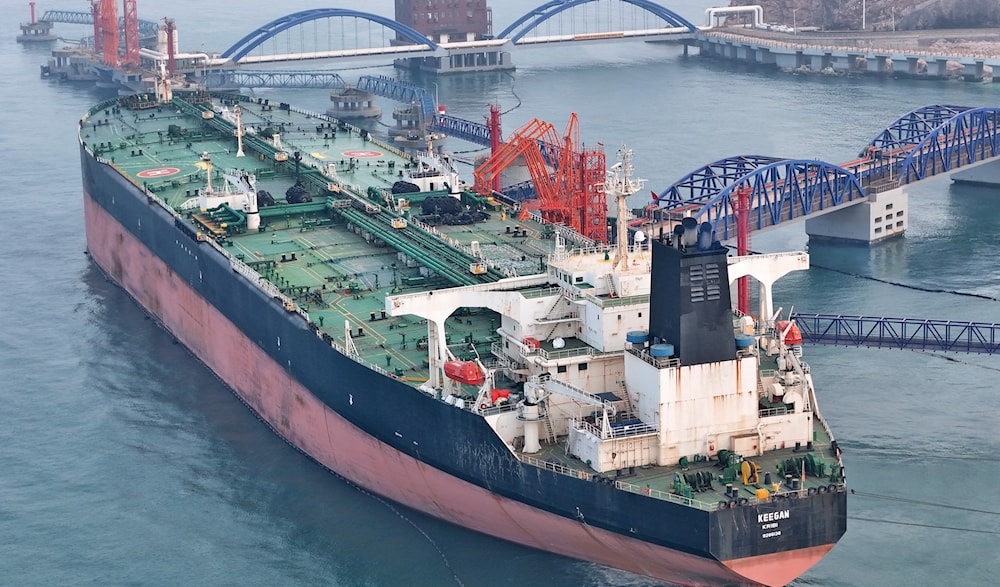
This picture taken on March 26, 2026, shows an oil tanker unloading crude oil at a port in Yantai, in China’s eastern Shandong province (Photo by CN-STR / AFP)
Aluminum prices climbed 5% at the opening of London trading on Monday after missile and drone strikes targeted industrial facilities across the Gulf region over the weekend, pushing the benchmark metal close to its highest levels since 2022.
The benchmark price for aluminum rose to $3,450/ton in London following reported damage to two of the Gulf's most significant production sites, namely the Abu Dhabi facility of Emirates Global Aluminium (EGA), one of the world's largest aluminum producers, and Alba, a smelter in Bahrain, both of which sustained damage in Iranian strikes over the weekend.
The Gulf region accounts for nearly 10% of global refined aluminum production. The metal is a critical industrial input used in packaging, automotive manufacturing, and a broad range of other industries, making supply disruptions from the region a significant concern for global markets.
Crude oil prices also rose by 3% at the opening of trading. The renewed energy cost increase has amplified concerns over global inflation, a trend already reflected in government bond yields, which have climbed noticeably over the past month in anticipation of interest rate hikes by major central banks.
Saudi crude pricing mechanisms under strain
The war has also thrown traditional Saudi crude pricing mechanisms into disarray, as anxious buyers in Asia push the kingdom toward alternative supply arrangements amid rising prices, according to traders familiar with the matter cited by Bloomberg.
Saudi Aramco is currently finalizing official selling prices (OSPs) for May shipments, expected to be released to buyers within days. Based on the standard regional benchmark system, traders anticipate the premium for Arab Light crude, Aramco's flagship grade, could surge to an unprecedented $40 per barrel, compared to just $2.50 for April shipments.
The highest premium Aramco has previously set for Arab Light bound for Asia was $9.80 per barrel, recorded in August 2022.
Aramco's OSPs are typically set as a differential to a benchmark composed of S&P Global's assessed Dubai price and Oman crude futures traded on the Dubai Mercantile Exchange. However, traders said some Asian refiners have already requested a shift to Brent futures pricing, with other alternatives proposed, including Shanghai futures prices, adjusted for shipping costs, and references to the UAE's Upper Zakum crude grade.
Hormuz closure compounds supply concerns
Flows of other Aramco grades, Arab Extra Light, Arab Medium, and Arab Heavy, have nearly halted due to the effective closure of the Strait of Hormuz. While the Yanbu pipeline, which links eastern Saudi Arabia to Red Sea export terminals, offers an alternative route, it is limited to carrying Arab Light crude and cannot fully compensate for Hormuz-related losses.
As a result, Saudi oil sales to China and India, its two largest Asian buyers, are expected to fall below normal levels, further tightening an already strained global supply picture.
Traders said discussions between Aramco and its clients remain ongoing, with no final pricing decisions reached. They warned that should premiums be set near $40 per barrel, a significant drop in purchases would likely follow.


