
BRICS financial alternatives no longer a 'fantasy', economist says
 5 Min Read
Jim O’Neill, the economist who coined the BRIC acronym, says advances in payment technology have made BRICS efforts to build alternatives to the US dollar more realistic.
-
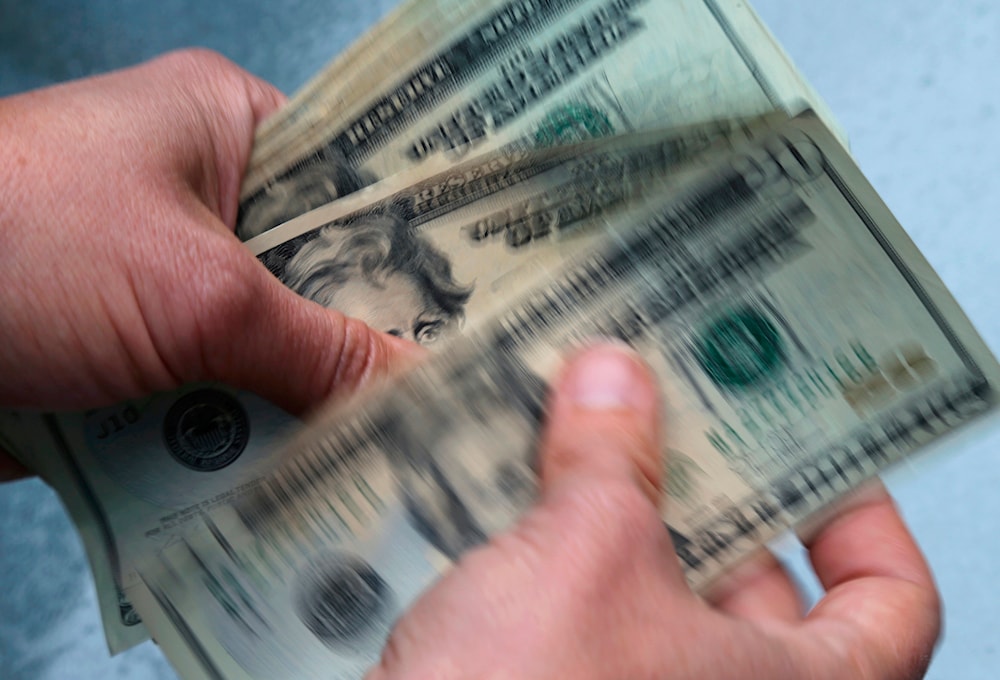
FILE- In this June 15, 2018, file photo, twenty-dollar bills are counted in North Andover, Mass. (AP)
The economist who coined the BRIC acronym said emerging economies may now have a more realistic path toward building financial mechanisms outside the US dollar system, arguing that recent advances in payment technology have made what once seemed unrealistic more plausible.
Jim O’Neill, a former Goldman Sachs economist, told Reuters that the idea of BRICS nations developing an alternative financial arrangement had appeared highly unlikely until recently. But he said progress in digital payments and financial infrastructure has led him to rethink that view.
"About 18 months ago, if you would have quizzed me about all of this, I would have said it's a fantasy, the idea that the BRICS countries can create some kind of alternative financial vehicle," O’Neill said.
Dollar dominance and an uncertain future
He tied his earlier skepticism to the dollar’s long-standing dominance in the international monetary system, particularly after the collapse in the 1970s of the Bretton Woods framework that had shaped global finance for decades.
"Who knows quite what the monetary system will be in the future?" he added.
His remarks come as de-dollarization has become a growing goal for several emerging economies, particularly those seeking to reduce their exposure to US financial pressure, sanctions, and dollar-based trade systems.
The shift, however, remains gradual and uneven. IMF data showed that the dollar still accounted for 57.13% of official foreign exchange reserves in the first quarter of 2026, up from 56.42% in the previous quarter, underscoring its continued dominance. But the broader trend has been toward diversification, with gold gaining a larger role in official reserves and central banks increasingly seeking assets outside the US financial system.
A 2026 World Gold Council survey found that 74% of central bank respondents expected lower US dollar holdings in global reserves over the next five years, while most expected gold to take up a larger share. The trend has been reinforced by years of heavy central bank gold purchases, particularly among countries looking to hedge against geopolitical risk and financial pressure.
Still, the dollar remains deeply entrenched in global finance. The Bank for International Settlements said the US currency was on one side of 89.2% of all foreign exchange trades in April 2025, showing that no rival currency is close to displacing it in global markets.
Symbolism versus concrete results
O’Neill said BRICS has become a powerful political symbol, especially for countries seeking a stronger voice for the Global South. However, he argued that the bloc has struggled to turn that symbolism into concrete results.
"The symbolism is really powerful," O’Neill said. "But in terms of achieving specific things, with the honourable exception of creating the New Development Bank, I'm struggling to think of another thing."
Exploring alternatives to dollar-based systems
BRICS members have been discussing several possible tools to reduce reliance on dollar-centered systems. These include the BRICS Pay initiative, closer coordination among national payment platforms such as India’s UPI, China’s CIPS, and Brazil’s PIX, as well as the possible future use of central bank digital currencies.
Those efforts reflect a wider push by emerging economies to reduce dependence on Western-controlled financial channels. For many countries, the issue is not only monetary but also political: the freezing of foreign reserves, sanctions, trade restrictions, and the use of dollar-based systems as instruments of pressure have pushed governments to search for alternatives.
At the same time, new payment technologies have made those alternatives more technically feasible. Instant payment systems, domestic settlement networks, central bank digital currencies, and blockchain-based tools have opened space for cross-border payment arrangements that do not rely as heavily on traditional dollar-based infrastructure.
The bloc began with Brazil, Russia, India, and China, which held their first summit in 2009, before South Africa joined the following year. It has since expanded into BRICS+, bringing in countries including Egypt, Ethiopia, Indonesia, Iran, and the United Arab Emirates.
Expanding influence and future cooperation
O’Neill has also co-founded BRICS+ Thinking with Gemma Chenger Deng, a nonprofit policy platform intended to support research and dialogue between Western countries and BRICS+ members. Backed by seed funding from O’Neill, the platform plans to publish its own indexes and growth forecasts for BRICS+ economies.
Deng said the initiative will focus on issues that require international cooperation, including climate change, energy transition, global health, and artificial intelligence governance.
"It's really to look at issues that are genuinely global, that would affect all of us — and it would be disastrous if we don't work together," she said.
O’Neill said the growing political attention around BRICS reflects the bloc’s rising visibility, particularly in Washington.
"I joke that I never recall any American presidents of the preceding 25 years even mentioning the BRICS. And Donald Trump can't shut up about them."
Read more: USD to stay dominant despite de-dollarization: Expert to Al Mayadeen


