
Crisis is here: US oil execs warn fuel buffers running dangerously low
 6 Min Read
Oil executives warn of a deepening fuel crisis as attacks disrupt energy infrastructure and crude prices approach $101 a barrel.
-
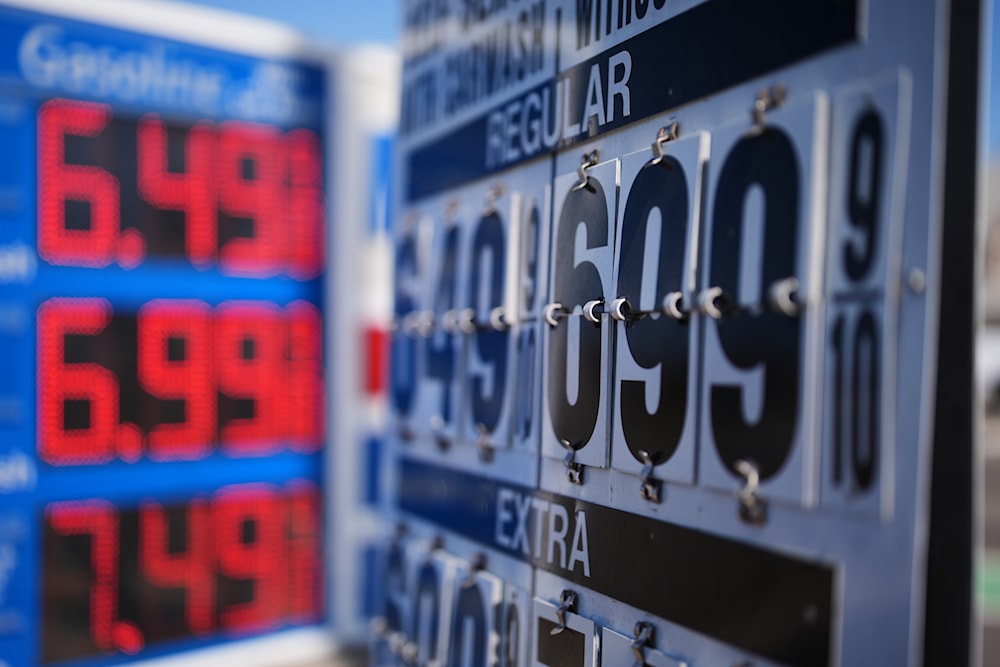
Gas prices are displayed in front of a gas station, Thursday, Sept. 10, 2026, in Carlsbad, Calif. (AP)
US oil executives are warning that the prolonged disruption to global energy flows has entered a more severe phase, with fuel inventories being depleted and fewer buffers available to absorb further shocks, The Wall Street Journal reported.
Chevron CEO Mike Wirth said the mechanisms that had helped cushion the oil market from the effects of the prolonged closure of the Strait of Hormuz have largely been exhausted, leaving global supplies increasingly exposed to further disruptions.
“All these mechanisms helped to mitigate the price and supply risk,” Wirth said Friday at an energy conference in Austin, Texas, as reported by The Wall Street Journal. “Those have largely now played out, and we don’t have nearly the buffers in the system that we did when it began.”
Wirth said it was difficult to predict how high oil prices could rise, but indicated that a rapid return to lower prices appeared unlikely.
“I wish I could tell you that I saw some reason why things would ease, but it’s difficult right now to see that happen,” he said.
The warning comes as attacks on energy infrastructure and shipping routes across the region have compounded an already strained global market. Analysts estimate that damage to a Saudi pipeline that provides an alternative route around the Strait of Hormuz has stranded at least 2.5 million barrels of crude per day.
Fuel prices climb as supplies tighten
The disruption is increasingly being felt by consumers, with diesel prices reaching a record $6.23 a gallon and gasoline climbing back to $4.32 after falling below $4 earlier this summer.
Energy advisors have warned that continued fighting could push the market into a deeper supply crisis, while investors are increasingly questioning how high fuel prices could affect consumer demand.
Diesel supplies are particularly constrained due to refinery outages linked to conflicts in the Middle East and Russia. Demand is also expected to rise as farmers enter the harvest season, increasing pressure on an already tight market.
“Diesel has no easy solution,” said Dan Pickering, founder of Pickering Energy Partners, as per the WSJ.
US crude prices have risen 19% over the past three weeks to around $101 a barrel as attacks affecting energy infrastructure and shipping have multiplied.
China, meanwhile, has begun purchasing more crude from international markets after relying heavily on domestic stockpiles for months. Analysts say the shift has removed another source of relief for global oil supplies.
Washington insists disruption is temporary
The worsening market conditions contrast with repeated assurances from the Trump administration that the disruption will be temporary and that energy supplies from West Asia will continue to increase.
US Interior Secretary Doug Burgum told reporters at a G20 energy event in Houston on Monday that the current price shock was temporary, while also blaming the previous administration's policies for higher energy costs.
“If you want to write about the prices, make sure you include the word ‘temporary’ because this is a temporary disruption,” Burgum said.
The White House has identified increased Venezuelan oil production and expanded US refining capacity as two key measures for easing domestic fuel prices.
US officials have in recent months pursued agreements expected to increase Venezuela's oil output, while also meeting with US refining executives to discuss expanding domestic fuel-making capacity. A senior US official said the administration was satisfied with progress on both fronts.
Energy executives and administration officials have maintained regular discussions since the war began, with oil executives including Wirth in frequent contact with Energy Secretary Chris Wright.
According to WSJ, Wirth, however, said he had not spoken with President Donald Trump since August 3, when Trump publicly urged Chevron and other oil companies to lower retail fuel prices.
Oil industry had warned of prolonged crisis
The current supply crunch follows warnings from major US oil companies earlier this year.
In March, the CEOs of ExxonMobil, Chevron, and ConocoPhillips warned administration officials that a prolonged closure of the Strait of Hormuz could lead to shortages of refined petroleum products, including diesel.
Some executives have since expressed concern over the trajectory of the war, particularly as attacks on ships and energy infrastructure continue.
Wil VanLoh, founder and CEO of Quantum Capital Group, said Iran's willingness to endure prolonged pressure could complicate efforts to reach a quick resolution.
“The advantage in most negotiations usually goes to the side that has time on their side, and is willing to be patient,” VanLoh said at the Austin conference. “Iran is willing to suffer. Their people have already suffered a lot for many decades.”
The war has also affected alternative energy routes. Attacks have damaged Saudi Arabia's East-West pipeline, which transports crude from the Abqaiq oil field toward Yanbu al-Bahr on the Red Sea, further limiting options for bypassing the Strait.
Trump administration weighs response
The administration has ruled out sending US ground forces into the war while pledging to maintain economic pressure on Iran. Trump has also said he expects the war to continue until the November midterm elections, although some investors believe the war could last considerably longer.
Washington has also sought to discourage actions that could further disrupt global fuel supplies. Trump has reportedly called on Ukraine to halt attacks on Russia that he says threaten diesel supplies.
At the same time, Burgum rejected reports that the administration was seriously considering temporarily restricting US exports of refined petroleum products such as diesel.
“We will do anything that helps the price at home,” Burgum said. “But we’re also going to be smart about it, and not just have some idea that if we stop exporting, that somehow magically is going to help the prices.”
With commercial inventories continuing to fall and alternative supply routes facing disruption, oil executives are increasingly warning that the global market has far less capacity to absorb another major shock.
Read more: US war on Iran: A failure growing harder to conceal: Israeli media


