
EU eyes expanding Russia sanctions to include third-country ports
 2 Min Read
EU plans new sanctions on Russian oil refineries, ports in Georgia and Indonesia, and banks in Central Asia.
-
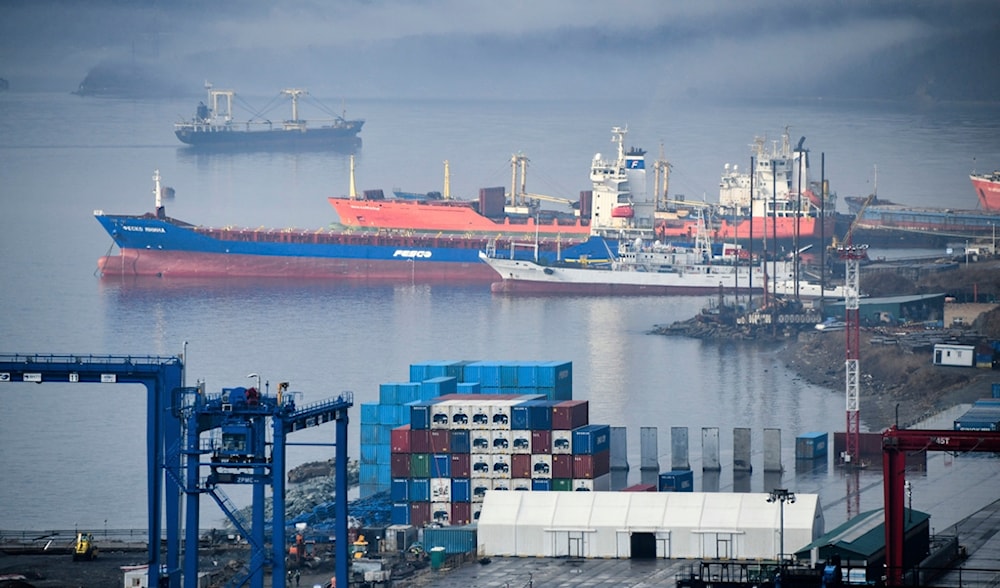
The container terminal at the Commercial Sea Port in the Pacific city of Vladivostok, east of Moscow, Russia, is seen on Monday, April 7, 2025. (AP)
The European Union is reportedly preparing to expand its sanctions regime against Russia, targeting ports in third countries for the first time, according to a Reuters report citing a leaked EU document.
The proposal includes sanctions on the Kulevi port terminal in Georgia and Karimun port in Indonesia, marking a significant shift in Brussels’ approach to enforcing restrictions on Russian-linked logistics and trade routes.
In a parallel move, the EU is also considering adjustments to its financial blacklist, removing two Chinese banks, while adding institutions from Laos, Tajikistan, and Kyrgyzstan, the document reportedly states.
In late January, Bloomberg reported that the next EU sanctions package might include additional restrictions on Russian oil companies, banks, and even financial institutions in third countries. Furthermore, the EU is reportedly preparing to apply, for the first time, a mechanism targeting alleged sanctions circumvention, specifically focused on equipment exports to Kyrgyzstan, which Brussels suspects may be rerouted to Russia.
The reported proposals reflect growing frustration within the EU over sanctions loopholes and pressure from some member states to tighten enforcement amid ongoing tensions with Moscow.
Russian refineries, key commodities targeted
In a related measure, the EU proposes to add eight Russian oil refineries to its sanctions list as part of the bloc’s 20th sanctions package against Moscow. The list reportedly includes a facility located in Tuapse, on Russia’s Black Sea coast.
According to Reuters, the expanded sanctions package also aims to ban the import of various materials and resources, including salt, ammonia, pebbles, silicon, and fur, further tightening economic pressure on Russia.
The proposed additions and changes are still under discussion among EU member states and have not yet been formally adopted.
Read more: EU mulls replacing Russian oil price cap with ban on maritime services


