
EU to subsidize farmers and hauliers as Iran war drives energy shock
 3 Min Read
The EU will subsidise up to 70% of rising fuel and fertiliser costs linked to the Iran war, offering emergency aid to farmers, hauliers, and fishing firms across Europe.
-
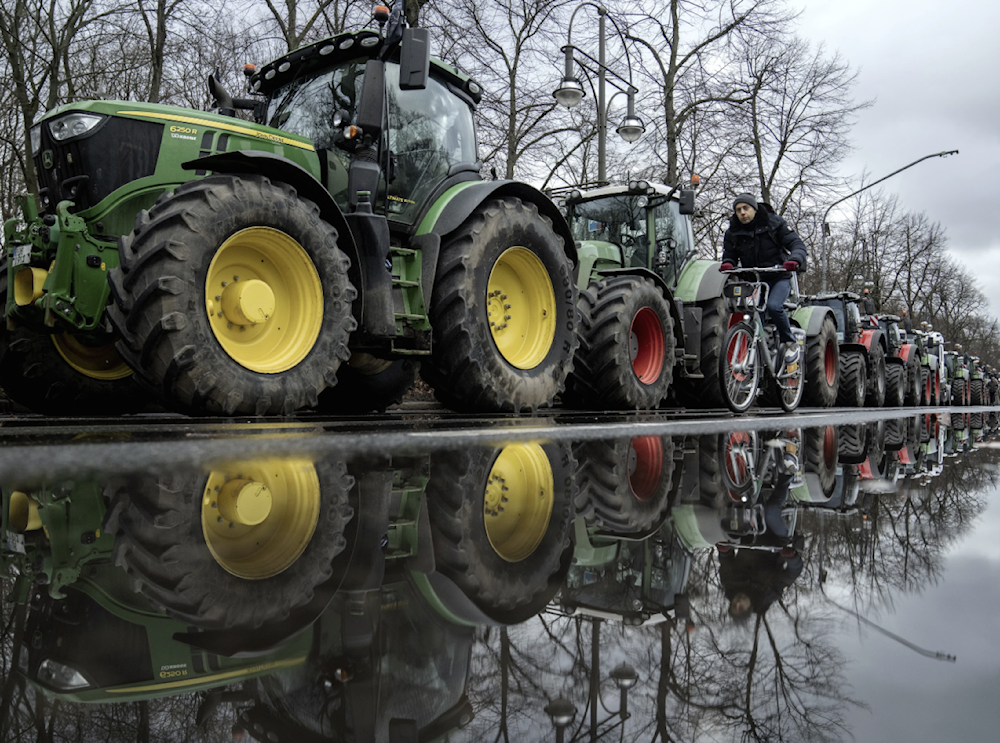
Farmers place their tractors at the government district in Berlin, Germany, Monday, Jan. 15, 2024, ahead of a demonstration. (AP)
The European Union has announced emergency subsidies to offset surging fuel and fertiliser costs linked to the ongoing war involving Iran, in a move aimed at shielding farmers, hauliers, and fishing businesses from rising energy prices.
Under the new measures, individual companies will be able to claim up to €50,000 in support between now and the end of the year, with reduced administrative requirements intended to speed up access to funds.
The EU said it will cover up to 70% of additional costs linked to fuel and fertiliser price increases for eligible sectors, including agriculture, fisheries, road transport, rail, inland waterways, and short-sea shipping within the bloc.
Energy-intensive industries such as steel and chemicals will also be eligible for support, with subsidies covering up to 70% of increased electricity costs.
Energy shock linked to Iran war disruption
European Commission Vice-President Teresa Ribera said the measures could determine whether some businesses survive the economic shock.
“I want to reassure European citizens, national governments, and European institutions are monitoring and are ready to react in cases when it is needed,” she said.
Oil and gas prices surged following the US-Israeli war on Iran, with fertiliser costs rising sharply as supply chains were disrupted, including through constraints on urea exports and pressure on shipping routes in the Strait of Hormuz.
According to market data cited in the report, fertiliser prices jumped by 61% in March alone, intensifying pressure on food production and transport sectors across Europe.
Corporate profits and political backlash
At the same time, major energy firms have reported significant profit increases during the crisis. French multinational TotalEnergies said its net profit rose 51% in the first quarter to $5.8bn, triggering criticism from politicians and civil society groups.
French Prime Minister Sébastien Lecornu called for the company to redistribute part of its war-driven gains, saying it should act “in the most effective and rapid way possible.”
Campaign groups accused fossil fuel companies of benefiting from geopolitical instability while consumers face rising costs at the pump.
The EU described the initiative as a temporary “crisis response” framework, designed to stabilise exposed sectors while energy markets remain volatile.
Officials warned that even if a diplomatic breakthrough is reached, elevated oil and gas prices could persist for months due to supply disruptions and infrastructure damage in key energy-producing regions.
The European Commission said the support package will remain in place until the end of the year, but did not rule out further intervention depending on market conditions.


