
First in nearly three decades: US, Japan move to shore up yen
 3 Min Read
The US and Japan reportedly intervened to support the yen after it fell to its weakest level since 1986 amid rate gaps and market pressure.
-
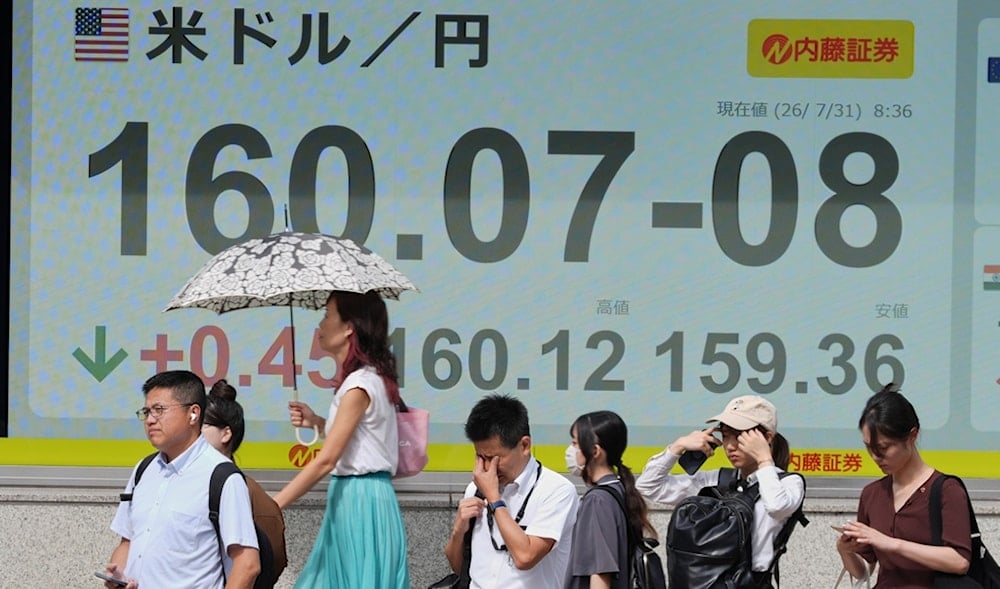
People stand in front of the electronic board showing Japanese Yen and U.S. Dollar exchange rate at a securities firm Friday, July 31, 2026. (AP)
The United States and Japan reportedly carried out a joint intervention to support the Japanese yen after the currency fell to its weakest level in decades, marking the first coordinated effort between Washington and Tokyo to shore up the yen in nearly 30 years.
According to the Financial Times, the intervention came after the yen dropped to 163.24 per dollar last month, its lowest level since 1986, as higher US interest rates, rising oil prices, and continued capital outflows placed pressure on the currency.
The newspaper reported, citing people familiar with the matter, that the Federal Reserve Bank of New York took the unusual step of selling euros to buy yen on behalf of the US Treasury.
The transactions were reportedly conducted through Goldman Sachs and Morgan Stanley, according to the Financial Times.
Yen weakness targeted
Washington's move came as the yen rebounded sharply last week, fueling speculation that Japanese authorities had also intervened in foreign exchange markets.
The yen was trading at 160.53 against the dollar on Friday, after strengthening to as high as 158 yen a day earlier.
"Whether Tokyo was actually involved remains unclear, but the price action had all the familiar fingerprints," Stephen Innes at SPI Asset Management wrote in a comment.
Analysts cited by the Financial Times estimated that Japan's intervention may have reached around 8.45 trillion yen ($52.8 billion), while Japan's Nikkei business daily estimated the figure at between 6 trillion and 7 trillion yen.
According to the Financial Times, the reported move would represent the first coordinated US-Japan effort to support the yen since 1998.
Interest rate gap drives pressure on Japanese yen
While rising oil prices and concerns over debt levels have contributed to the yen's decline, a major factor behind the currency's weakness has been the wide gap between interest rates in Japan and the United States and other major economies.
The difference in rates has encouraged investors to borrow cheaply in yen and invest in assets outside Japan that offer higher returns, a strategy known as the "carry trade."
The practice has contributed to capital outflows from Japan and increased downward pressure on the Japanese currency.
Markets are now closely watching the Federal Reserve's policy outlook, with growing expectations that US interest rates could rise again before the end of the year, potentially widening the gap further and adding more pressure on the yen.
Read more: Japan, South Korea prop up yen, won amid US coordination


