
US dollar falls as inflation data cools Fed rate hike expectations
 4 Min Read
The US dollar slips against major currencies after inflation data met forecasts, prompting traders to scale back Federal Reserve interest rate hike expectations.
-
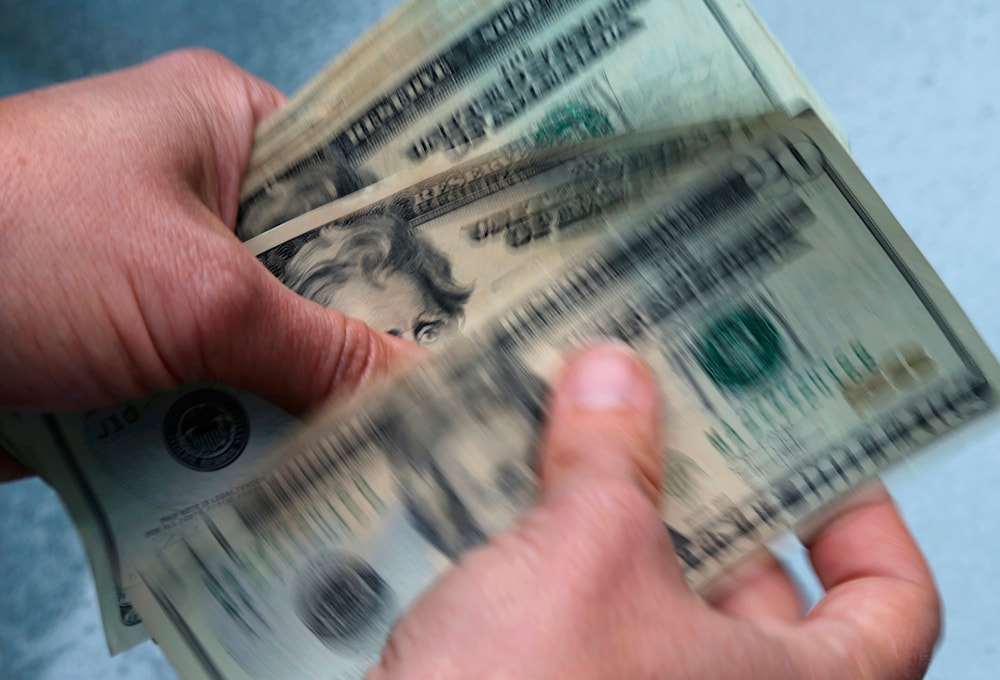
In this June 15, 2018, file photo, twenty dollar bills are counted in North Andover, Mass (AP)
The US dollar was on track to break a three-session winning streak on Thursday, retreating against major peers after a fresh batch of economic data showed inflation rising in line with expectations, prompting markets to trim bets on aggressive interest rate hikes from the Federal Reserve this year.
The dollar index, which measures the greenback against a basket of six rival currencies, fell 0.19% to 101.41, poised for its biggest daily percentage drop in two weeks.
The euro gained 0.16% to $1.1375, while sterling strengthened 0.25% to $1.3196, snapping a string of declines that followed Prime Minister Keir Starmer’s resignation on Monday.
Inflation matches forecasts, spending defies expectations
The Commerce Department reported that the personal consumption expenditures (PCE) price index, the Fed’s preferred inflation gauge, surged 4.1% in the 12 months through May, marking the largest annual increase and the first reading above 4.0% since April 2023. The figure matched economists’ forecasts in a Reuters poll.
On a monthly basis, the PCE rose 0.4%, just below the 0.5% estimate. Yet even with prices remaining elevated, consumer spending proved unexpectedly robust, climbing 0.7% in May from 0.4% in April and surpassing the 0.6% consensus forecast.
“The worst of inflation and consumer angst may be mostly behind us,” said Brian Jacobsen, chief economist at Annex Wealth Management in Menomonee Falls, Wisconsin. “Inflation expectations are tied more to the price at the pump than the price of microchips and memory. As long as gasoline prices trend lower, inflation expectations will likely follow suit.”
Rate-hike odds ease after run of dollar strength
The greenback had risen in five of the previous six sessions, touching a 13-month peak on Wednesday, as expectations for Fed rate hikes had grown. However, following Thursday’s data, markets priced in a roughly 30% chance of a 25-basis-point hike at the central bank’s July meeting, down from 34.2% in the prior session, according to CME FedWatch. Expectations for a September move dipped to 62.1% from 65.7%.
Chicago Federal Reserve President Austan Goolsbee acknowledged a “glimmer of hope” on services inflation in the latest report but warned that underlying price pressures remain too high and are moving in the wrong direction.
In separate data, the Commerce Department revised first-quarter gross domestic product growth up to a 2.1% annualized rate, from the previously reported 1.6% pace. However, consumer spending growth for the quarter was slashed to a 0.5% rate from the prior 1.4%.
Meanwhile, the Labor Department reported that weekly initial jobless claims fell by 12,000 to a seasonally adjusted 215,000, coming in below the 225,000 forecast and underscoring continued tightness in the labor market.
Yen under pressure as BOJ hawk talks, government signals caution
Against the Japanese yen, the dollar edged up 0.01% to 161.79. A break above 161.96 would leave the yen at its weakest level since 1986.
Hawkish Bank of Japan board member Naoki Tamura said the central bank should raise interest rates once every few months and stand ready to accelerate the pace of hikes, citing inflationary risks from the Middle East conflict. However, a draft of Japan’s long-term economic blueprint, reviewed by Reuters, called for monetary policy that bolsters private demand, signaling a preference for keeping borrowing costs low and setting up potential policy tensions with the BOJ.
Recent dollar strength has weighed on commodities and risk assets, pushing gold briefly below $4,000 an ounce for the first time in over seven months and bitcoin below $60,000 for the first time since early June.
Analysts at Societe Generale said they “believe markets should look through the announcement at this stage, although fiscal risks are being delayed rather than eliminated and are likely to become a more important theme over time.”


