
Hormuz reopening drops US gas prices below $4 in first since April
 4 Min Read
US gasoline prices fell below $4 a gallon for the first time since April as oil prices declined on optimism over a US-Iran memorandum and the potential reopening of the Strait of Hormuz.
-
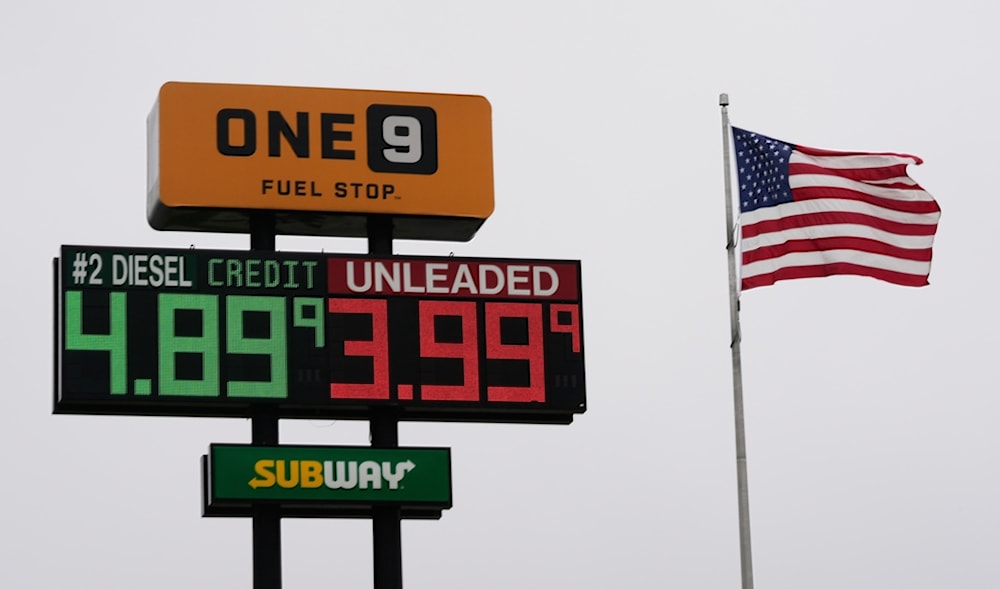
The American Flag flies next to a One9 Fuel Stop sign displaying gas prices for diesel and unleaded gas in Wilmington, Ohio, Wednesday, June 10, 2026. (AP)
US average retail gasoline prices fell below $4 a gallon for the first time since mid-April, driven by declining oil prices and growing optimism that the US-Iran memorandum of understanding could pave the way for reopening the Strait of Hormuz.
According to GasBuddy data, the national average price of gasoline dipped to $3.997 per gallon on Sunday, slipping below the psychologically important $4 threshold. The average price stood at $4.065 per gallon on Monday, according to the American Automobile Association, though prices remain 90.8 cents higher than a year ago.
Crude oil prices dropped by more than $4 a barrel on Monday after US President Donald Trump claimed that Washington and Tehran had signed a memorandum of understanding aimed at ending a nearly four-month war.
Consumers gain relief as fuel prices ease
The decline in gasoline prices could offer some relief to the Trump administration, which has pledged to lower energy costs for consumers. Trump and Republican lawmakers, who are seeking to defend narrow majorities in both chambers of Congress in November's midterm elections, have faced criticism over rising fuel prices.
Analysts consider the $4-per-gallon mark a key psychological threshold at which some consumers begin changing their behavior, including reducing fuel consumption. GasBuddy head of petroleum analysis Patrick De Haan said further declines are possible if relations between the US and Iran continue improving.
"The real test now shifts to the Strait of Hormuz, where any reopening and resumption of normal oil flows would be the clearest signal that this relief is durable," De Haan said. "For now, the national average could continue falling, provided there isn't a drastic reversal and the US and Iran continue moving in a positive direction."
Strait of Hormuz reopening could take weeks
Trump said the text of the memorandum would be released following a formal signing ceremony on Friday and that the Strait of Hormuz would be fully reopened. However, experts caution that restoring normal shipping conditions could take weeks, citing the potential presence of naval mines.
Since the war on Iran began, Americans have collectively spent around $46 billion more on gasoline, according to De Haan. Fuel prices surged above $4 per gallon in late March after Iran took control of the Strait of Hormuz and Washington announced a complete naval blockade of the waterway.
Higher fuel costs contributed to inflationary pressures, with consumer inflation rising above 4% in May for the first time in three years. More recently, easing gasoline prices have helped moderate consumers' inflation expectations.
Supply risks could reverse the decline
Analysts warn that the recent relief in fuel prices remains fragile. SEB chief commodities analyst Bjarne Schieldrop said unresolved details in the US-Iran memorandum could still derail the agreement.
Meanwhile, the US gasoline market faces tightening supplies. Government data showed gasoline inventories fell to 215.1 million barrels in the first week of June, their lowest seasonal level in a decade, amid resilient domestic demand and strong fuel exports.
Tom Kloza, chief energy adviser at Gulf Oil, warned that the reprieve could prove short-lived if substantial progress is not made in clearing the Strait of Hormuz, restoring insurance coverage for vessels and curbing regional tensions.
Shipping firms wary of Strait of Hormuz security
Currently, shipowners remain cautiously optimistic about the security situation in the Strait of Hormuz, according to reports.
Politico, citing the association of independent tanker owners INTERTANKO, said shipowners are continuing to assess risks in the strategic waterway, including concerns over the possible presence of naval mines.
The association stressed that maritime operators are gathering updated security information as conditions in the region evolve.
Major shipping company Maersk welcomed the reported US–Iran understanding but said it had not made any changes to its operations in the region.
Read more: Iran secured last-minute concessions over Hormuz, Lebanon MoU clauses


