
Global leaders welcome US–Iran MoU, urge stability in Strait of Hormuz
 6 Min Read
Saudi Arabia, Kuwait and global leaders, including the UK, France, China and Germany, welcomed the US–Iran agreement, calling for stability in the Strait of Hormuz.
-
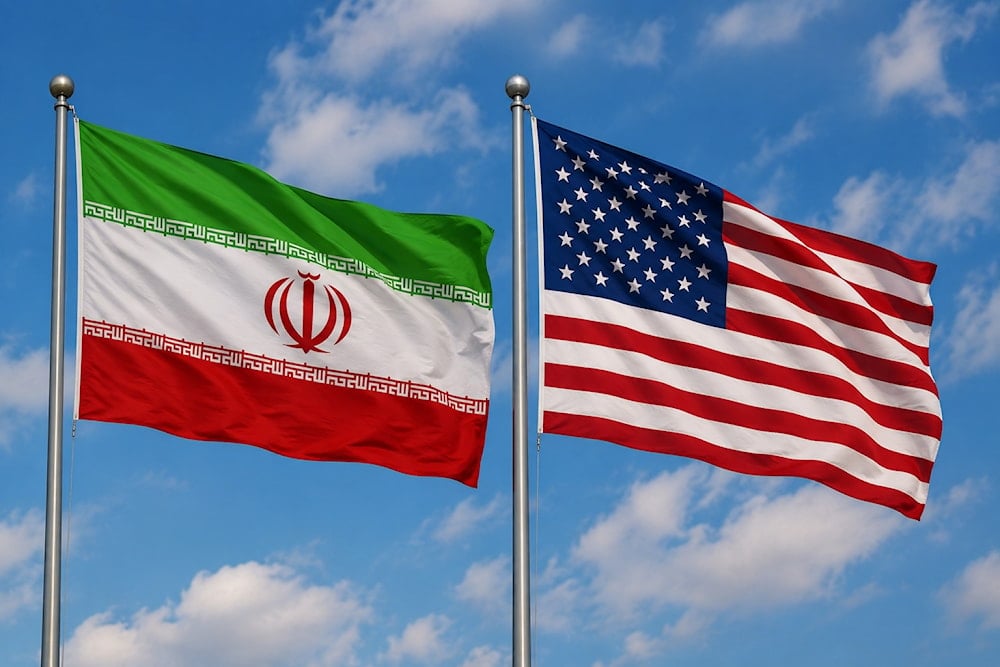
AI-generated illustration of the Iranian flag (L) and the United States flag (R). (Illustrated by: Al Mayadeen English)
A broad range of regional and global leaders have welcomed the agreement reached between the United States and Iran to end the US-Israeli war on Iran and to begin negotiations aimed at reaching a permanent settlement.
The agreement has triggered coordinated diplomatic responses across West Asia, Europe, and Asia, with a shared emphasis on de-escalation and maritime stability.
The US–Iran memorandum of understanding has triggered a wave of global reactions, with leaders from the UK, France, Qatar, the UN, and the EU all hailing it as a turning point, praising the role of mediators, especially Pakistan and Qatar, while warning that its success now… pic.twitter.com/qdqoMAhwPN
— Al Mayadeen English (@MayadeenEnglish) June 15, 2026
UN Secretary-General António Guterres welcomed the agreement, describing it as a significant step toward de-escalation. "I warmly congratulate the US & Iran for having reached a peace deal that provides for an immediate & permanent ceasefire, the reopening of the Strait of Hormuz, as well as a framework for further negotiations", Guterres said.
Gulf States Emphasize Security and Navigation
Saudi Arabia’s Ministry of Foreign Affairs also welcomed the agreement and described it as an important step toward reducing tensions. Riyadh stressed the need to restore security and ensure freedom of navigation in the Strait of Hormuz to pre-war conditions.
"The Kingdom of Saudi Arabia welcomes the agreement reached between the United States of America and the Islamic Republic of Iran to end military operations and begin detailed negotiations within 60 days with the aim of reaching a permanent agreement."
Saudi Arabia also praised the mediation efforts of Pakistan and Qatar, noting their role in facilitating dialogue between Washington and Tehran.
Qatar's PM Sheikh Mohammed bin Abdulrahman Al Thani
For his part, Qatar’s Prime Minister Sheikh Mohammed bin Abdulrahman Al Thani said that Qatar looks forward to constructive engagement in the upcoming negotiations.
“We look forward to all parties engaging in the forthcoming negotiations in a positive and constructive spirit that will help consolidate this progress and build upon it,” he said.
Kuwait MoFA welcomes agreement
Kuwait’s Ministry of Foreign Affairs welcomed the agreement, calling on all parties to approach the upcoming negotiations in a constructive and positive spirit, stressing the importance of strengthening regional cooperation and stability.
“The Ministry calls on all parties to engage in the upcoming negotiations in a positive and constructive spirit, thereby supporting efforts aimed at strengthening cooperation, consolidating stability, and achieving prosperity for the peoples of the region and the world,” it added.
Iraq MoFA expresses commitment to diplomatic solutions
For its part, Iraq’s Foreign Ministry reaffirmed its commitment to diplomatic solutions and opposition to war. It also expressed satisfaction with steps toward reopening maritime navigation in the Strait of Hormuz.
Western leaders call for rapid implementation
European leaders, including UK Prime Minister Keir Starmer, French President Emmanuel Macron, German Chancellor Friedrich Merz, and European Commission President Ursula von der Leyen, welcomed the agreement and called for swift implementation.
They stressed that the deal must be fully executed by all parties to ensure long-term stability and prevent renewed escalation.
German Chancellor Friedrich Merz welcomed the agreement and expressed his belief that this path could pave the way for a revitalized global economy and a safer West Asia region, and called for its diligent implementation.
Canada and Australia also expressed support for the agreement, emphasizing restraint, diplomacy, and continued engagement to avoid further escalation.
UK Prime Minister Keir Starmer
For his part, British Prime Minister Keir Starmer said attention must now focus on fully implementing the memorandum of understanding to ensure the Strait of Hormuz reopens and remains permanently open, as well as finalizing the details of the nuclear agreement.
"Attention must now turn to fully implementing the memorandum of understanding to ensure the Strait reopens and remains fully and permanently open, and that the detailed elements of the nuclear agreement are finalized", Starmer said.
"We stand ready to support the technical talks that will now begin".
French President Emmanuel Macron
French President Emmanuel Macron welcomed the agreement reached between the United States and Iran, calling for its swift and full implementation by all parties involved. "I welcome the agreement reached between the United States and Iran,” Macron said. “I call for its swift and full implementation by all parties to the conflict".
He added that France would continue to support efforts aimed at strengthening state institutions in Lebanon.
"France will also continue to lend its full support to the determined efforts of the Lebanese authorities to restore the sovereignty of the State, which alone is capable of ensuring Lebanon’s stability and territorial integrity and meeting the needs of its people. A robust and lasting ceasefire is essential to this end", he said.
President of the EU Commission Ursula von der Leyen
Von der Leyen also welcomed the agreement, stressing that "The priority now is its swift and full implementation by all parties. This agreement should allow for the immediate reopening of the Strait of Hormuz.
As the President of the European Commission, Ursula von der Leyen, welcomed the "agreement reached between the #US and #Iran, following sustained diplomatic efforts by several partners," she pointed to "broader negotiations on peace and security in the Middle East."
— Al Mayadeen English (@MayadeenEnglish) June 15, 2026
Von der… pic.twitter.com/mXMRolxYiD
And of course, there can be no peace in the Middle East while Lebanon is in flames. Once again, Europe calls on all parties to respect Lebanon's sovereignty and territorial integrity and implement a genuine ceasefire".
Turkish Foreign Minister Hakan Fidan
Turkish Foreign Minister Hakan Fidan welcomed the agreement and stressed the importance of maintaining a cautious and responsible approach to ensure its success.
"All relevant countries demonstrate a prudent and responsible attitude to prevent any attempts to sabotage the agreement and to safeguard regional peace and security", Fidan said.
China
China’s Foreign Ministry welcomed the memorandum of understanding and highlighted the strategic importance of the Strait of Hormuz for global energy and trade flows, calling for continued international cooperation to maintain stability.
Strait of Hormuz remains central focus
Across all reactions, the Strait of Hormuz remains a key concern due to its strategic importance in global energy and maritime trade. Leaders broadly agreed that ensuring safe navigation and stability in the waterway is essential for regional security and the global economy.
On that note, an informed source has divulged that the reopening of the Strait of Hormuz is expected to begin after Friday, following the signing of a memorandum of understanding, Tasnim reported on Sunday.
Iran's Supreme National Security Council said it finalized a memorandum of understanding with the United States on June 14 regarding the end-of-war negotiations, referred to as the Islamabad talks. Key points are that military operations on all fronts, including Lebanon, are to cease immediately and permanently from tonight, according to the statement.
Additionally, the naval blockade imposed on Iran will be lifted immediately. The memorandum is scheduled to be formally signed on Friday, June 19. Talks on a final comprehensive agreement will be postponed until the other side fulfills its commitments under the memorandum.


