
India raises $40.8bln from diaspora as war on Iran pressures rupee
 6 Min Read
India has drawn $40.8 billion from its diaspora to support the rupee and ease financial pressure caused by rising energy costs amid the war on Iran.
-
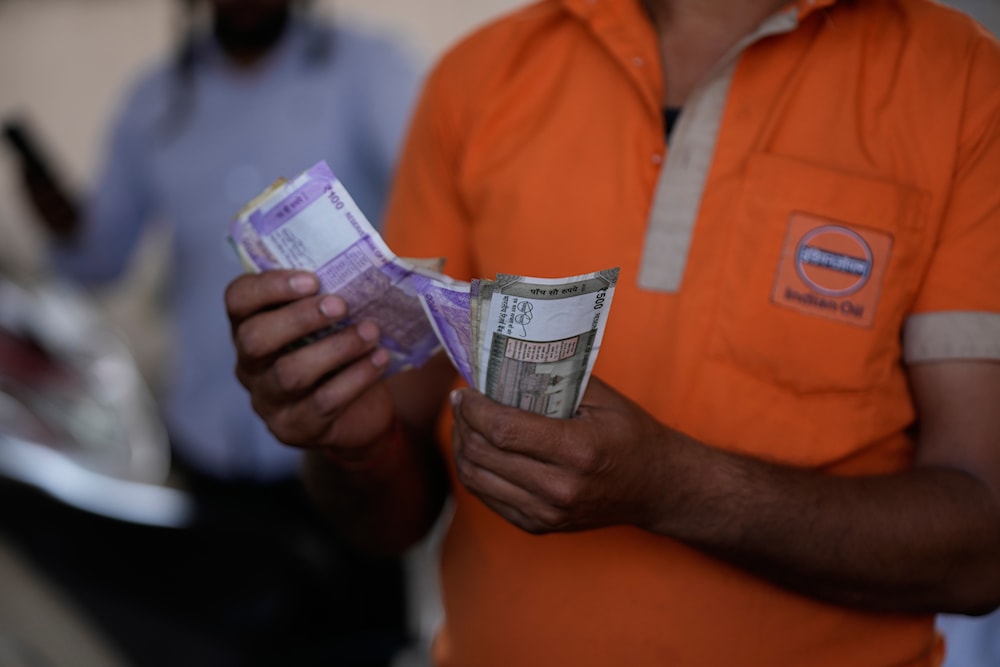
An employee counts Indian rupees while refueling a motorbike at a filling station in Jammu, India, Friday, May 15, 2026 (AP)
India has attracted more than $40 billion from citizens living abroad as authorities seek to protect the rupee and rebuild foreign currency buffers depleted by soaring energy costs resulting from the US-led aggression on Iran, the Financial Times reported.
The Reserve Bank of India said $40.8 billion had entered the country since it introduced a special fundraising campaign in June targeting India’s vast overseas population. The initiative marks only the sixth time since 1990 that New Delhi has turned to its diaspora during a period of external financial pressure.
The mobilization comes as India, one of the world’s largest importers of Gulf oil, faces a growing energy bill caused by the war on Iran. The rupee has lost around 6% against the dollar since the beginning of the year, placing it among Asia’s weakest-performing currencies.
India is also heading toward a balance-of-payments deficit for the third consecutive fiscal year, increasing pressure on the central bank to secure additional sources of foreign exchange.
Banks intensify diaspora outreach
The size of the inflows exceeded economists’ projections after Finance Minister Nirmala Sitharaman called on state-owned banks last month to expand their efforts to attract deposits from Indians living overseas.
Banks have offered higher savings returns and allowed customers to borrow substantial amounts against their deposits, making the program especially attractive to wealthy members of the diaspora.
“This is much higher than what we expected,” Bank of Baroda chief economist Madan Sabnavis said.
Sabnavis estimated that the total could “move towards” $60 billion by September, equivalent to nearly 10% of India’s existing foreign exchange reserves.
“A large part of this is due to the leverage that has been allowed, with some banks offering up to 19 times the size of the initial deposit,” he said. “This explains why the numbers have been high, besides the very attractive rates being offered by banks.”
Most of the funds were collected through the RBI’s foreign currency non-resident deposit program, which is scheduled to remain available until the end of September.
Under the program, the central bank assumes the cost of protecting banks against currency fluctuations, enabling lenders to offer overseas Indians more competitive interest rates.
India also raised slightly more than $4 billion through foreign currency swap arrangements linked to external commercial borrowing and overseas borrowing. Those facilities will remain open until the end of 2026.
RBI gains room before policy decision
The inflows have provided RBI Governor Sanjay Malhotra with additional flexibility ahead of Wednesday’s monetary policy announcement.
Economists broadly expect the central bank to leave interest rates unchanged, despite annual inflation reaching an 18-month high of 4.4% in June following the government’s decision to raise retail fuel prices.
The central bank may use the newly mobilized dollars to strengthen its balance sheet, manage domestic liquidity, and reduce pressure caused by the rupee’s decline.
However, analysts noted that the funds have not yet produced an equivalent increase in India’s official reserves, suggesting that the RBI may already be using part of the money to support the currency or close out its substantial short-dollar position.
India’s reserves have fallen by a net $46 billion since the United States and “Israel” launched their aggression on Iran at the end of February.
They stood at $682 billion on July 24 after increasing by almost $10 billion from mid-June, when US President Donald Trump announced a fragile memorandum of understanding with Tehran. The arrangement later collapsed following renewed US attacks and another escalation in the war on Iran.
Larger diaspora expands funding base
India has previously relied on overseas citizens during periods of economic vulnerability.
The government first sought emergency diaspora funding during the 1991 balance-of-payments crisis, which forced India to introduce sweeping economic reforms. The strategy was last used in 2013, when approximately $34 billion was raised to counter capital flight during the US Federal Reserve’s so-called taper tantrum.
Nomura chief economist for India and Asia ex-Japan Sonal Varma said India’s diaspora had grown by around 70% since 2013 to approximately 37 million people.
India now has “a bigger pool of wealth” from which to draw, she said, estimating that the current program could eventually raise as much as $90 billion.
The larger overseas population, combined with preferential rates and bank leverage, has helped New Delhi secure funds more rapidly than during previous campaigns.
Temporary relief does not resolve structural pressures
Despite the strong response, economists cautioned that the program has not yet guaranteed lasting stability for the rupee or India’s foreign exchange reserves.
Pantheon Economics chief emerging Asia economist Miguel Chanco said “the jury was still out” on the initiative, noting that the rupee had “traded mostly sideways” since June.
“The authorities were also quite lucky in terms of timing, as the scheme was introduced around the same time that the US-Iran MoU was being finalised, which eventually sent oil prices crashing to the benefit of India’s balance of payments picture,” Chanco said.
The “ultimate test", he added, would be whether the campaign succeeds in preventing a further decline in the country’s reserves.
Goldman Sachs chief India economist Santanu Sengupta said the RBI was expected to absorb the dollars gradually onto its balance sheet while carefully introducing additional rupee liquidity into the banking system.
He previously argued that the funds were unlikely to be released directly into the spot foreign exchange market, limiting their immediate effect on the rupee’s market value.
Varma similarly said the short-term inflows had provided the RBI with “breathing room” but would not resolve India’s deeper balance-of-payments vulnerabilities, particularly its dependence on imported energy and exposure to volatile global capital.
“You could argue that in the absence of this scheme, the pressure would have been a lot more,” she said.
“This period has to be used to figure out more of a medium-term strategy on dealing with the new reality,” Varma added, “where capital flow is more volatile and where oil prices are susceptible to extreme volatility.”
Read more: US went after Iran 'nukes', met with ‘more powerful weapon': Newsweek


