
US went after Iran 'nukes', met with ‘more powerful weapon': Newsweek
 8 Min Read
Iran's control over the Strait of Hormuz has emerged as a powerful asymmetric tool that disrupts global trade, strains US military resources, and strengthens Tehran's position in the ongoing war.
-
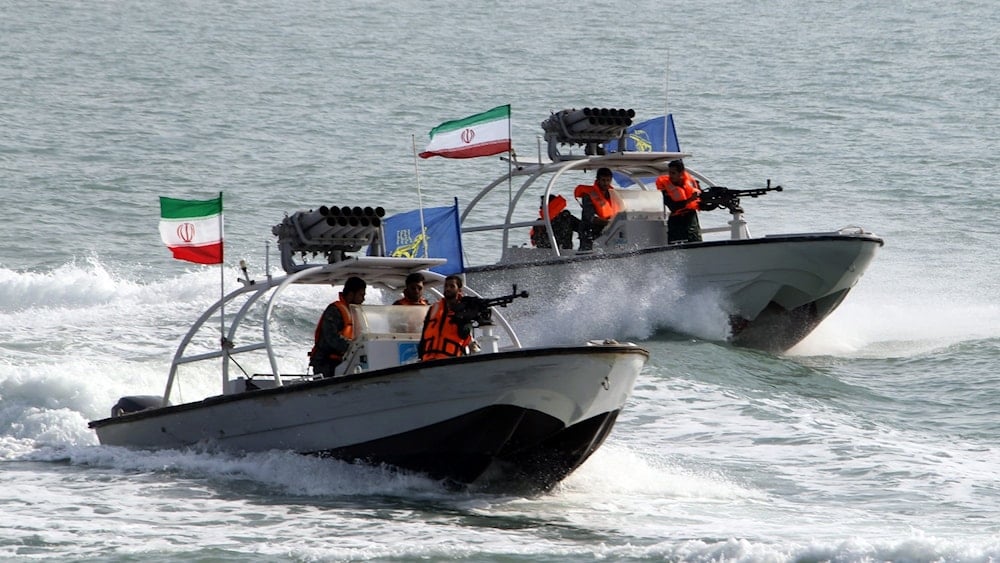
IRGC Navy speedboats during military exercises at the port of Bandar Abbas, July 2, 2012 (AFP)
Iran’s ability to influence shipping through the Strait of Hormuz has emerged as one of Tehran’s most consequential tools in its six-month confrontation with the United States and “Israel”, allowing the Islamic Republic to impose global economic costs without relying on nuclear weapons, Newsweek reported.
The war initially centered on Washington’s allegations concerning Iran’s nuclear program, which Tehran has consistently maintained is intended exclusively for peaceful purposes. However, the conflict has increasingly shifted toward maritime trade and energy security, where Iran holds considerable geographic and strategic leverage.
Disruptions in the Strait of Hormuz have shaken global oil markets, increased transportation and insurance costs, and fueled public frustration in the United States over the economic consequences of Washington’s war.
Trump has also repeatedly threatened additional attacks on Iran, including what he described as “the biggest attack since World War II,” only to step back from carrying them out.
Against this backdrop, analysts cited by Newsweek argued that Tehran’s capacity to disrupt one of the world’s most important shipping corridors may provide greater practical leverage than a weapon that could trigger overwhelming international retaliation.
“Iran’s ability to impose economic pain on the global economy is, in some ways, a more powerful weapon than a nuclear bomb,” Joshua Tallis, a former senior US Navy official and director of the Center for Naval Analyses’ Ally and Partner Security Affairs program, told Newsweek.
Low-cost operations strain global trade
Iran has warned for decades that it could restrict passage through the Strait of Hormuz if subjected to a major military assault.
Those warnings date back to the Iran-Iraq War in the 1980s, which strongly influenced the Islamic Republic’s defense doctrine, and resurfaced after Trump withdrew the United States from the 2015 nuclear agreement in 2018.
The current war has transformed that longstanding warning into an operational strategy.
Rather than attempting to match US conventional military power, Iran has relied on relatively inexpensive weapons, maritime pressure, and asymmetric operations capable of generating consequences far beyond the immediate battlefield.
Commercial carriers, insurers, and shipping crews have been forced to reconsider the risks of operating in and around Hormuz, disrupting supply chains and increasing costs across the global economy.
“With relatively few and inexpensive weapons, Iranian strikes on commercial shipping create a cascade effect throughout the global trading system as shipping lines, insurance companies, and seafarers reassess the risks of transiting,” Tallis said. “Because the collateral damage is modest and offshore, while the consequences are global and pronounced, Iran reaps substantial strategic gains at minimal reputational cost.”
“This makes Iran’s influence over Hormuz traffic more politically palatable to deploy than a nuclear weapon ever would be, and far harder for the US to counter militarily or proportionally,” he added.
The campaign has also placed pressure on US weapons inventories, as Washington expends costly and sophisticated interceptor missiles against Iranian drones and projectiles that are significantly cheaper to manufacture.
Reports have meanwhile indicated that Iran is replenishing some of its capabilities more rapidly than US planners had anticipated.
Tehran places Hormuz at center of diplomacy
Iran’s perceived success in using the strait as leverage has also affected diplomatic efforts aimed at ending the conflict.
Although Trump suggested on Monday that a new agreement with Tehran could be imminent, Iranian Foreign Ministry spokesperson Esmaeil Baghaei denied that direct negotiations with Washington were planned.
Baghaei instead confirmed that Iranian representatives were holding direct discussions with Oman regarding “reaching an understanding over a path to ensure the security of shipping passage through the Strait of Hormuz.”
Oman's centrality
Oman has assumed a central mediating role because of both its neutral foreign policy and its geographic position. The Omani exclave of Musandam sits opposite Iran along the narrow maritime passage.
Muscat has reportedly proposed a voluntary payment mechanism under which states using the strait would contribute toward maintaining its security and sustainability. Similar arrangements have previously been introduced in the Strait of Malacca and the Singapore Strait.
Whether the proposal advances or not, Iran has succeeded in shifting international attention away from Washington’s original war aims and toward negotiations over the future governance and security of Hormuz.
Tallis said, “Iran’s ability to pivot the nature of the war to one that is fundamentally about the future of Hormuz creates a serious reputational challenge for the US.”
Ansar Allah adds pressure in Red Sea
The pressure facing Washington has been compounded by operations carried out by Yemen’s Ansar Allah movement, a key member of the Axis of Resistance.
Before the US-Israeli war on Iran began in February, Ansar Allah had already demonstrated the economic impact of maritime warfare through its campaign against vessels linked to “Israel” in the Red Sea.
Those operations were launched in support of Gaza following the outbreak of the Israeli war in October 2023.
Shipping through the Suez Canal subsequently fell sharply, with many companies redirecting vessels around South Africa’s Cape of Good Hope, adding significant time and expense to international trade.
Ansar Allah later withstood an expanded US-led bombing campaign before reaching a ceasefire with the Trump administration in May. Its maritime operations ceased only after Washington helped secure a ceasefire in Gaza last October.
The Yemeni movement resumed attacks in the Red Sea last month, targeting Saudi-linked vessels in response to Riyadh’s blockade of Yemen and its attacks on Sanaa International Airport.
US military force as powerful instrument of deterrence weakened
The escalation has intensified concerns among Saudi Arabia and other US regional partners already questioning Washington’s ability to protect them from the consequences of a widening war.
“Until recently, the mere threat of US military force served as a powerful instrument of deterrence,” Tehran-based security analyst Mostafa Najafi told Newsweek. “Recent developments, however, have weakened that perception.”
“Today, not only Iran but also many regional actors—and even some international powers—view the effectiveness of American military coercion differently,” Najafi said. “As a result, military threats no longer carry the same deterrent value they did in the past.”
Failed understanding deepens mistrust
Prospects for a new arrangement remain uncertain following the collapse of a memorandum of understanding reached between Iran and the United States in June.
The understanding collapsed last month after Washington resumed strikes against Iran in breach of its terms and facilitated tanker passage through a route that Tehran had not authorized as per the agreement.
Iran subsequently targeted the vessels, as the US violation triggered nearly two weeks of renewed confrontation.
Despite the risk of another large-scale escalation, Iranian officials and analysts believe time may work against Washington in a prolonged confrontation.
“Should the current crisis evolve into a prolonged war of attrition, I do not believe time would necessarily favor the United States,” Najafi said. “The experience of America’s military engagements over the past two decades has demonstrated that Washington’s greatest vulnerability lies not in initiating wars, but in sustaining them.”
“Mounting economic costs, domestic political pressure, logistical challenges, operational fatigue, and growing concerns among regional partners would significantly constrain the United States’ ability to maintain a long-term military campaign,” he added. “By contrast, Iran’s strategic doctrine has consistently focused on gradually increasing the costs of the US military presence in the region.”
Najafi argued that Iran would continue relying on asymmetric warfare to exploit weaknesses in the US military posture across West Asia.
“Having spent years identifying the vulnerabilities of the US conventional military posture in the region,” Najafi said, “Tehran would likely seek to exploit those weaknesses through asymmetric strategies designed to raise the costs of the American presence, restrict its operational freedom, and ultimately facilitate the gradual—and eventually complete—withdrawal of US forces from the region.”
Read more: US offers Iran concession on Strait of Hormuz southern route: Source


