
War on Iran disruptions expose fragility of global supply chains
 6 Min Read
The ongoing war on Iran and Strait of Hormuz disruptions are triggering global shortages in energy, fertilizers, semiconductors, plastics, and critical industrial materials.
-
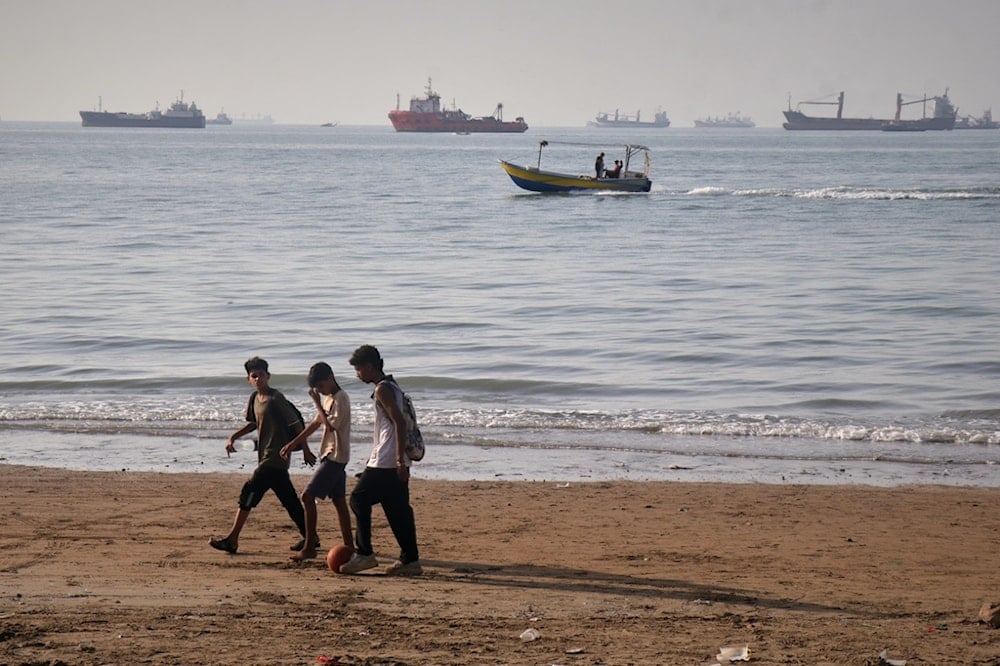
Children walk along the shore with a ball as a small motorboat passes offshore and bulk carriers, cargo ships, and service vessels line the horizon in the Strait of Hormuz off Bandar Abbas, Iran, Monday, April 27, 2026.(Razieh Poudat/ISNA via AP)
The ongoing war on Iran and the continued disruption of shipping through the Strait of Hormuz are exposing the deep structural dependence of the global economy on Gulf supply routes, with impacts extending far beyond oil and gas markets, a report for Foreign Policy magazine states.
While the strait is widely known as a critical artery for global petroleum and liquefied natural gas exports, the war is now destabilizing supply chains tied to numerous industrial materials essential to agriculture, technology, manufacturing, and healthcare.
The economic fallout is increasingly affecting commodities ranging from sulfur and helium to aluminum, fertilizers, plastics, and semiconductor components, raising fears of a prolonged global supply crisis even if maritime routes eventually reopen.
Roughly one-fifth of global LNG and petroleum exports normally transit through the Strait of Hormuz, making the waterway one of the world’s most strategically significant chokepoints.
Iran initially closed the Strait as a means of economic retaliation against US and Israeli hostilities against the Islamic Republic. While Iran's blockade only targeted vessels linked to the aggressive actions of Washington and Tel Aviv, following the ceasefire in April, the US imposed its own blockade, which in turn threw a wrench in the already slowed shipping passage.
Energy disruptions spill into industrial supply chains
The refining of oil and natural gas in Gulf states produces critical industrial by-products such as sulfur and sulfuric acid, both central to global mining and agricultural production.
China, the world’s largest sulfur importer and sulfuric acid exporter, reportedly suspended most sulfuric acid exports in May to protect domestic supplies amid escalating shortages.
Sulfuric acid is a core component in the processing of copper, cobalt, and nickel, materials essential for batteries, electronics, and industrial manufacturing.
Indonesia’s nickel industry, Chile’s copper sector, and cobalt mining operations in the Democratic Republic of the Congo are among the industries facing mounting supply pressure due to disruptions linked to Gulf exports.
The fertilizer sector has also been severely impacted, with producers warning that sulfur shortages are undermining agricultural production worldwide.
Vijay Chakravarthy, chief risk officer at Louis Dreyfus Company, told the Financial Times that fertilizer producers have found themselves “at the back of the queue” as higher-value industrial sectors absorb available sulfur supplies.
Read more: US 'peace through force' view belongs to 'era of barbarism': Bagheri
Helium crisis threatens semiconductor production
The conflict has also disrupted global helium markets after attacks linked to the regional escalation affected Qatar’s Ras Laffan facility, one of the world’s largest LNG production sites.
Qatar previously accounted for roughly one-third of the global helium supply before production cuts triggered by the war.
Helium plays a critical role in semiconductor manufacturing, particularly in cooling semiconductor wafers during chip production.
Industry analysts warn that supply shortages could increasingly affect electronics manufacturing, artificial intelligence infrastructure, and missile production.
According to market research firm IDTechEx, global helium demand from the semiconductor industry is expected to increase more than fivefold by 2035.
The shortages are additionally affecting medical infrastructure, as helium remains essential for cooling superconducting magnets used in MRI machines.
Fertilizer and ammonia shortages threaten food security
Natural gas infrastructure across Iran and Qatar also underpins large portions of global ammonia and nitrogen-based fertilizer production.
Ammonia production depends heavily on natural gas extraction, both as a source of hydrogen and industrial energy.
Approximately 70% of global ammonia production supports agriculture, while Gulf countries account for around two-thirds of the global urea fertilizer supply.
Blocked shipping routes and production interruptions are raising concerns over future food security and crop output worldwide.
Read more: The long shadow of the Strait of Hormuz closure
Aluminum and plastics industries face mounting costs
The Gulf region also accounts for roughly one-tenth of global aluminum production, an industry heavily dependent on energy-intensive refining processes.
Iran's retaliatory strikes against US-Israeli-linked assets and shipping disruptions have also damaged aluminum infrastructure and constrained exports, affecting construction sectors, automobile manufacturing, and packaging industries across Asia and beyond.
Toyota reportedly absorbed losses exceeding $3.5 billion since the beginning of the war due to higher transport, energy, and material costs.
Meanwhile, shortages of naphtha, a petroleum-derived hydrocarbon critical for plastics production, have sharply increased manufacturing costs throughout Asia and Europe.
Naphtha prices in Asia have nearly doubled since the conflict began, disrupting industries tied to synthetic rubber, polyester textiles, beauty packaging, medical supplies, and disposable consumer goods.
Manufacturers in Bangladesh, South Korea, Malaysia, and Japan have all reported severe disruptions linked to rising input costs and shipping instability.
Consumer products increasingly affected worldwide
The cascading impact of petrochemical shortages is now visible across everyday consumer markets.
South Korea has faced periods of panic buying involving plastic trash bags due to supply concerns tied to naphtha shortages.
Japanese snack manufacturer Calbee temporarily shifted some products to black-and-white packaging after ink prices surged.
In India, aluminum shortages linked to Gulf disruptions have reportedly contributed to shortages of canned beverages, including Diet Coke.
The crisis has additionally strained healthcare supply chains, with Japan establishing emergency task forces to secure syringes, dialysis equipment, and synthetic rubber gloves.
Global economic dependence on Gulf energy routes exposed
The widening disruption demonstrates how deeply integrated fossil fuel supply chains remain within nearly every sector of the global economy, despite ongoing discourse surrounding diversification and energy transition.
The ongoing blockade of the Strait of Hormuz also highlights how Western-backed regional instability can rapidly reverberate through global food systems, industrial production, healthcare infrastructure, and consumer markets far beyond West Asia.
The war on Iran exposed the vulnerability of a global economic system heavily dependent on militarized trade corridors, fossil fuel infrastructure, and geopolitical confrontation. Even if direct military escalation subsides, analysts increasingly warn that the economic aftershocks could continue reshaping supply chains and commodity markets for years.


