
Global oil reserves fall sharply amid Hormuz closure fears
 3 Min Read
Analysts warn global oil inventories are approaching critical levels as disruptions linked to the US-Israeli aggression against Iran continue to affect supply flows through the Strait of Hormuz.
-
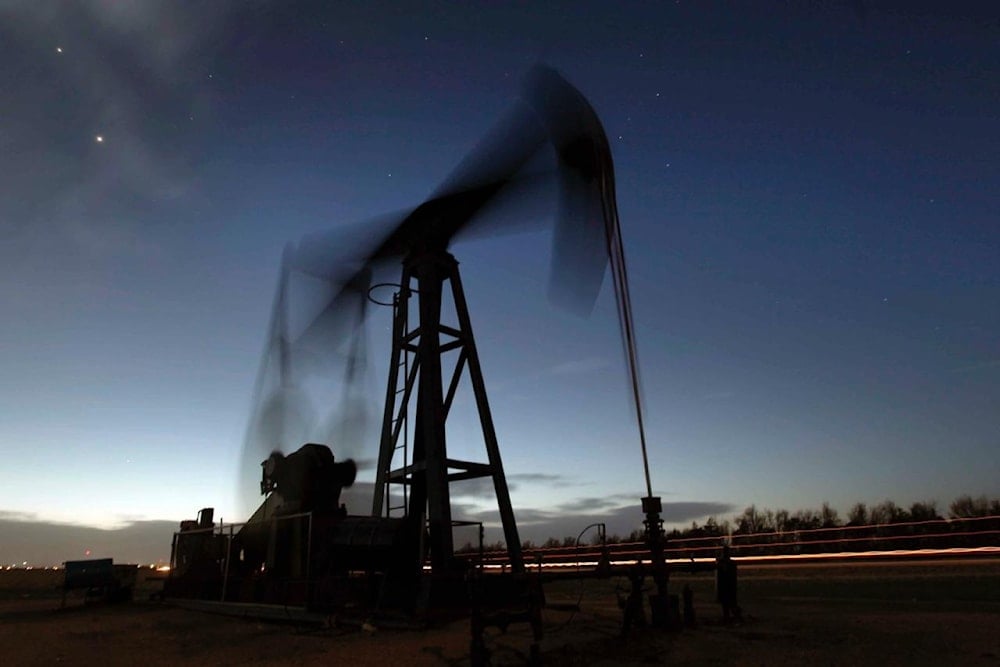
A pumping unit sucks oil from the ground near Greensburg, Kansas, on March 6, 2012 (AP)
Global oil inventories are rapidly declining amid the continued closure of the Strait of Hormuz, raising fears of a major energy shock as analysts warn that stockpiles could approach historically critical levels in the coming months.
The warnings come as disruptions linked to the ongoing US-Israeli aggression against Iran continue to affect global energy markets and maritime trade routes across the region.
Energy agencies warn of tightening supply
The International Energy Agency (IEA) warned that shrinking global oil buffers could trigger sharp price spikes if disruptions persist through the summer peak demand season.
According to estimates from financial institutions and energy analysts, global commercial inventories and strategic reserves have so far cushioned the impact of reduced West Asian supply flows.
However, analysts say these reserves are being depleted at an accelerated pace as the Strait of Hormuz remains closed.
Swiss bank UBS estimated that global oil inventories fell from more than 8 billion barrels at the end of February to approximately 7.8 billion barrels by the end of April.
The bank warned that inventories could approach near-record lows of around 7.6 billion barrels by the end of May if supply disruptions continue at the current pace.
Risk of supply chain breakdown
Analysts from JPMorgan Chase warned that while total stockpile figures appear large, only a limited portion of global reserves can realistically be used without destabilizing the broader supply chain.
They noted that much of the world’s oil inventory is required to maintain minimum operational levels in pipelines, storage facilities, and transport systems.
Energy analysts compared the oil circulation system to blood flow in the human body, warning that the crisis is less about the physical disappearance of oil and more about the inability to maintain stable circulation throughout global markets.
Forecasts suggest inventories could fall to critically low levels by September if the Strait of Hormuz remains shut, while fuel product shortages could emerge even earlier during the summer.
Economic impact and price surge fears
Analysts warned that prolonged disruption in Gulf shipping routes could trigger severe spikes in oil and fuel prices, potentially leading to major economic contraction worldwide.
Research firm Rapidan Energy stated that markets are unlikely to allow inventories to fall to catastrophic levels, as soaring prices would likely suppress demand before supply systems fully collapse.
Nevertheless, experts warned that the resulting economic shock could severely impact transportation networks, industrial production, and global trade.
The Strait of Hormuz remains one of the world’s most critical energy corridors, with a significant share of global oil exports passing through the narrow waterway connecting the Persian Gulf to international markets.
Read More: US-caused Hormuz crisis is cracking apart its global sanctions architecture


