
Strait of Hormuz is Iran's 'insurance' against future attacks
 2 Min Read
The New York Times reports that Iran's targeting of Gulf energy infrastructure and control over the Strait of Hormuz helped gain leverage over the US and “Israel."
-
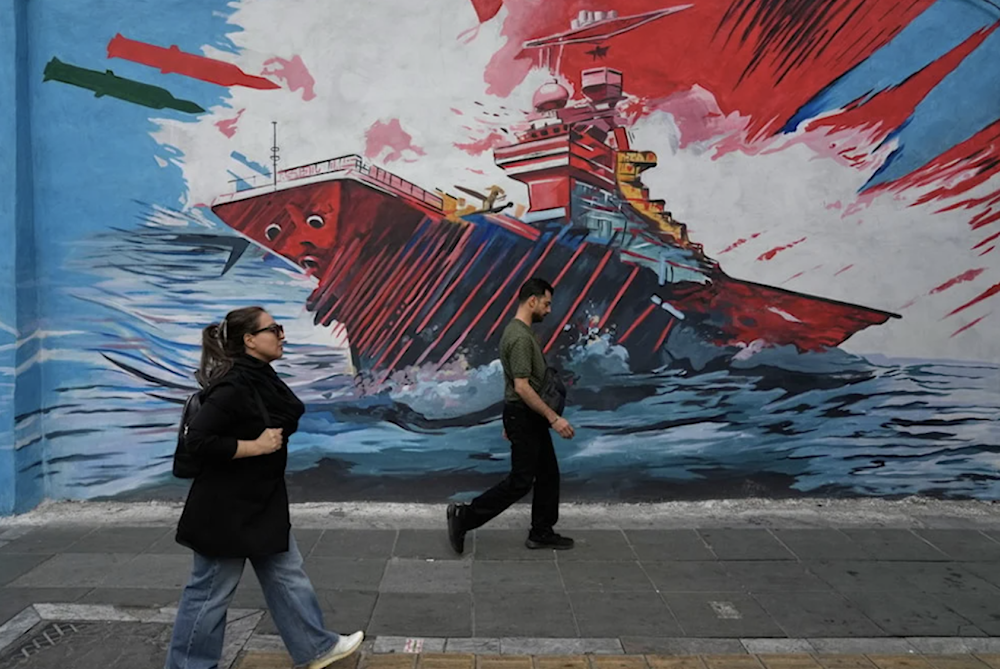
People walk past a mural depicting a US aircraft carrier under missile strikes in downtown Tehran, Iran, Sunday, May 17, 2026 (AP)
Nearly three months into the war, Iran has upended early expectations of a swift US and Israeli victory, instead contributing to a widening regional stalemate that has reshaped the balance of power.
The New York Times reports that despite early aggression targeting its leadership and infrastructure, Iran has managed to retain strategic influence over key pressure points in the region, particularly the Strait of Hormuz.
According to the report, Tehran has, since mid-March, maintained full control over the Strait of Hormuz — the strategic waterway through which nearly 20% of global oil supplies transit — while simultaneously protecting its energy infrastructure and compelling US President Donald Trump to curb the war on Lebanon.
The newspaper noted that Iran’s deterrence strategy became particularly evident after the Israeli attack on the South Pars gas field on March 18.
Tehran responded immediately by targeting the US-linked Ras Laffan gas facility in Qatar, alongside facilities in other countries used by the US, thereby imposing what the report described as a decisive equation: attacks on Iranian energy infrastructure would be met with direct retaliation against US-linked Gulf energy facilities.
Washington retreats under pressure
The report stated that the Iranian response pushed Trump to publicly distance himself from the Israeli attack and move toward negotiations, culminating in a ceasefire agreement on April 8, despite the continued closure of the Strait of Hormuz.
It further highlighted the failure of US efforts to reopen the waterway, noting that Trump quickly abandoned “Operation Freedom,” which aimed to escort stranded vessels through the strait, only days after announcing it in May.
According to the report, this demonstrated Tehran’s capacity to deter and restrain Washington despite the immense military imbalance.
Strait of Hormuz becomes Iran’s 'insurance policy'
Experts cited by The New York Times concluded that Iran, despite suffering some damage, is likely to emerge with a major geopolitical advantage.
The report stressed that maintaining even partial control over the Strait of Hormuz now represents an “insurance policy” against future attacks, while exposing the limitations of Trump’s foreign policy approach, which assumed the United States was immune to retaliation.


