
Trump delays reignition of war on Iran after White House divisions
 3 Min Read
Internal divisions reportedly emerged inside the Trump administration over Iran policy as Washington weighs renewed talks against military escalation.
-
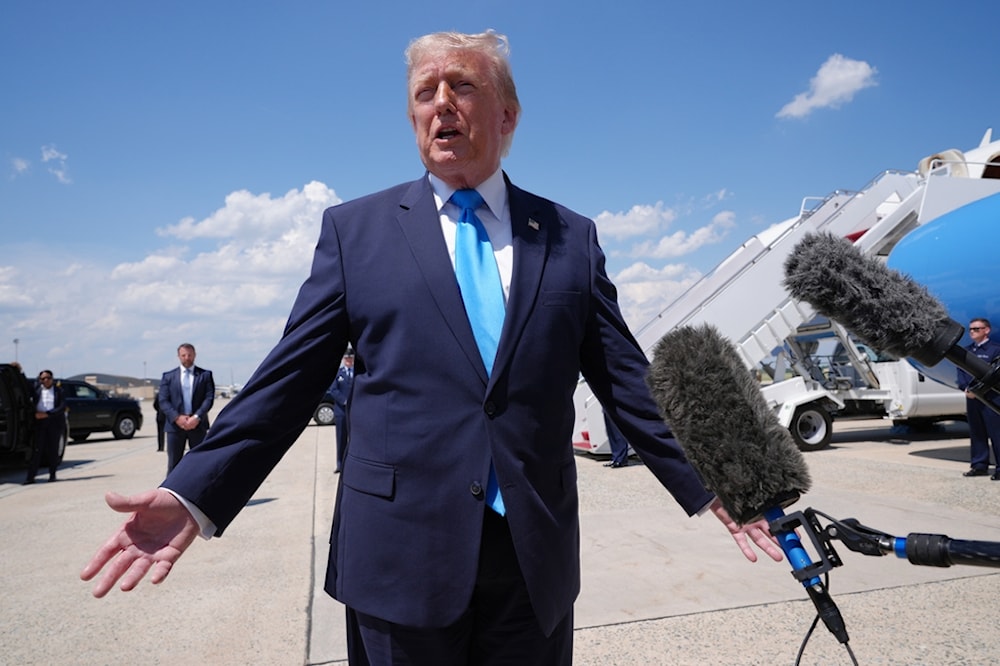
US President Donald Trump speaks to the press after returning and stepping off Air Force One, Wednesday, May 20, 2026, at Joint Base Andrews, Maryland. (AP Photo/Jacquelyn Martin)
US President Donald Trump reportedly decided to give negotiations with Iran another opportunity following a heated internal debate inside the White House over whether Washington should escalate pressure on Tehran or continue diplomatic engagement.
According to a report by Israel Hayom, citing informed sources, the dispute involved Vice President JD Vance, senior administration officials, and Trump himself during discussions over the future of US policy toward Iran after months of hostile aggression against the Islamic Republic and regional instability.
The report claimed that US officials advocating a harder line argued that Iran would not make concessions without increased military and economic pressure, including the threat of direct attacks and harsher sanctions.
Vance, however, reportedly argued that Tehran’s latest proposal demonstrated enough flexibility to justify continued negotiations and potentially move toward a broader agreement capable of ending tensions.
Read more: Iran 'clearly prepared', 'outstrategized' the Trump administration
Gulf states reportedly oppose renewed confrontation
According to the report, Trump's envoys, Steve Witkoff and Jared Kushner, supported Vance’s position during the discussions.
It added that talks had also taken place prior to the meeting with Gulf states, including Oman, Qatar, and Saudi Arabia, which were said to oppose renewed military escalation against Iran due to fears of broader regional instability and economic fallout.
Trump reportedly criticized officials favoring diplomacy, accusing them of allowing Iran to buy time while weakening Washington’s position. Vance reportedly responded by arguing that the administration should focus on ending military entanglements abroad, reducing oil prices, and addressing domestic economic concerns inside the United States.
US media, contradictory to what the Israeli report is saying, claimed that Trump would rather move towards a diplomatic end instead of reigniting the war on Iran.
The Wall Street Journal on Thursday, citing informed sources, said that the US president and Israeli Prime Minister Benjamin Netanyahu held a phone call wherein the latter told Trump that Iran would not abide by the ceasefire conditions and that the US should resume attacks on Iran.
Trump, per the WSJ, defended opting for talks but added that strikes on Iran would resume if Tehran did not prove more amenable.
The US President told reporters on Wednesday that the call went well and that Netanyahu would “do whatever I want him to do,” stating later that a decision regarding Iran is "right on the borderline.”
“We have to get the right answers—it would have to be a complete 100% good answers,” Trump said of Iran’s response.
Regional divisions deepen over approach to Iran
Israel Hayom noted divisions among regional US allies regarding Iran in its report.
According to the claims, UAE President Mohamed bin Zayed Al Nahyan and Netanyahu supported maintaining a hard-line approach toward Tehran while demanding protection for strategic infrastructure.
Meanwhile, Saudi Crown Prince Mohammed bin Salman and Qatari Emir Tamim bin Hamad Al Thani reportedly favored avoiding a return to open confrontation.
Diplomatic sources cited in the report said that Saudi Arabia and Qatar have maintained communication channels with Iran to reduce regional tensions and security risks.


