
US-Iran talks making 'a lot of progress': JD Vance
 3 Min Read
JD Vance says the US and Iran are making progress in nuclear negotiations, adding that both sides want to avoid renewed military conflict.
-
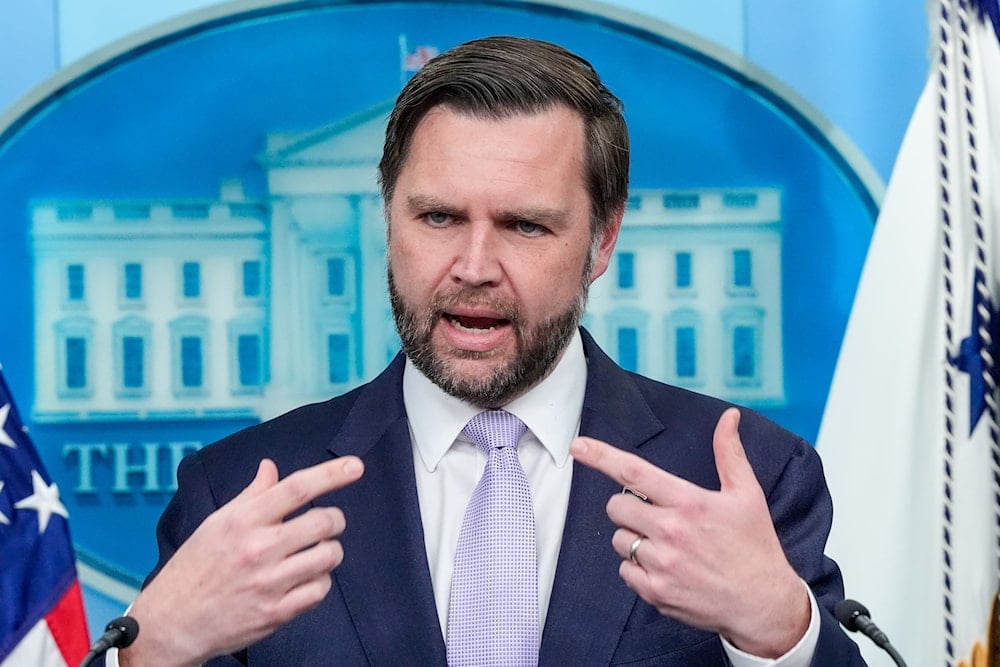
Vice President JD Vance speaks to reporters during a during a press briefing at the White House, May 19, 2026, in Washington. (AP)
US Vice President JD Vance announced on Tuesday that the United States and Iran have achieved significant headway in ongoing talks, adding that neither side wants to return to military action.
“We think that we’ve made a lot of progress. We think the Iranians want to make a deal,” Vance told reporters during a White House briefing.
The Vice President said he had just spoken with President Trump, who underscored Washington’s core demand in the talks.
“He stressed that the core issue for the US is that Iran can never have a nuclear weapon,” warning that if that were to happen, “countries around the Gulf would then want their own weapon, then other countries across the world would as well.”
US seeks to block Iran from rebuilding 'nuclear weapon capabilities'
He reiterated the US position on nuclear non-proliferation, stating, “We want to keep the number of countries that have nuclear weapons small, and that’s why Iran cannot have a nuclear weapon...that’s what we’re trying to accomplish in negotiations."
According to Vance, the United States seeks Iranian cooperation in a process designed to ensure Tehran does not rebuild its nuclear weapons capability in the coming years.
When asked whether Russia could potentially take possession of Iran’s enriched uranium, Vance dismissed the idea as a current US proposal.
“That is not currently the plan of the United States government. The Iranians have not raised it,” he said.
Iran submits revised 14-point ceasefire proposal to US via Pakistan
Iran has submitted a revised 14-point proposal to end the ongoing war to the United States through a Pakistani mediator, following Washington's response to an earlier Iranian plan, according to the Iranian Tasnim News Agency.
Citing a source close to the negotiating team, Tasnim reported that Tehran handed the new proposal to the Pakistani intermediary, who is expected to forward it to US officials.
Meanwhile, a Pakistani source told Reuters when asked whether closing the gaps between Washington and Tehran would take time, "We don't have much time." The source claimed that both countries "keep changing their goalposts."
The Pakistani source added that the US recently sent a reply to Iran's previous 14-point text, prompting Tehran to reformulate its proposal with certain amendments. The revised plan, still made up of 14 points, was then resubmitted to the Pakistani mediator for delivery to Washington.


