
Hormuz shutdown cuts global growth outlook to as low as 2.1%
 4 Min Read
The prolonged disruption of shipping through the Strait of Hormuz following the US-Israeli war on Iran is driving up energy and transport costs and slowing global trade and economic growth.
-
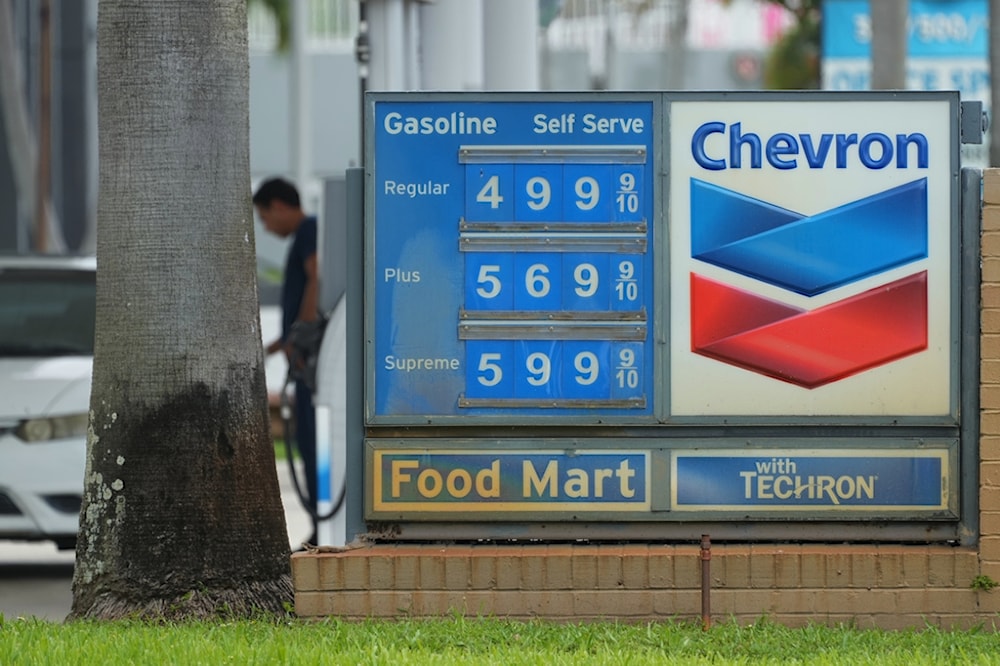
A customer pumps gas at a Chevron station Wednesday, May 27, 2026, in North Miami, Fla (AP)
The prolonged disruption of commercial shipping through the Strait of Hormuz is weighing heavily on the global economy, with international organizations warning of slower growth, rising inflation and mounting pressure on trade flows as the fallout from the US-Israeli war on Iran continues, Anadolu reported, citing the Organization for Economic Cooperation and Development (OECD).
Nearly 100 days after the war began on February 28, restrictions affecting one of the world's most important maritime corridors have significantly disrupted the movement of oil, liquefied natural gas, fertilizers, and other critical commodities, sending energy prices higher and straining supply chains across multiple sectors.
The ongoing disruption has affected roughly one-fifth of global oil and LNG trade, while also impacting substantial portions of the world's fertilizer, urea, sulfur and phosphate supplies.
Global oil consumption hit 104 million barrels per day in April
According to data cited from the International Energy Agency, global oil consumption reached 104 million barrels per day in April, while supply stood at 95.1 million barrels per day. Gulf producers have experienced a sharp decline in exports compared with pre-war levels due to the halt in traffic through the waterway.
The tightening supply situation has pushed Brent crude prices about 30% above levels recorded before the outbreak of hostilities. European natural gas prices have also surged by roughly 50%, reflecting growing concerns over energy availability.
Shipping companies have faced rising operational costs as vessels remain stranded or are forced to alter routes. The World Maritime Council reported that fuel expenses for ships climbed by 59% during the period of disruption.
The increase in transportation costs, combined with higher energy prices, has added pressure to global supply chains and fueled concerns over inflation in both developed and developing economies.
Economic outlook deteriorates
In its latest Economic Outlook report released this week, the Organization for Economic Cooperation and Development said the duration of the war will play a decisive role in determining the trajectory of global growth.
The organization outlined two potential scenarios: a temporary disruption and a prolonged crisis.
Under a shorter conflict scenario, the OECD projects global economic growth could ease from 3.4% in 2025 to 2.8% in 2026 before recovering to 3.1% in 2027.
If war persists, growth could weaken substantially
However, if the war persists and trade disruptions continue, growth could weaken substantially, falling to 2.1% this year and 1.8% by 2027.
The OECD estimates that a reduction of 0.6 percentage points in global growth would amount to approximately $700 billion in lost economic output based on the current size of the world economy.
Meanwhile, Fitch Ratings lowered its 2026 global growth forecast by 0.2 percentage points to 2.4%, citing the energy shock triggered by the war.
The agency expects the Strait of Hormuz to remain closed until at least July and warned that oil markets are likely to face additional pressure in the coming months as inventories decline.
Trade slowdown expected
The impact is also expected to be felt across global commerce.
The OECD forecasts that worldwide trade growth will slow from 5% in 2025 to 3.1% in 2026 and 2.9% in 2027.
Similarly, the World Trade Organization expects trade growth to fall to 1.9% this year after expanding by 4.6% in 2025, before rising modestly to 2.6% in 2027.
While demand for artificial intelligence-related technologies continues to support exports in parts of Asia and provide some momentum to global trade, economists say those gains are unlikely to fully offset the effects of higher energy costs and reduced trade volumes.
Developing economies face greatest risks
The United Nations Conference on Trade and Development warned that the world economy is entering a more fragile phase, forecasting global growth of 2.6% in 2026.
The organization noted that many developing countries remain especially exposed to rising fuel costs. Of the 75 economies considered most vulnerable to the current crisis, 65 are net oil importers with a combined population of around one billion people.
According to UNCTAD, more than 30% of those people live on less than $3 per day. At current import levels, the rise in energy prices could add over $20 billion annually to the fuel import bills of these economies, further increasing economic pressures and social hardship.
Read more: War on Iran disruptions expose fragility of global supply chains


