
Luxury stocks slide as war on Iran disrupts demand and tourism
 3 Min Read
Hermes and Kering shares fall as the war on Iran hits West Asia demand and European tourism, undermining hopes of a luxury sector recovery.
-
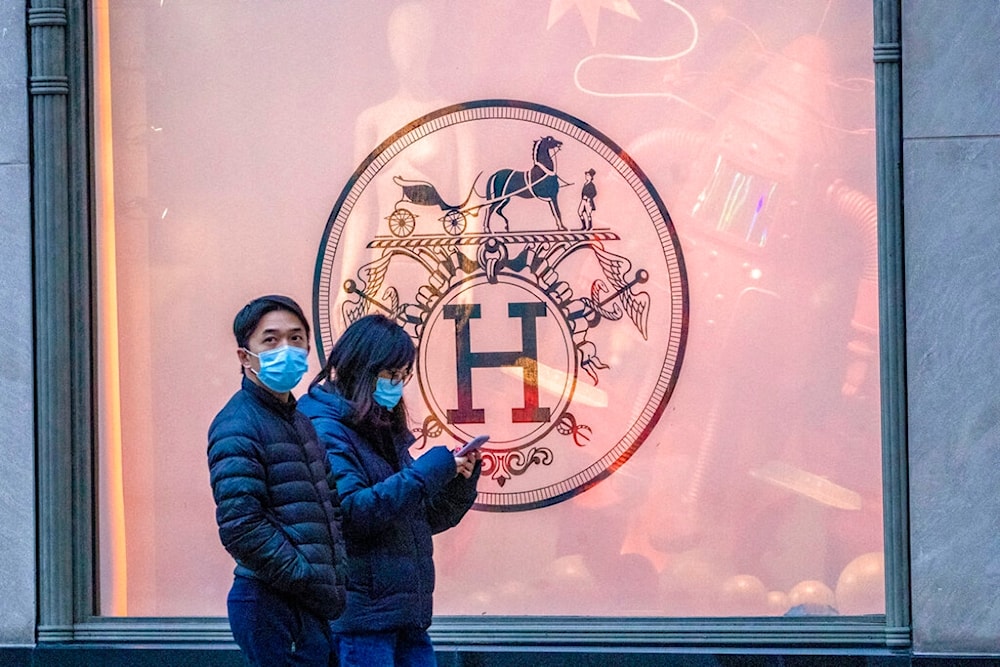
Pedestrians wearing face masks walk past the temporarily closed Hermes store on Madison Avenue, Thursday, March 19, 2020, in New York. (AP Photo/Mary Altaffer)
Shares in major European luxury firms dropped sharply after new data revealed that the US-Israeli war on Iran is weighing heavily on consumer demand and international tourism, undermining expectations of a sector rebound.
French luxury house Hermès led the decline, with its stock falling as much as 14% in early trading before partially recovering. The drop reflects weakening sales across key markets tied to West Asian spending and global travel flows.
Similarly, Kering, owner of Gucci, saw shares fall more than 9%, while LVMH had already warned of a sharp slowdown linked to the same regional instability.
West Asia demand collapses amid war
West Asia was previously one of the fastest-growing markets for luxury brands, but it has seen a sharp contraction in spending.
Hermès reported a 6% drop in regional sales, with revenues falling to €160 million compared to €185 million a year earlier. The downturn was particularly abrupt, with strong growth in January and February giving way to a sudden collapse in March.
“We had very good growth… and then the month of March was an abrupt halt,” said finance chief Eric du Halgouet.
Luxury retail hubs in the Gulf, including major malls in Dubai, experienced a dramatic decline in activity, with sales reportedly dropping by around 40% during the month.
Tourism slowdown reverberates across Europe
The impact of the war extends beyond West Asia, significantly affecting tourism-dependent luxury markets in Europe.
Fewer visitors from the Gulf have translated into declining sales in major shopping destinations such as Paris and London. Hermès noted that more than half of its sales in France are typically driven by tourists, making the sector particularly vulnerable to disruptions in travel.
Airport retail outlets and flagship stores across France, Britain, Italy, and Switzerland have all recorded weaker performance, reflecting a broader slowdown in international mobility linked to the US-Israeli war on Iran.
Growth expectations falter despite price increases
Hermès reported first-quarter sales growth of 5.6% on a currency-adjusted basis, falling short of Visible Alpha analyst expectations of 7.1%.
Analysts at Deutsche Bank suggested the figures imply “zero underlying volume growth,” noting that price increases of around 6% at the start of the year accounted for much of the revenue gain.
Currency fluctuations have compounded the pressure, with a stronger euro cutting €290 million from reported revenue and contributing to an overall decline in quarterly sales.
Sector volatility increases amid global uncertainty
The luxury sector has become increasingly volatile as geopolitical tensions reshape consumer behavior and investment patterns.
While the United States remained a relative bright spot, with sales rising over 17%, other key regions, including Asia, experienced slower growth due to travel disruptions and declining consumer confidence.
The combined effects of war, energy price spikes, and uncertainty in global markets have led investors to reassess the sector’s near-term outlook, with hedge funds increasing speculative activity in luxury stocks.


