
Oil prices rise amid doubts over durability of US-Iran ceasefire
 3 Min Read
Analysts warn prices could climb toward $115/barrel if the truce fails, with more extreme scenarios pointing to $200.
-
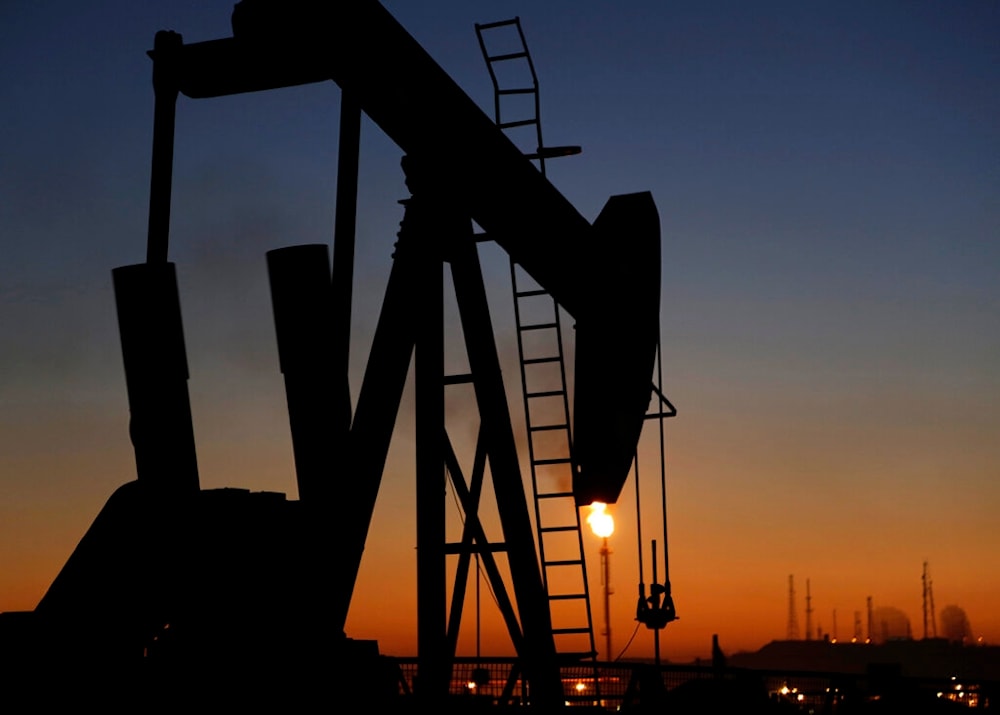
In this Jan. 18, 2016 file photo, an oil pump works at sunset, in the desert oil fields of Sakhir, Bahrain. (AP)
Oil prices climbed on Thursday as investors grew increasingly skeptical that West Asian oil supplies would fully resume, with the Strait of Hormuz remaining closed and the two-week US–Iran ceasefire showing nearing collapse.
As of 00:48 GMT, Brent crude futures were up $2.60, or 2.74%, at $97.35 per barrel, while US West Texas Intermediate (WTI) gained $3.02, or 3.2%, to reach $97.43 per barrel.
The rebound follows one of the most turbulent weeks in oil market history. Prices had surged on Tuesday, with WTI spiking to $111.29 per barrel and Brent trading at $107.57 as Trump threatened to destroy Iranian civilian infrastructure to pressure Tehran to reopen the strait.
When the ceasefire was announced late Tuesday, markets reversed sharply, WTI plunged more than 16% to close at $94.41, its biggest single-day decline since April 2020, while Brent lost about 13% to settle at $94.75, according to CNBC.
Ceasefire fractures over Lebanon
The relief was short-lived. Tanker traffic through the strait remained at a trickle, with just a handful of vessels passing, and Iran's Fars News Agency reported the waterway had been fully closed again within hours, after "Israel" launched its largest aggression against Lebanon since the start of the war.
Maritime tracking data showed a tanker identified as AUROURA executing an abrupt 180-degree turn near the Musandam Peninsula before retreating into the Gulf. Iranian naval sources confirmed that only two tankers had managed to pass before "Israel" violated the agreement.
Ibrahim Rezaei, spokesperson for Iran's parliament National Security and Foreign Policy Committee, stated: "Either there is a ceasefire on all fronts, or there is no ceasefire on any front." Foreign Minister Abbas Araghchi stated that the terms of the ceasefire are "clear and explicit," and that Washington must choose between enforcing the agreement or allowing continued war through "Israel," warning the US "cannot have both" and that "the ball is in the US court."
Iran has reportedly also made its attendance at planned Islamabad negotiations, expected on Friday, conditional on a ceasefire in Lebanon first, according to the Wall Street Journal.
The stakes of a prolonged closure
Analysts warn that the consequences of a continued Hormuz shutdown would be severe. Following the ceasefire announcement, Goldman Sachs trimmed its Q2 Brent forecast to $90 per barrel, assuming gradual normalisation of flows, but warned prices could average closer to $115 in Q4 if the ceasefire fails and West Asian oil production losses persist.
In a more extreme scenario, Bloomberg reported that industry executives and traders have warned that prices could surge toward $200 per barrel if the strait remains closed, the largest supply shock since the 1970s oil crisis, one severe enough to force a sharp contraction in global demand.
Meanwhile, the US Energy Information Administration raised its 2026 average Brent forecast to $96 per barrel, flagging supply disruptions peaking at 9.1 million barrels per day in April and a global inventory draw of around 5.1 million bpd in Q2. Even if flows resume, the EIA said prices are likely to remain elevated for the remainder of the year.


