
Oil surge, Fed rate hike bets rattle global markets
 3 Min Read
Global markets declined as investors awaited a US Federal Reserve rate decision amid persistent inflation, surging oil prices, Middle East tensions, and renewed concerns over AI development.
-
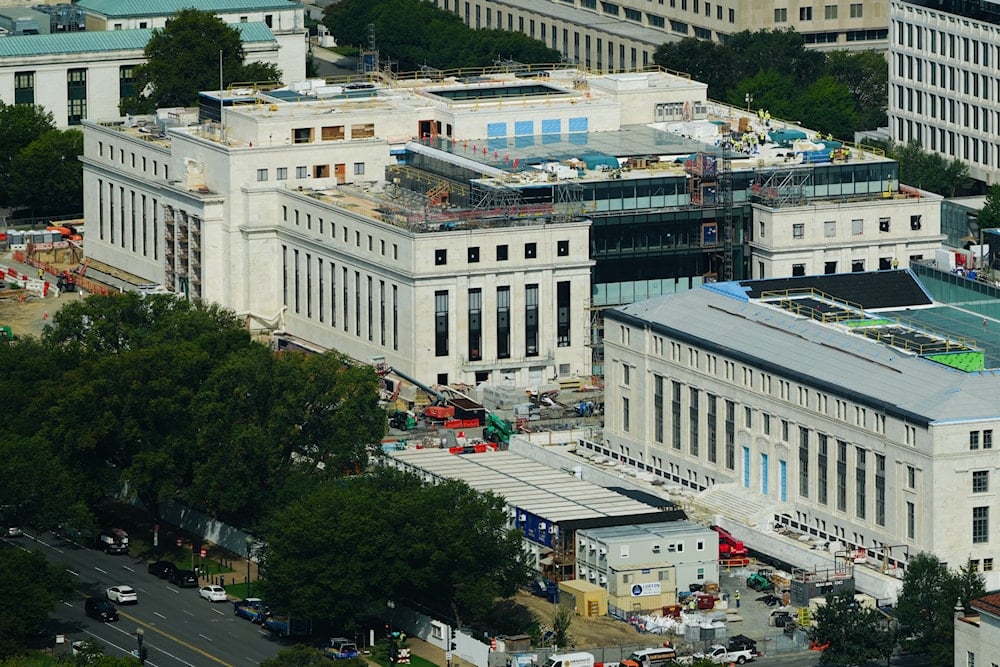
The Federal Reserve is seen from the Washington Monument, Tuesday, Sept. 1, 2026, in Washington (AP)
Global financial markets came under renewed pressure on Tuesday as investors awaited the outcome of the US Federal Reserve’s latest policy meeting, with persistent inflation, elevated oil prices, and concerns over artificial intelligence weighing on sentiment.
Market participants widely expect the Federal Reserve to raise interest rates by 25 basis points as policymakers seek to contain inflation that remains significantly above the central bank’s target.
The expected move follows recent US inflation data showing consumer prices continuing to rise at a pace that has increased expectations of further monetary tightening. The prospect of higher borrowing costs strengthened the US dollar while putting pressure on equities.
“There's no let-up in the volatility rippling through financial markets, with energy prices staying painfully elevated and worries swirling about the knock-on effect for inflation and interest rates,” noted Susannah Streeter, chief investment strategist at Wealth Club.
Oil prices intensify inflation concerns
Energy markets remained a major source of concern as crude prices continued climbing, with Brent crude trading above $107 per barrel and West Texas Intermediate surpassing $103.
The rise in oil prices has been linked to escalating tensions in the Middle East, with disruptions to key shipping routes adding to concerns over global energy supplies.
Higher fuel costs have increased pressure on governments and central banks, as rising energy prices can feed into broader inflation by increasing transportation and production expenses.
In the United States, diesel prices reached record levels, creating additional political pressure on President Donald Trump ahead of midterm congressional elections.
The European Central Bank has already raised interest rates in response to inflation pressures, while the Bank of England is expected to keep its benchmark rate unchanged as it attempts to support economic growth.
Stock markets retreat amid uncertainty
European and Asian markets moved lower on Tuesday after Wall Street recorded losses at the beginning of the week.
Major indexes declined, including London’s FTSE 100, Paris’ CAC 40, Frankfurt’s DAX, and Hong Kong’s Hang Seng, as investors assessed the impact of higher interest rates and rising energy costs.
Bond yields also increased, reflecting expectations that central banks may maintain tighter monetary policies for longer.
AI sector faces renewed scrutiny
Technology stocks also faced pressure amid growing debate over the pace of artificial intelligence development.
The discussion intensified after leading figures in the AI industry called for greater caution over the rapid expansion of the technology.
Anthropic CEO Dario Amodei recently urged the sector to slow down, with similar concerns later expressed by OpenAI CEO Sam Altman and SpaceXAI’s Elon Musk.
Microsoft also introduced a “humanist AI code of conduct” amid calls for stronger safeguards.
"AI should not exceed human control. Models should remain subordinate to humanity," read one part.
Meanwhile, Trump rejected concerns that artificial intelligence could pose an existential threat, dismissing such warnings as a hoax and opposing calls for global restrictions on the technology.
Read more: AI stocks slide as tech chiefs warn against reckless development


