
Rare Earth shortages from China strain US aerospace and chipmakers
 4 Min Read
US aerospace and semiconductor firms face rare earth shortages, including yttrium and scandium.
-
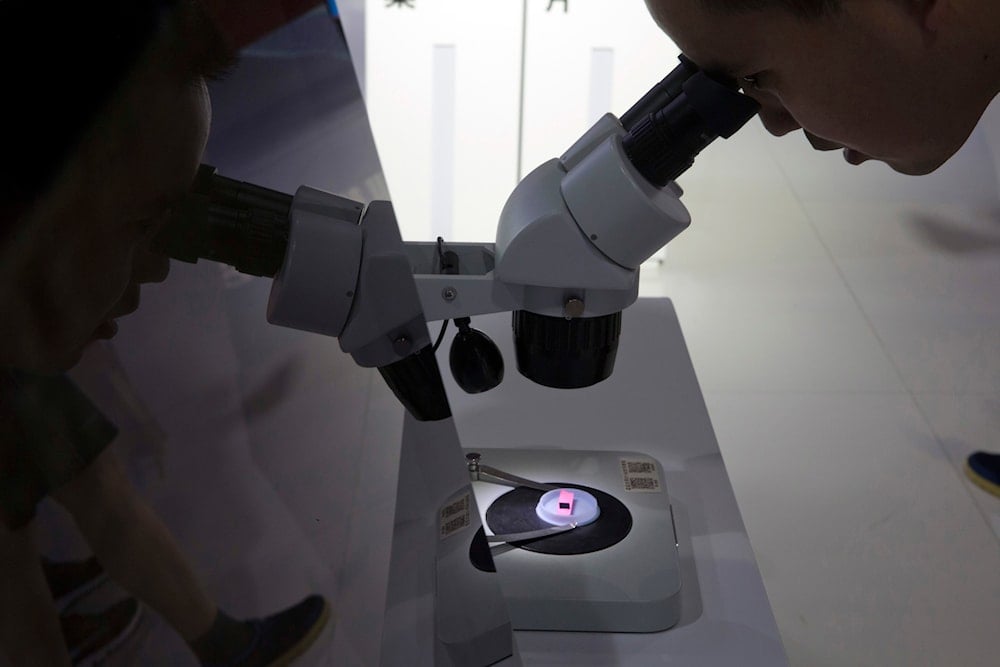
A visitor to the 21st China Beijing International High-tech Expo looks at a computer chip through the microscope displayed by the state-controlled Tsinghua Unigroup project in Beijing, China, on May 17, 2018. (AP)
Suppliers to US aerospace and semiconductor companies are facing worsening rare earth shortages, with some firms turning away customers as supply constraints deepen ahead of an expected summit between US President Donald Trump and Chinese President Xi Jinping in Beijing.
Industry insiders say shortages of key materials, particularly yttrium and scandium, are intensifying despite an easing of trade tensions between Washington and Beijing last October.
The shortages center on yttrium and scandium, two niche elements within the family of 17 rare earths that are overwhelmingly produced in China. Though used in small quantities, they play critical roles in defense systems, aerospace manufacturing, and semiconductor production. Yttrium is essential in high-temperature coatings that prevent jet engines and turbines from melting. Without the consistent application of such coatings, engines cannot operate safely.
Since November, when Reuters first reported on yttrium supply constraints, prices have surged 60% and now stand approximately 69 times higher than a year ago. Company executives and traders say some coating manufacturers have begun rationing material.
Executives at two North American companies that purchase yttrium for coatings production told Reuters they have temporarily paused operations due to limited supply. One firm has begun prioritizing larger clients, including certain engine manufacturers, while turning away smaller and offshore customers. Another company in the coating supply chain has reportedly run out of yttrium oxide and halted sales of products containing the material, according to a source familiar with the situation.
China exported 17 tons of yttrium products to the US in the eight months following the introduction of export controls last April, compared to 333 tons in the eight months prior, according to Chinese customs data.
Although yttrium shortages have not yet directly affected jet engine or semiconductor production, a US government official told Reuters that some American manufacturers are now experiencing shortages of certain rare earth materials from China. US engine manufacturers are already under strain, working to meet strong demand for spare parts from airlines and increased output from planemakers Boeing and Airbus. GE Aerospace, RTX’s Pratt & Whitney, and Honeywell declined to comment.
A White House official said the Trump administration remains committed to securing access to critical minerals, including through negotiations with China and by developing alternative supply chains where necessary.
Scandium shortage threatens semiconductor sector
In addition to the yttrium supply crisis, US semiconductor manufacturers are facing a scandium shortage, raising concerns about next-generation 5G chip production.
Dylan Patel, founder and CEO of research firm SemiAnalysis, said scandium is used in chip components found in nearly every 5G smartphone and base station. With global production limited to several tens of tons annually, the material plays a small but crucial role in advanced chip processing and specialty aluminum aerospace alloys.
US chipmakers have reportedly encountered delays in receiving new scandium export licenses from China and have sought assistance from Washington, according to industry sources.
While some firms have sourced scandium from third-country suppliers, China requires export license applicants to disclose end-users, according to a US official. “Our thesis is that it is precisely the semi industry being targeted,” the official said.
The US currently has no domestic scandium production and lacks operational alternative sources outside China, Patel noted, adding that stockpiles are likely measured in months rather than years.
Beijing has allowed many rare earth exports to resume since imposing restrictions in April, but shipments of yttrium and scandium rarely reach the US despite the October detente between the two sides. The status of critical mineral export controls is expected to feature prominently when Trump and Xi meet in Beijing in March.
China’s Ministry of Commerce did not respond to requests for comment.
The outcome of the summit could have significant implications for US-China trade relations and the stability of global supply chains dependent on rare earth elements.


