
Saudi-UAE tensions raise concerns over Gulf business stability
 4 Min Read
Businesses fear trade disruption as Saudi Arabia and the UAE face tensions while competing for economic dominance in the Gulf.
-
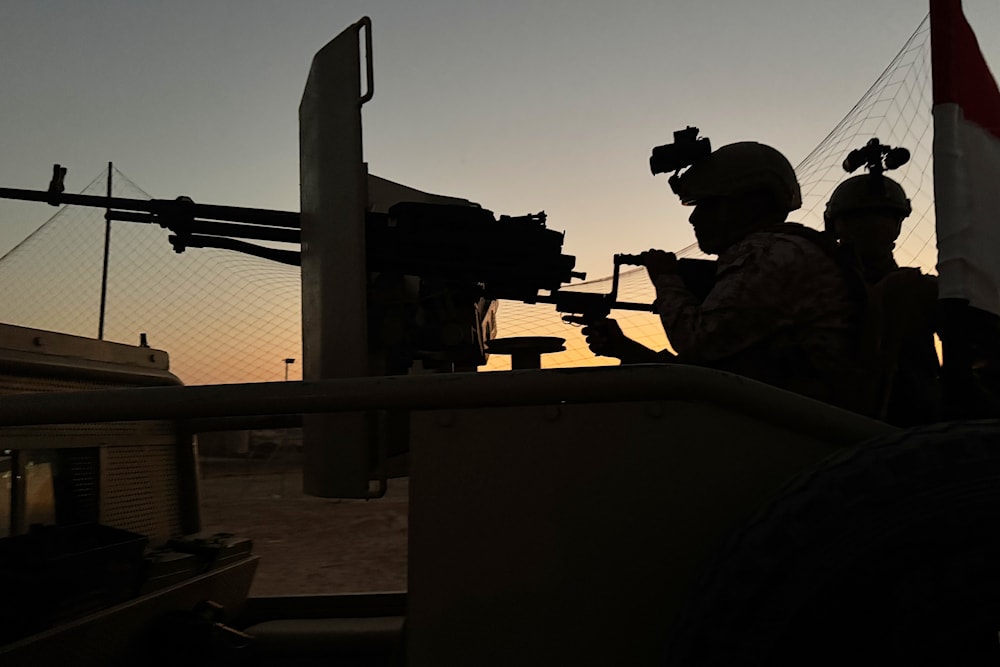
Members of the Yemeni Homeland Shield Forces are seen on a military vehicle during a military demonstration at Al Rayan Air Base in Mukalla, Yemen, Monday, Jan. 19, 2026 (AP)
Middle East businesses are closely monitoring rising tensions between Saudi Arabia and the United Arab Emirates, amid concerns the dispute could disrupt commerce as both countries consolidate their roles as regional trade and financial powerhouses, Bloomberg reported.
The tensions became public in December, when Saudi Arabia reportedly gave UAE forces 24 hours to withdraw from Yemen, followed by an escalation in critical rhetoric in Saudi media. While no official diplomatic or commercial measures have been announced, companies operating across both markets have begun contingency planning to safeguard business continuity should relations deteriorate further, according to people familiar with the discussions.
For international firms and investors, the situation has revived memories of the 2017 blockade of Qatar by Saudi Arabia, the UAE, Bahrain, and Egypt, which lasted more than three years and severely disrupted regional supply chains. Heightening concerns over regional stability, US President Donald Trump said last week that an “armada” of US Navy vessels was heading to the Middle East as he continued to threaten Iran with strikes.
“At this stage, companies are not reacting operationally; they are asking baseline questions,” said Hussein Nasser-Eddin, chief executive officer of Dubai-based security services provider Crownox. “Most inquiries focus on financial resilience in case of escalation and whether there are any early diplomatic or consular shifts.”
Some UAE-based firms have reported difficulties obtaining Saudi business visas, although it remains unclear how widespread the issue is or whether it signals a shift in Saudi policy. Riyadh has for several years pressed foreign companies to relocate their regional headquarters to the kingdom. At least one UAE-based supplier to Saudi Arabia is considering building inventory as a buffer, while some funds and companies are assessing plans to open offices in the kingdom to protect against potential curbs on cross-border activity.
$22 bln at stake
About $22 billion in trade between the two largest Gulf economies is at stake, alongside broader business confidence as both seek to position themselves as global financial hubs. Their sovereign wealth funds have expanded their global influence through major investments across finance, energy, technology, and healthcare, intensifying competition to attract Wall Street banks, hedge funds, and asset managers. Representatives for both governments did not respond to requests for comment.
Despite the uncertainty, several professionals said they have not yet seen tangible impacts on business operations or planned investments, expressing optimism that political leaders will resolve the dispute behind closed doors. Saudi Foreign Minister Prince Faisal Bin Farhan Al Saud said on Monday that the UAE’s decision to leave Yemen, “if that indeed is the case," could serve as a foundation for improved relations, while Finance Minister Mohammed al-Jadaan said last week that he was confident the two sides would “reach an agreement to deescalate.”
Recent events have also shown how global business is adapting to geopolitical volatility. Even the 12-day war "Israel" launched on Iran last year, which concluded with Iranian missile strikes on a US air base in Qatar, had a limited impact on commercial activity. UAE financial institutions have continued purchasing Saudi bonds at a steady pace, and major Emirati lenders remain involved in underwriting those sales.
“It could slow growth, but as long as it doesn’t escalate to an existential threat to either side, most folks will come around eventually and go back to doing business as usual,” said Ryan Bohl, a senior Middle East and North Africa analyst at Rane Network, a risk consultancy.


