
Yemeni STC's Zubaidi resurfaces rejecting Saudi-backed push
 4 Min Read
Yemeni Southern separatist leader Aidarous al-Zubaidi vowed to reject externally imposed solutions and pledged to continue pursuing an independent southern state.
-
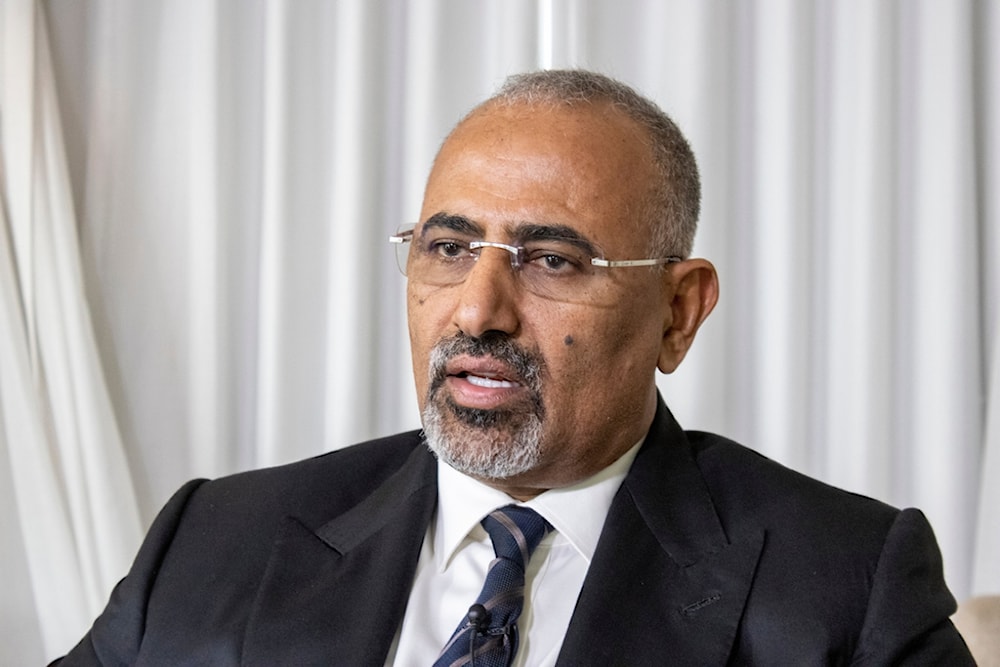
Aidarous al-Zubaidi, head of Yemen’s Southern Transitional Council, during an interview on September 22, 2023, in New York, on the sidelines of the United Nations General Assembly’s annual high-level meeting. (AP Photo/Ted Shaffrey, File)
Yemeni Southern separatist leader Aidarous al-Zubaidi resurfaced publicly this week following a Saudi-backed military push against UAE-supported forces in southern Yemen, an escalation that brought long-simmering Saudi–Emirati tensions into open view.
In his message to supporters, Zubaidi rejected externally imposed political arrangements, declaring: "We will no longer accept any solutions that diminish our rights or impose an unacceptable reality upon us." He pledged to continue the southern project, adding, "With your determination, we will prevail. With your unity, the South will be protected, and with your will, the future state will be established." The statement marked his first public communication in weeks, after his absence from Saudi-hosted talks in early January triggered speculation over his status and movements.
Saudi-UAE Rift
The remarks came following a sharp deterioration in relations between Riyadh and Abu Dhabi over influence in southern Yemen. Saudi officials have increasingly accused Emirati-backed factions, particularly forces aligned with the Southern Transitional Council, of advancing agendas that threaten Saudi national security, a notable rupture between two states that once jointly led the military coalition intervening in Yemen since 2015.
In December, STC-affiliated forces briefly expanded their footprint across several southern governorates, advancing toward areas Riyadh considers strategically sensitive, including zones near the Saudi border. Saudi officials later described the advance as a “red line,” warning that unchecked separatism, militia rule, or territorial fragmentation could have grave security consequences for the kingdom.
The escalation prompted Saudi airstrikes on a shipment linked to UAE-supported forces, followed by a rapid counter-deployment by Saudi-aligned units that reversed the STC’s gains. Saudi-backed “National Shield” forces subsequently announced full deployment across Aden governorate, while the Presidential Leadership Council moved to retake camps and installations previously controlled by STC-aligned units, exposing deep fractures within the coalition that has dominated Yemeni politics and security for nearly a decade.
Defiance spills South
Zubaidi’s reappearance also followed Riyadh saying that he had left Yemen with Emirati facilitation, an allegation denied by STC supporters, who insisted he remained committed to the southern cause. The council rejected claims circulated in Saudi media that it had agreed to dissolve itself, calling such statements invalid and issued under pressure.
The unrest followed a series of political moves by Saudi-backed authorities, including the dismissal of UAE-aligned ministers, efforts to strip Zubaidi of his position within the presidential council, and allegations by the STC that some of its representatives in Riyadh were being detained and pressured to issue coerced statements.
Foreign Imposition
From Sanaa’s perspective, the episode reinforces a long-standing assessment: that turmoil in the south reflects competition between foreign patrons rather than a sovereign Yemeni political process. Axis of Resistance-aligned authorities have consistently argued that both Saudi Arabia and the United Arab Emirates have violated Yemen’s sovereignty by sponsoring armed factions, managing territory, and shaping political outcomes through proxy forces, turning the country into a battleground for overlapping regional agendas rather than Yemeni self-determination.
For Sanaa, the trajectory confirms a central claim: that Yemen’s sovereignty remains constrained by foreign intervention, and that the struggle unfolding in the south is less about local choice than about a power contest between external actors, one that has now moved decisively from behind closed doors into the open.
Read more: Ansar Allah warns attack on Iran could ignite wider escalation


