
Tehran stock exchange surges following ceasefire deal
 3 Min Read
Iran's stock exchange just posted one of its best weeks on record after retail investors poured in hundreds of millions of dollars in days, even as foreign capital remains locked out by sanctions.
-
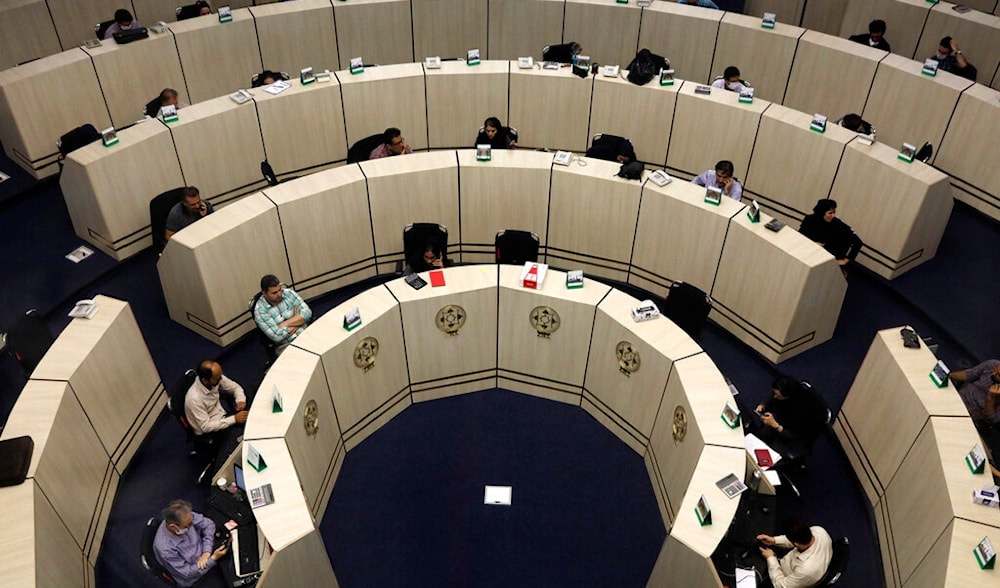
Stockbrokers work at the Tehran Stock Exchange in Iran on Sunday, May 10, 2020. (AP Photo/Vahid Salemi, File)
Iran's Tehran Stock Exchange has emerged as one of the world's top-performing equity markets following the signing of a Memorandum of Understanding aimed at ending the US war on Iran, according to analysis from Amtelon Capital, a foreign investment firm tracking the market, cited by the Financial Times.
The Tedpix index, which tracks major Iranian companies, climbed roughly 30 percent in dollar terms over the past week alone. Since the exchange resumed trading on May 19 following a wartime suspension, it has gained nearly 50 percent in dollar terms compared with its final pre-war session on February 25.
In the 21 trading days since the Tehran Stock Exchange reopened, Iran’s retail investors have poured over USD 400
— Maciej Wojtal (@mwojtal) June 18, 2026
million of fresh capital into equities. The stock market gained 30% in USD terms this week and is up nearly 50% since the final session before the war. Post-war… pic.twitter.com/mQ10KnqIvI
Had Iran been included in standard global rankings, its market would have posted the strongest monthly performance of any exchange worldwide, the report noted.
The rial has also firmed against the dollar on the open market, trading near 1.55 million to the dollar, though it remains down 98 percent from its value in the 2010s. The exchange itself sold off about 30 percent earlier this year before fighting began, and remains far below its 2020 peak when measured in dollars.
A market shaped by isolation
Years of sanctions, intensified after Washington withdrew from the 2015 nuclear agreement in 2018, left Iran's capital market almost entirely cut off from foreign participation. The result is a market with virtually no international investors and valuations among the lowest globally, with some companies trading at just one to two times earnings, a fraction of the roughly 23 times earnings average across global equity markets, according to Siblis Research.
Amtelon's chief investment officer, Maciej Wojtal, said retail brokers in Iran logged unprecedented pre-market buy orders of $300 million to $400 million daily in the period surrounding the ceasefire announcement, with total retail inflows since reopening reaching approximately $400 million.
Companies positioned to benefit from normalization
Iranian firms have long operated under what Amtelon says are "defensive financial strategies," characterized by holding excess inventory and relying on operating revenue rather than credit, in order to withstand sustained disruption.
Analysts at the firm argue that easing sanctions pressure could allow companies to shift toward leaner, more efficient operations, potentially improving profit margins across multiple sectors.
Earlier this year, Tehran ended foreign currency subsidies on food and pharmaceutical imports, allowing firms in those sectors to raise prices, a shift Wojtal says is already visible in recent earnings data.
Sanctions relief remains the deciding factor
Despite the rally, the market remains thinly traded and highly dependent on how ceasefire terms are implemented, particularly whether Washington grants waivers permitting Iranian oil exports to resume. Foreign capital remains almost entirely absent. Amtelon, based in Amsterdam, said it cannot accept American clients due to sanctions restrictions, though it has fielded inquiries from investors across Europe and Australia.
Should sanctions ease substantially, analysts suggest Iran's market, currently sustained almost entirely by domestic retail investors, could open to international capital for the first time in years, transforming what has been one of the world's most isolated frontier markets.


