
Trump calls US-Canada currency gap 'unacceptable'
 3 Min Read
The Canadian dollar has historically been weaker than its US counterpart for most of the past 15 years.
-
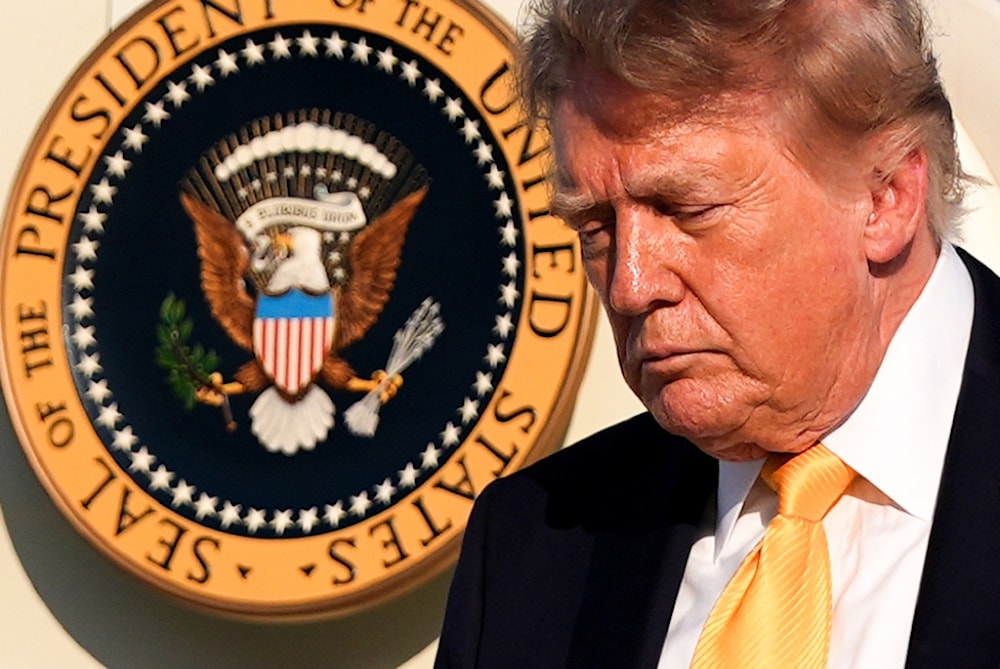
US President Donald Trump disembarks from Air Force One at Morristown Airport, Friday, Sept. 4, 2026, in Morristown, N.J. (AP)
US President Donald Trump has turned his attention to the value of the Canadian dollar, describing the exchange-rate gap with the US currency as "unacceptable" as tensions between Washington and Ottawa continue to escalate.
"Canada's (currency) Dollar imbalance with the US is unacceptable," Trump wrote Sunday on Truth Social. "It has been that way for years - but no longer!"
The US president gave no further explanation of the remark or indication of whether his administration is considering measures targeting Canada's currency.
Trump's comments come as relations between the neighboring countries deteriorate amid an intensifying trade dispute and the collapse of negotiations between the two governments.
Canadian dollar trades well below US counterpart
The Canadian dollar is currently trading at roughly 72 US cents, with one US dollar worth around 1.38 Canadian dollars.
While the Canadian currency has remained below parity with the greenback for much of the past 15 years, such a gap is not unusual. Over the longer term, one US dollar has averaged approximately 1.24 Canadian dollars, while since 2015 the exchange rate has generally fluctuated between 1.20 and 1.45 Canadian dollars.
The Canadian dollar last reached or surpassed parity for a sustained period during the commodity-driven rally between 2007 and 2012.
Weaker Canadian dollar boosts export competitiveness
A lower-valued Canadian currency can benefit exporters by making Canadian-made goods less expensive for buyers paying in US dollars.
At the same time, it raises the cost of American goods for Canadian consumers, potentially affecting trade flows between the two countries.
Trump has repeatedly attacked Canada's trade relationship with the United States, accusing Ottawa of benefiting disproportionately from bilateral commerce and using tariffs as leverage in negotiations.
His latest remarks suggest the exchange rate itself may now become part of that confrontation, although Trump stopped short of accusing Canadian authorities of deliberately manipulating their currency.
Canada operates a floating exchange-rate system, meaning the value of its dollar is largely determined by financial markets rather than being fixed by the government.
US-Canada trade tensions escalate
The currency remarks come after trade negotiations between Washington and Ottawa broke down, with Canadian Prime Minister Mark Carney ordering his negotiating team to return home from the US capital.
Washington subsequently moved toward imposing tariffs of 50% on several major Canadian products.
Carney has responded by promising matching retaliation, with Canada's countermeasures scheduled to take effect on September 8.
The confrontation represents a sharp deterioration in economic relations between two countries whose markets and supply chains are deeply interconnected.
Trump expands trade pressure to currency issue
Trump has increasingly used tariffs and trade restrictions as instruments of economic pressure, arguing that longstanding US trading relationships have disadvantaged American producers and workers.
His criticism of the Canadian dollar now raises the possibility that Washington could seek to link exchange-rate movements with wider trade negotiations.
For now, however, the White House has provided no explanation of what Trump considers an acceptable value for the Canadian currency or whether the administration intends to pursue specific action over the issue.
Read more: Canada turns critical minerals into leverage against Trump


