
Trump imposes 50% tariffs on Canada, reigniting trade tensions
 4 Min Read
Trump announces 50% tariffs on some Canadian goods, prompting calls for retaliation and raising fresh questions over US-Canada trade relations.
-
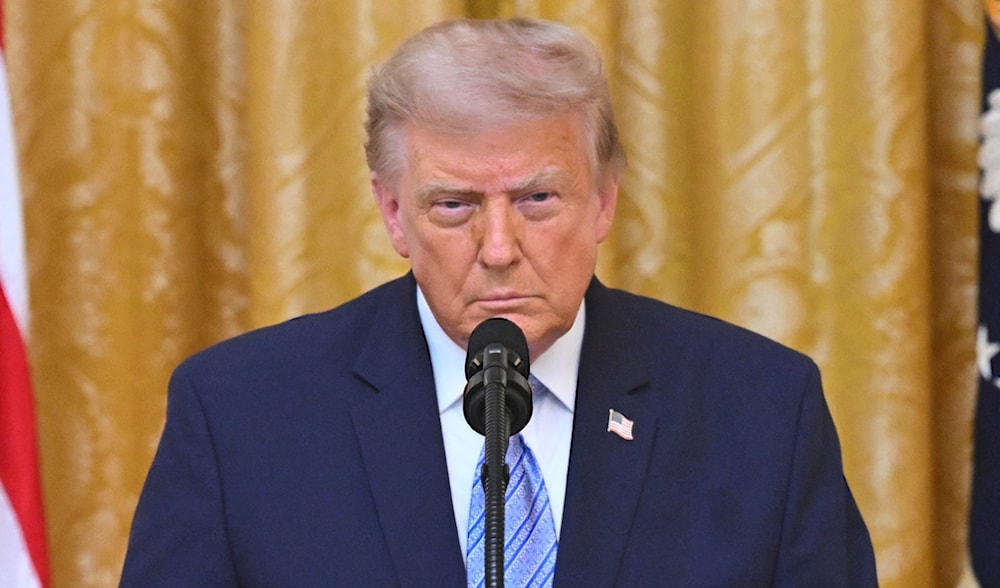
FILE - President Donald Trump speaks in the East Room of the White House, July 16, 2026, in Washington. (Saul Loeb/Pool via AP, File)
President Donald Trump on Monday announced sweeping tariffs against Canada, threatening to reignite a trade battle with one of the US' closest allies and top economic partners.
The 50% tariffs on certain Canadian goods, including electrical equipment and machinery, are among the steepest tariffs his administration has levied against any country.
Although Trump has recently threatened tariffs against America's neighbor in retaliation for wildfire smoke that poured into the northern regions of the United States, administration officials said the latest tariffs are unrelated.
The levies will take effect in 30 days and cover about $20 billion worth of Canadian goods, the White House said.
Canada signals possible tariff retaliation
Canadian Prime Minister Mark Carney said the country "believes in the benefits of free and fair trade," in a statement on Monday.
"In all circumstances, Canada will work relentlessly and take any measures necessary to build our strength at home and to support Canadian workers, farmers, businesses, and families," Carney said.
Ontario Premier Doug Ford went further, immediately encouraging Canada to retaliate. "If these tariffs proceed, Canada should respond tariff for tariff, dollar for dollar," Ford said in a post on X.
I’ll never stop fighting to protect Ontario. If these tariffs proceed, Canada should respond tariff for tariff, dollar for dollar.
— Doug Ford (@fordnation) July 20, 2026
Section 338 gives Trump a new tariff tool
Trump cited Section 338 of the Tariff Act of 1930, a law that allows a president to set tariffs of up to 50% when another country discriminates against American goods. However, the law has never been applied in this way.
Excluded from the latest round of tariffs are several key Canadian imports, including energy products, critical minerals, fish, and other goods that are subject to industry-specific duties, such as cars and metals.
However, unlike other levies Trump has enacted against Canada, there will be no carve-outs for goods covered by the trade pact known as the United States-Mexico-Canada Agreement, which is currently under negotiation.
According to research firm Capital Economics, only about 5% of Canadian imports would be affected by the new tariffs, or about 0.6% of total US imports.
New tariffs add to Trump's trade strategy
Still, if Trump's use of Section 338 is upheld by the courts, it could become a useful tool in future trade negotiations, said Stephen Brown, chief North America economist at Capital Economics.
"Taking a step back, it’s striking that the Trump administration is now reaching to a new method to implement tariffs," Brown wrote in a research note Monday.
Tariffs have become one of Trump's go-to economic negotiation tactics, which he has attempted to levy against every major US trade partner during his latest term.
However, the Supreme Court ruled in February that the president could not use the International Emergency Economic Powers Act, or IEEPA, to implement sweeping tariffs globally. The decision negated Trump's attempt to tax imports from every country and impose additional punitive tariffs on China, Canada, and Mexico.
Instead, Trump imposed temporary, across-the-board 10% tariffs under Section 122 of the Trade Act of 1974, which are set to expire later this week.
Last week, the US announced a new 25% tariff on many Brazilian imports under Section 301, following a yearlong investigation into Brazil's trade policies that it said found them to be unfair.
The US has also previously threatened to impose more tariffs on China, its primary economic rival in global trade, which is already facing much steeper tariffs than other nations. Though tariffs went undiscussed during a summit between Trump and Chinese leader Xi Jinping in May, Xi is expected to visit the US in September.
In its statement Monday, the White House emphasized that Canada was one of two countries that had chosen to retaliate against US tariffs rather than negotiate, with the other country being China.


