
Republicans push sanctions on Canada as wildfire smoke drifts into US
 5 Min Read
Trump threatens new tariffs on Canada as wildfire smoke blankets large parts of the US, while Republicans call for sanctions over Ottawa's wildfire response.
-
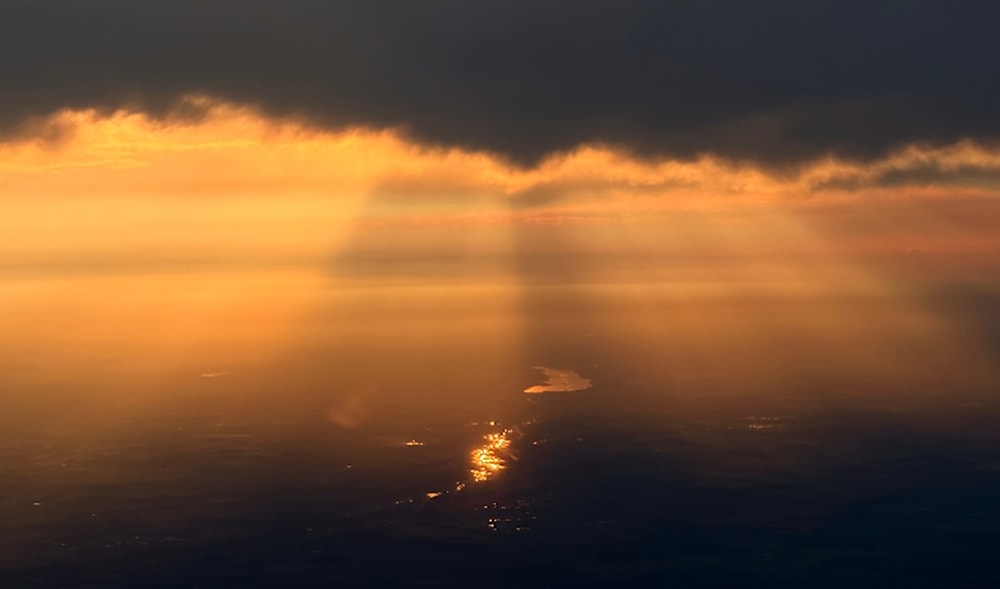
Light reflects off the water as the sun sets through wildfire smoke over Edmonton, Alberta, Friday, July 17, 2026 (AP)
US President Donald Trump threatened to impose additional tariffs on Canada after smoke from the country's devastating wildfires spread across large parts of the United States, worsening air quality for tens of millions of people. Simultaneously, Republican lawmakers pushed for sanctions against Ottawa over its handling of the blazes.
In a post on Truth Social on Friday, Trump said the United States had been "invaded" by dirty air drifting south from Canada and announced he planned to speak with Canadian Prime Minister Mark Carney about the country's response to the wildfires.
"[The] cost of this pollution must of necessity be added to the TARIFFS Canada is currently paying," Trump wrote.
Republicans push sanctions against Canada
Trump's remarks came a day after Republican Senator Bernie Moreno of Ohio said he would introduce legislation next week to impose sanctions on Canada and Canadian government officials.
In a statement, Moreno accused the Canadian government of failing to adequately prevent wildfires, saying it had "failed to invest in wildfire prevention methods including forest thinning, fuel reduction, prescribed burns, and stronger enforcement against arson."
Four Republican members of the House representing Michigan also urged Carney to strengthen Canada's wildfire management.
"If Canada will not manage its forests to prevent these fires, the United States will look elsewhere, and act on our own, to protect our people," the lawmakers wrote in a letter to the Canadian prime minister.
Canada rejects US criticism
Responding to the accusations on Thursday, Carney defended Canada's approach, telling reporters: "Fighting climate change is the responsibility of all countries, including the United States."
Ontario Premier Doug Ford also rejected the criticism, arguing that Washington should provide more assistance in combating the fires instead of assigning blame.
"Maybe what you should do rather than complain is send support, send help," Ford said. "Because we have done the exact same thing for our American friends, and that's what you're supposed to do."
Wildfires spread across Canada and US
The political dispute comes as Canada continues to battle hundreds of active wildfires. The country's largest blaze, near Ontario's remote Wabakimi Provincial Park, has expanded to approximately 787,802 acres (318,812 hectares) and is among 191 large fires that remained out of control as of Friday morning.
Thousands of people have been evacuated across Ontario, while the fires have destroyed at least one First Nations community. Nearly 6 million acres have burned in Canada this year, although that remains well below the area consumed during the record-breaking 2023 wildfire season.
Wildfires are also burning across the United States in what the National Interagency Fire Center has described as an above-average fire season. More than 5,740 square miles have burned so far this year, about 31% above the 10-year average for the same period.
Major fires have affected northern Minnesota, where more than 63,000 acres have burned, as well as Oregon, Washington, and Idaho. Smoke from those fires has also drifted north into Canada, affecting air quality there.
Smoke triggers hazardous air quality across US
About 109 million people across the US Midwest, Mid-Atlantic, and Northeast remained affected by poor air quality on Friday as smoke from the Canadian wildfires spread across the region.
Chicago and Detroit were among the cities blanketed by smoke, with Detroit recording a hazardous Air Quality Index of 361, prompting officials to advise residents to remain indoors and limit physical activity.
The smoke also reached Baltimore, Washington DC and New York City. Air quality reached "very unhealthy" levels in Baltimore and Washington early Friday, while New York's air quality improved later in the day from "unhealthy" to "unhealthy for sensitive groups."
Philadelphia, Cleveland, and parts of Michigan, Minnesota, and Wisconsin also recorded very unhealthy or hazardous air quality, while organizers of the FIFA World Cup final in East Rutherford, New Jersey, were monitoring smoke forecasts that could affect the event.
US practices exacerbate climate change
Meanwhile, as the United States assigns blame, it also remains the world's largest producer of oil and gas and has historically emitted more greenhouse gases than any other country.
Since returning to office, Trump has expanded support for the domestic fossil fuel industry while rolling back environmental regulations, reducing support for renewable energy projects, and scaling back climate-related programs. His administration has also reduced funding for climate research and moved to close several government laboratories studying the effects of wildfires on public health, air quality, and ecosystems.
Scientists have warned that these measures could weaken efforts to protect communities from increasingly severe wildfire seasons.
Wildfire smoke is estimated to contribute to tens of thousands of deaths globally each year because of its widespread effects on human health.
Read more: Climate change fuels surge in extreme fire weather


