
UK fuel prices hit 18-month high due to war on Iran
 3 Min Read
UK gas and diesel prices surge to 18-month highs as the US-Israeli war on Iran drives oil above $100, raising inflation concerns and government pressure on retailers.
-
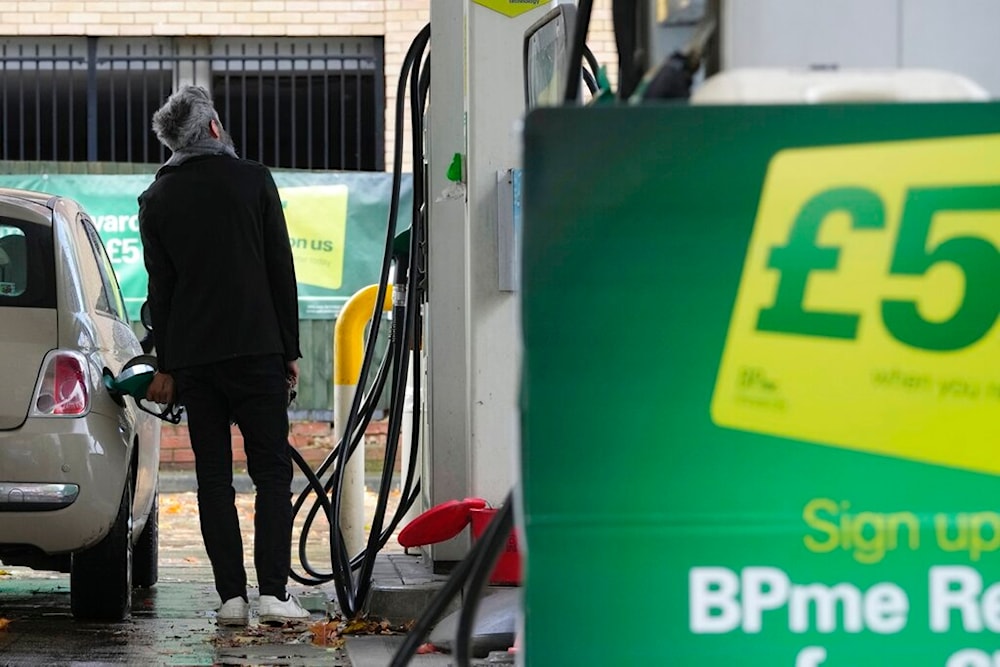
A man refuels his car at a BP gas station in London, Tuesday, November 1, 2022. (AP Photo/Kin Cheung)
Fuel prices across the United Kingdom have surged to their highest levels in over 18 months, reflecting growing economic pressure linked to the escalating US-Israeli war on Iran.
According to government data, unleaded gas rose by 4.6 pence per liter over the past week to an average of 140.28 pence, marking its highest level since August 2024. The increase represents the sharpest weekly rise since the global energy market turmoil of 2022.
Diesel prices climbed even more sharply, rising by nearly 10 pence per liter to reach 158.78 pence, the highest level recorded since late 2023. The sustained increases are now being felt directly by UK consumers, particularly those reliant on personal transport and logistics.
War on Iran drives global oil spike
The surge in fuel costs follows a sharp rise in global oil prices, with Brent crude exceeding $100 per barrel amid the war on Iran.
The escalation has disrupted key trade routes, particularly through the strategically vital Strait of Hormuz, through which a significant portion of the world’s oil supply passes. The conflict has also drawn in additional oil-producing countries, amplifying concerns over market stability.
This geopolitical shock has quickly translated into higher gas prices at UK gas stations, underscoring the country’s exposure to global energy price fluctuations.
Read more: UK media fail to question legality of US-Israeli war on Iran
UK government downplays supply risks
Despite rising prices, the UK government has sought to reassure the public that fuel supplies remain stable.
A spokesperson for UK Prime Minister Keir Starmer told reporters on Tuesday that gas stations across the country are “well stocked,” emphasizing that fuel production and imports are continuing without disruption.
“Petrol stations in the UK are well stocked,” the spokesperson said. “Fuel production and imports are continuing as usual with no issues reported.”
Economists warn that the increase in fuel prices could have a measurable impact on inflation in the coming months.
Dan Hanson, chief UK economist at Bloomberg Economics, estimated that the rise in fuel costs could add approximately 0.3 percentage points to the UK’s inflation rate in March.
This development risks complicating efforts to stabilize the economy, particularly as households continue to face broader cost-of-living pressures.
Pressure mounts on energy firms and policymakers
The UK government has intensified pressure on fuel retailers and energy suppliers to limit price increases.
Chancellor of the Exchequer Rachel Reeves has formally contacted the country’s competition watchdog, urging it to remain on “high alert for unjustifiable price rises on gas, diesel and heating oil.”
At the same time, Reeves faces growing domestic pressure to reconsider planned increases in fuel duty scheduled for September, as rising costs place additional strain on consumers.
While the long-term impact will depend on the duration of the disruption, the government has already introduced targeted support measures for low-income households that rely on oil for heating.
Most UK households remain temporarily shielded by an energy price cap, which is expected to lower domestic energy bills in April for a three-month period before being reassessed.


