
UK presses supermarkets to freeze essential food prices
 4 Min Read
The UK government is pressing supermarkets to consider voluntary price freezes on essential foods as inflation linked to regional conflict and energy costs deepens pressure on households.
-
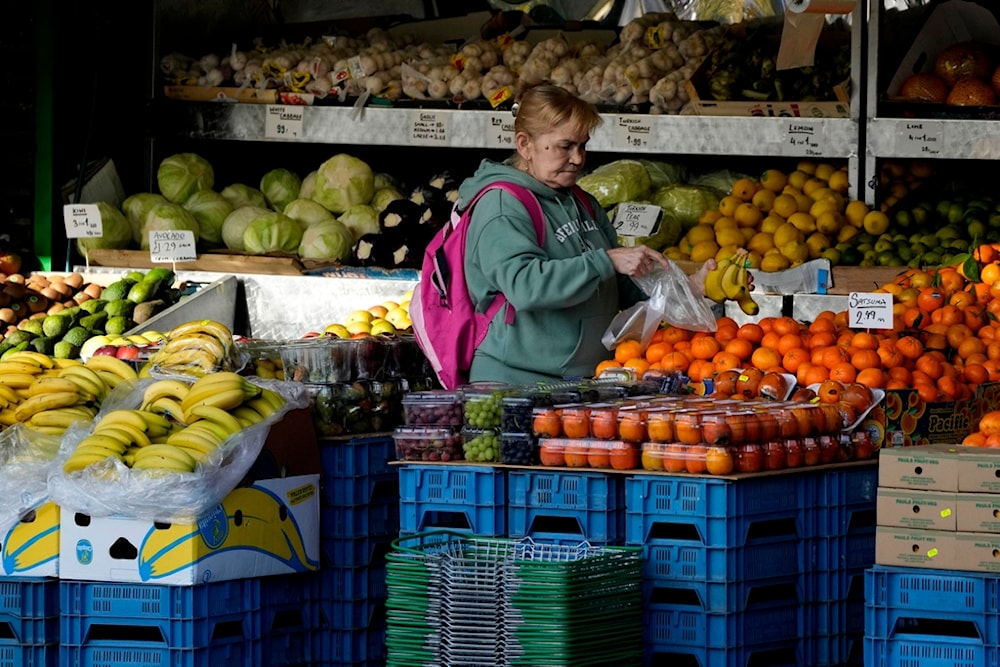
A woman selects fruits at a supermarket in London on November 17, 2021. (AP Photo/Frank Augstein)
The UK government has urged major supermarket chains to consider freezing prices on essential food items as rising inflation and global supply disruptions intensify pressure on households across Britain.
The proposal emerged amid growing concerns over the economic fallout linked to the US-Israeli war on Iran, rising fuel prices, and mounting energy costs that have sharply increased living expenses for working families.
Discussions between ministers and retailers focused on maintaining low prices for staple products. The Scottish National Party (SNP) vowed to ensure such prices remain low on products including bread, milk, butter, rice, eggs, cheese, and chicken.
However, supermarket executives strongly rejected the proposal, warning that the move could shift costs elsewhere in the market and ultimately raise prices on other goods.
The Guardian reports one retail executive described the proposal as “completely mad,” while another called it “an unnecessary, unwanted and unjustified intervention in the market.”
Read more: UK farmers count £800 mln losses after driest, hottest year
Retailers warn of rising costs and supply pressure
British supermarket chains argued that rising taxes, energy bills, transport expenses, and import costs are already placing a major strain on the retail sector.
Helen Dickinson, chief executive of the British Retail Consortium, said the UK already benefits from some of the lowest grocery prices in Western Europe due to intense competition between retailers.
“Rather than introduce 1970s-style price controls and trying to force retailers to sell goods at a loss, the government must focus on how it will reduce the public policy costs which are pushing up food prices in the first place,” Dickinson said.
Industry sources indicated that discussions centered on ensuring at least one low-cost version of essential goods remained available at all times.
Retail executives warned that maintaining such availability could require discounting more expensive products whenever cheaper stock runs out, creating further pressure on profit margins and supply systems.
“The cost of doing something like this is huge,” one supermarket source said, per the Guardian's report. “It would be a huge amount of work as we don’t sell every version of a product in every store.”
Inflation pressures linked to regional conflict
The talks come as Britain faces worsening inflation driven partly by the economic impact of the US-Israeli war on Iran and its effects on oil prices and shipping costs that continue to affect global supply chains.
UK Chancellor Rachel Reeves reportedly met supermarket executives last month to discuss the cost-of-living crisis and concerns over further food price increases.
The government is expected to announce additional measures aimed at easing pressure on households, while regulators are being granted expanded powers to monitor alleged profiteering and unjustified price hikes during periods of crisis.
Under the proposed measures, bodies such as the Competition and Markets Authority would be empowered to publicly identify companies accused of excessively increasing prices or profit margins.
Officials also plan to establish a monitoring group tasked with tracking market disruptions tied to the regional crisis.
SNP pushes broader price controls in Scotland
The SNP separately pledged to impose price controls on between 20 and 50 essential food items using devolved public health powers.
The proposal formed part of the party’s election platform following its victory in Scotland’s parliamentary elections.
SNP officials argued that rising food costs were increasingly affecting public nutrition and household stability.
Retail industry representatives quickly dismissed the proposal, with some warning that such measures could violate existing UK constitutional arrangements governing devolved powers.
British government officials later clarified that current discussions involve voluntary agreements with retailers rather than mandatory state-imposed caps.
A Treasury spokesperson said the government was examining additional measures to help families facing growing economic pressure.
“The chancellor has been clear we want to do more to help keep costs down for families, and will set out more detail in due course,” the spokesperson said.


