
US enters partial government shutdown amid dispute over DHS funding
 4 Min Read
Lawmakers have failed to fully pass a funding bill, as disputes over immigration enforcement and DHS oversight stalled congressional approval.
-
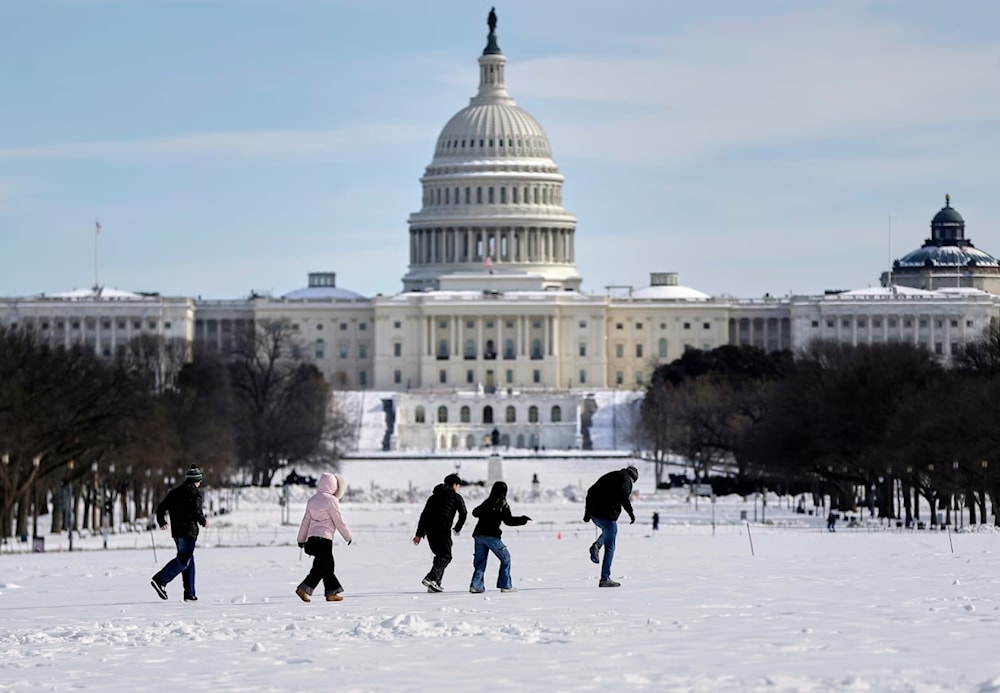
Tourists are seen on the Washington Mall, with the US Capitol in the background, Friday, Jan. 30, 2026, in Washington (AP)
The US federal government entered a partial shutdown early Saturday after a funding gap opened despite last-minute negotiations in Congress, as lawmakers remain divided over immigration enforcement policy.
The lapse began at midnight Eastern Time after the Senate approved a stopgap bill to keep most government agencies operating through September. The measure, however, provides only two weeks of funding for the Department of Homeland Security, leaving the department vulnerable to shutdown if no further agreement is reached.
The funding package still requires approval from the United States House of Representatives, which is currently out of session and is not expected to vote until Monday. The delay triggered a temporary funding lapse, forcing several federal operations to pause and prompting agencies to begin shutdown preparations.
US President Donald Trump reached a compromise with Democratic leaders after they refused to support extended DHS funding, following the fatal shooting of two US citizens in Minneapolis by federal agents. Trump has since urged Republican lawmakers, who hold a majority in the House, to swiftly pass the deal once the chamber reconvenes.
Second shutdown within past year
This marks the second federal shutdown within the past year and comes just 11 weeks after the end of a 43-day funding impasse, the longest shutdown in US history. That previous shutdown, which stretched from October 1 to November 14, 2025, disrupted essential services including air travel, delayed government programs nationwide, and left hundreds of thousands of federal workers without pay for weeks.
Under the current lapse, agencies that have not yet received full-year funding, including DHS, Transportation, Defense, and Education, must curtail non-essential activities. Essential personnel, such as immigration officers, border security agents, air traffic controllers, and TSA screeners, are expected to continue working without immediate pay, while hundreds of thousands of other federal employees face furloughs if the shutdown persists.
Enforcement under fire
While officials expect the current shutdown to be shorter and less disruptive, the White House has instructed multiple departments to implement shutdown procedures. In a memo circulated to agencies including transportation, education, and defence, the administration stated:
“Employees should report to work for their next regularly scheduled tour of duty to undertake orderly shutdown activities.”
“It is our hope that this lapse will be short.”
The short-term DHS funding window is intended to allow lawmakers to negotiate new conditions governing immigration enforcement, an issue that has become the central obstacle to a broader agreement. Democrats argue that any long-term funding extension must be tied to concrete reforms for federal immigration agents.
“We need to rein in ICE and end the violence,” Senate Minority Leader Chuck Schumer said, referring to Immigration and Customs Enforcement. “That means ending roving patrols. It means requiring rules, oversight, and judicial warrants... Masks need to come off, cameras need to stay on, and officers need visible identification. No secret police.”
Republicans and administration officials, however, have accused Democrats of using the shutdown threat as leverage to impose policy conditions, arguing that immigration enforcement funding should not be tied to operational reforms.
Enforcement backlash
Criticism of enforcement tactics has intensified following last weekend’s killing of Alex Pretti, an intensive care nurse who was shot in the back as federal agents pushed him to the ground to detain him. Both Republican and Democratic lawmakers have questioned the conduct of immigration officers in the case, reflecting rare bipartisan concern over accountability and use of force.
On Friday, the United States Department of Justice announced it had launched a civil rights investigation into the shooting, further raising the political stakes surrounding DHS funding negotiations.
Unless lawmakers reach a broader agreement within the next two weeks, DHS could face a full shutdown, potentially escalating the political standoff over immigration enforcement, civil liberties, and federal oversight at a moment of heightened scrutiny.
Read more: Florida Democratic candidate redirects Nazis.us to DHS website


