
US proposes 25% punitive tariff on Brazil imports, cites 'unfairness'
 3 Min Read
A US Section 301 investigation has found that Brazil's trade policies burden US commerce, but Brasília says the decision is political, not technical.
-
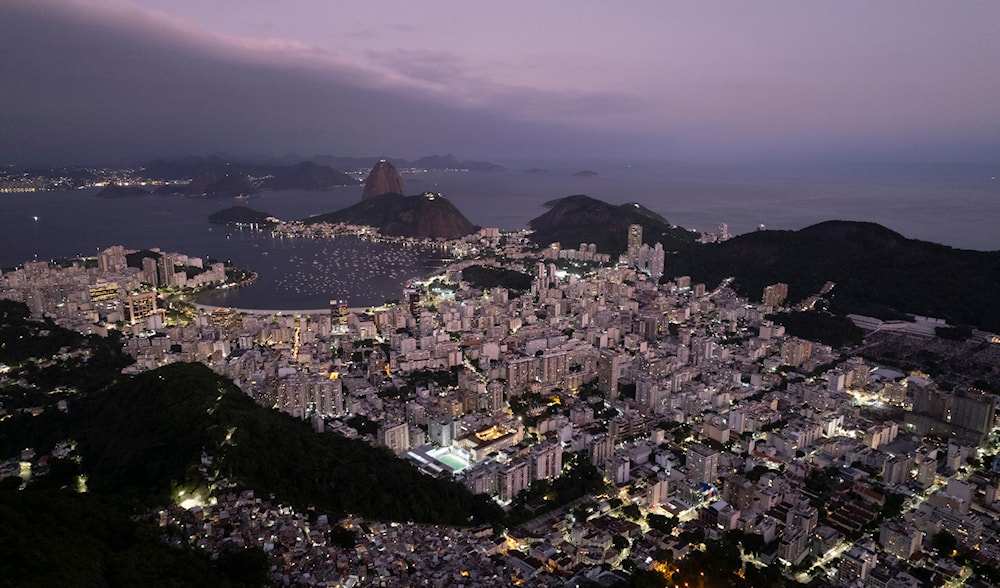
A view of Sugarloaf Mountain and Guanabara Bay at dusk, in Rio de Janeiro, Brazil, Wednesday, March 13, 2024 (AP)
The Trump administration has proposed a 25% tariff on a wide range of Brazilian imports, citing alleged longstanding unfair trade practices, in a move that sets a July 15 deadline for final action, The New York Times reported.
The proposal, announced late Monday by US Trade Representative Jamieson Greer, was launched under Section 301 of the Trade Act of 1974; a statute that requires a formal investigation, public comment period, and congressional hearing before tariffs can take effect.
A public hearing is scheduled for July 6, with comments accepted through July 1.
What the tariff covers
The investigation, opened last year, identified Brazilian practices across several areas as unreasonable burdens on US commerce, including restrictions on electronic payment services, intellectual property protections, ethanol market access, and preferential tariff arrangements.
The proposed tariff, however, comes with a notably broad list of exemptions. Excluded goods include beef, coffee, rare earths, crude oil and petroleum products, pharmaceutical compounds, organic chemicals, fertilizers, aircraft and aircraft parts, and a range of fruits and nuts.
Products already subject to national security tariffs under Section 232, including steel, aluminum, copper, motor vehicles, and auto parts, would also be exempt, meaning some Brazilian exports already face duties as high as 50%.
Speaking on CNBC, Greer said the measure was "quite nuanced" given the scope of those exclusions and indicated that additional Section 301 findings against other trading partners are expected in the coming weeks, adding that the Brazil action was part of a broader effort to address what he called a "giant" US trade deficit.
Brasília pushes back
Two Brazilian officials familiar with the matter told Reuters that the US findings disregarded arguments Brasília had presented over recent months, suggesting the decision was driven by political rather than technical considerations.
The proposal comes amid a cooling in bilateral relations. Despite a White House visit last month by Brazilian President Luiz Inácio Lula da Silva, tensions have mounted following the US designation of Brazil's two largest criminal organizations as "terrorist groups", a move Brasília opposed.
Lula's political rival, Senator Flavio Bolsonaro, met separately with senior US officials, including President Trump, Vice President JD Vance, and Secretary of State Marco Rubio, during a Washington visit days prior.
How this differs from the April 2025 tariffs
The proposed Brazil tariff differs significantly in legal basis from the sweeping duties Trump imposed in April 2025, which were enacted under the International Economic Emergency Powers Act (IEEPA), a statute allowing the president to act unilaterally on a declared national emergency, with no requirement for public consultation.
Those tariffs faced immediate legal challenges and were partially struck down. Section 301 actions, by contrast, follow a structured investigative and procedural process, giving them a stronger legal foundation and a harder track record to challenge in court.


