
Lula denounces US designation of gangs as threat to sovereignty
 3 Min Read
The Brazilian president denounces the US decision to classify the PCC and CV as "terrorist groups", saying, "We will fight them right here at home."
-
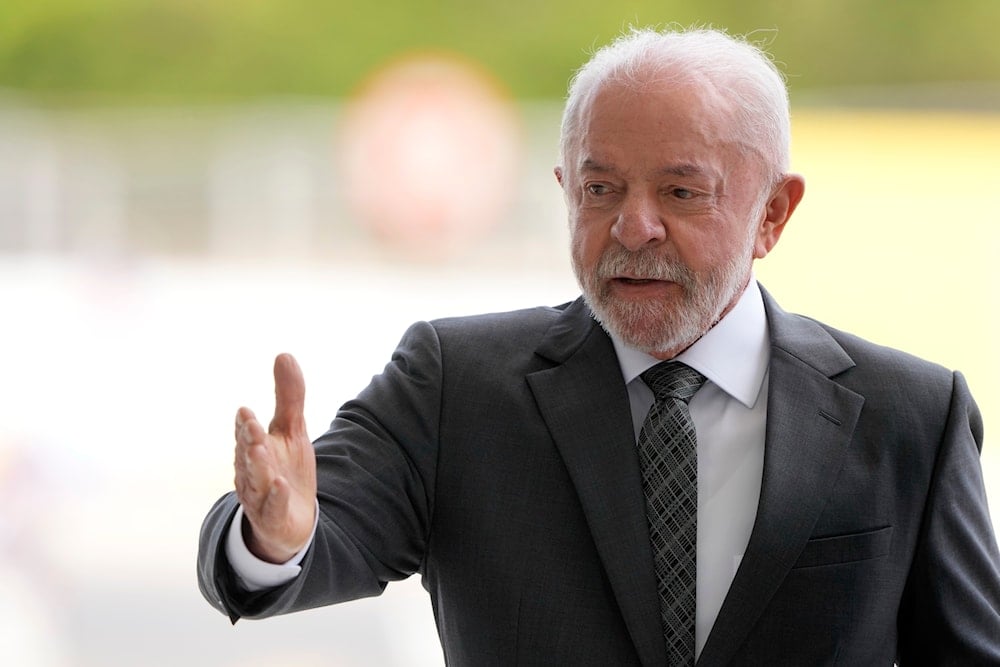
Brazilian President Luiz Inácio Lula da Silva waves to the press before the arrival of Suriname President Jennifer Geerlings-Simons at Planalto Presidential Palace in Brasilia, Brazil, Thursday, May 28, 2026 (AP)
Brazilian President Luiz Inácio Lula da Silva launched a fiery response Thursday after the United States designated two of the country’s most powerful criminal factions as "foreign terrorist organizations," calling the move an affront to Brazil’s sovereignty.
“We will not accept being treated like children. We will not accept being treated as if we were some tinpot republic,” a visibly angry Lula said at an event in the country’s northeast.
The US government on Thursday formally designated the Red Command (CV) and the First Capital Command (PCC) as "terrorist groups". Both organizations emerged from Brazil’s prison system and have since expanded across national borders, controlling large urban areas through drug and arms trafficking and extortion.
“They are terrorists because they torment families, they torment neighborhoods, and they torment the city,” Lula said, adding that “we will fight them right here at home.”
But the Brazilian leader took sharp issue with the US classification, arguing the groups do not fit the definition of terrorism as understood by the Trump administration.
“They are not the kind of terrorists that Trump is looking for. Trump wants an Osama Bin Laden figure,” Lula said.
'Do not play games with our democracy'
The designation was widely seen as a diplomatic snub to Lula, who met at length with US President Donald Trump earlier this month. Both leaders had described that meeting as positive.
“I spent three hours with President Trump, three whole hours,” Lula said, noting that he had handed the president documents specifically addressing the fight against organized crime. “Do not play games with the sovereignty of this country. Do not play games with our democracy,” he added.
Lula’s criticism was echoed by a senior Brazilian federal police official. Luciano Flores, a federal police commissioner, told The Associated Press that the CV and PCC do “not fall within the scope of the law that characterizes terrorist organizations” and are instead classified under Brazilian law as “criminal organizations operating internationally.”
How the US leverages its terrorist designation to evade accountability
The US "terrorist" designation for Brazil's PCC and CV, announced May 28, 2026, is seen as a legal pretext for unilateral military action. Under this framework, the Trump administration claims an "armed conflict" exists with designated cartels.
This authority enables lethal strikes without due process. As of May 29, 2026, US strikes in the Caribbean and Eastern Pacific against designated Venezuelan gangs have killed at least 202 people since early September 2025. Each attack uses identical phrasing, "intelligence confirmed" drug operations, without releasing public evidence.
The pattern resembles historical overreach. In the 1970s, Operation Condor saw CIA-backed Latin American regimes eliminate dissidents under an anti-communist guise. Today’s "narcoterrorism" label similarly bypasses legal constraints on sovereignty.
Critics note these strikes kill suspects without arrest or trial, which UN experts have condemned as extrajudicial. The military acts as judge and executioner, with the designation providing retroactive justification for lethal force.
By designating foreign groups as "terrorists", the US creates a parallel legal universe where military strikes replace law enforcement, evidence remains classified, and the 200+ killed as of May 29, 2026, are never even charged with a crime.


