
US risks losing its role as world's top investment hub, FT warns
 3 Min Read
FT commentator Rupert Armstrong argues fiscal mismanagement threatens the flow of global capital into US stocks and bonds, and the AI boom with it.
-
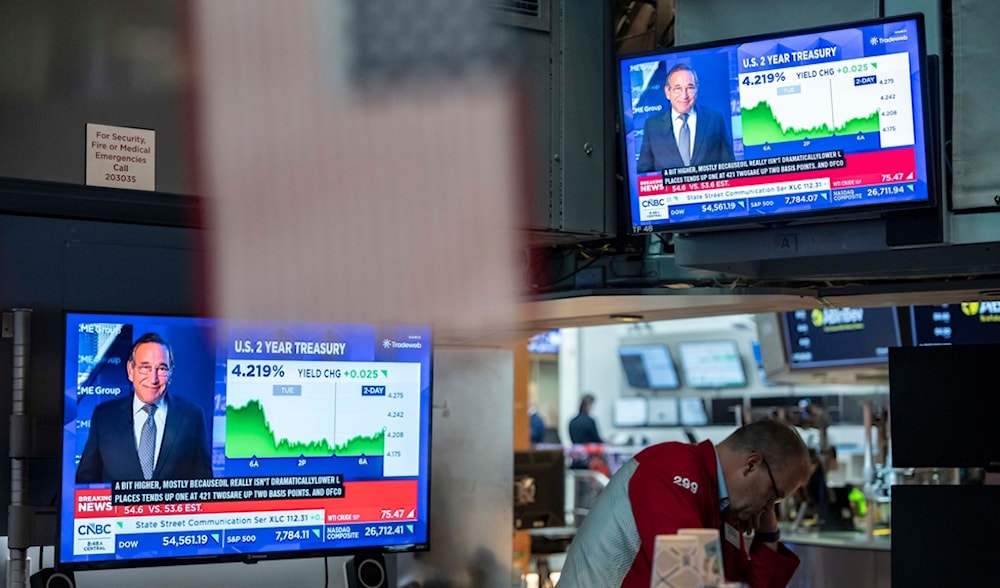
Screens on the floor of the New York Stock Exchange display US 2 year Treasury on the floor of the New York Stock Exchange, Wednesday, Aug. 5, 2026, in New York (AP Photo/Yuki Iwamura)
The United States' standing as the world's premier destination for global savings is under growing pressure, according to a Financial Times opinion piece by Rupert Armstrong, the outlet's US financial commentator.
Armstrong argues that Washington's fiscal mismanagement threatens not just the dollar but the entire architecture that draws global capital into American stocks and bonds, a flow he says sustains both consumer spending and the ongoing artificial intelligence investment boom.
He notes that US equities have dramatically outpaced global markets over the past two decades, delivering close to 17 percent annual returns since the 2008 financial crisis, far ahead of Europe, Japan, emerging markets, and China. But he points to a recent reversal, with global stocks matching or exceeding US performance over the last two years, particularly when measured in local currencies.
At the same time, US Treasury bonds have come under renewed pressure this summer, with yields on longer maturities testing the upper end of the range in place since the 2021 to 2022 inflation surge.
Armstrong attributes this partly to waning enthusiasm for the AI trade and partly to investors finally reacting to Washington's indifference toward its deficit, an indifference he says extends to the Trump administration and Congress alike.
Structural advantages, structural risks
Despite these signals, Armstrong does not foresee a wholesale exodus from US assets. He singles out advantages he believes remain unmatched elsewhere, including elite universities, a dependable legal system, relatively light regulation, abundant energy resources, a vast domestic market, and comparatively favorable demographics.
However, he cautions against assuming investors can simply shift from Treasuries into equities to sidestep the risk.
Public and private markets, he writes, are deeply intertwined. As Treasury yields climb, the discount rate applied to corporate future earnings rises with them, undermining the valuations propping up the tech giants that dominate the US stock market. Compounding this, major technology firms driving the AI buildout, including Alphabet and Oracle, are increasingly relying on debt financing, tying their borrowing costs directly to Treasury market volatility.
The paradox of fiscal discipline
Perhaps counterintuitively, Armstrong warns that even a successful effort to rein in the deficit carries its own dangers.
He explains that government deficits and corporate profits are mirror images of one another on the national ledger, meaning that closing the deficit would likely coincide with a painful decline in corporate earnings and share prices in the short term, an adjustment he says grows harsher the longer it is delayed.
Armstrong closes by noting that alternatives to US markets are becoming more compelling. He cites accelerating profits among European companies, momentum behind corporate governance reforms in Japan, and improving fiscal positions across several emerging economies.
He concludes that being heavily weighted toward American assets may no longer be the automatic choice for global investors, a shift he warns could destabilize the economic equilibrium the US has long relied upon.


