
US dollar near multi-month lows as Treasury bond buybacks shake market
 4 Min Read
The US dollar remains near multi-month lows as Treasury bond buybacks unsettle markets, while traders await Iran sanctions and key US and Japanese policy signals.
-
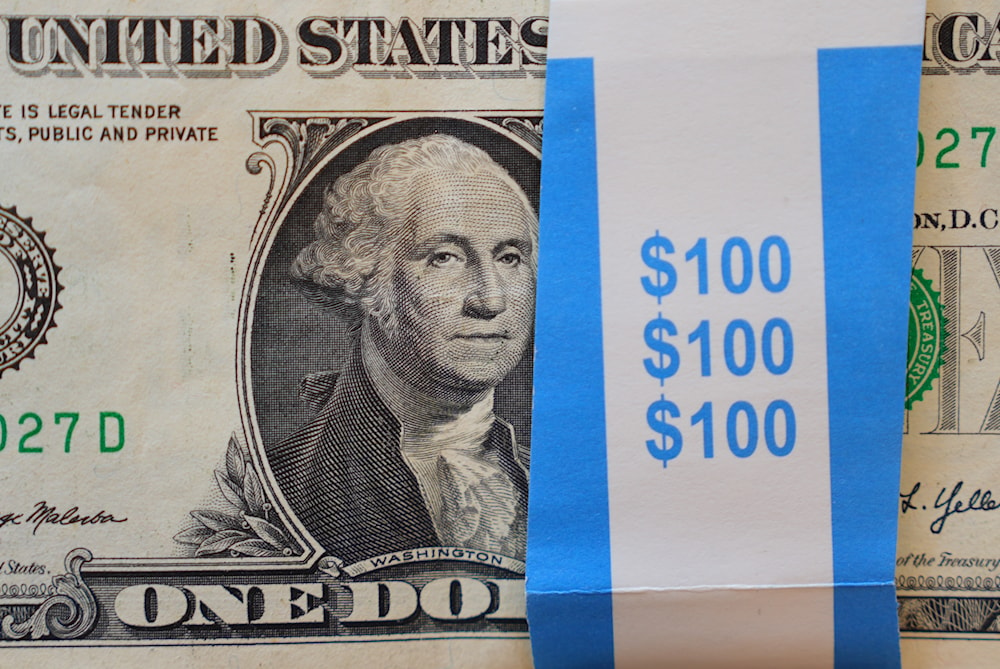
A portrait of George Washington is displayed on a stack of US one-dollar bills in Dallas, Tuesday, April 7, 2026 (AP)
The US dollar traded near multi-month lows on Monday, unsettled by the Treasury’s plan to increase long-bond buybacks, as traders awaited details on new Iran sanctions and policy speeches from US and Japanese officials later this week.
The Canadian dollar slipped 0.2% in early trade to C$1.3798 per dollar after trade talks with the US collapsed and Washington imposed 50% tariffs on Canadian goods, with Canada retaliating in kind. The Australian and New Zealand dollars traded just shy of three-month highs at $0.7171 and $0.5979, respectively. The euro was comfortably above $1.16 at $1.1685, while the yen kept to the strong side of 159 per dollar.
Friday data showing the strongest US services growth in nearly two years in August held off dollar sellers in steady early trade. The dollar logged its largest weekly drop against bitcoin in nearly three-and-a-half years on Sunday and has been sliding sharply on gold over revived fears the currency will suffer if the US tries to hold down yields.
Long-end yields rise
Long-end yields have been climbing globally on a combination of a solid economic growth outlook, rising inflation expectations and nerves about ballooning sovereign debts.
Last week, after 30-year yields hit almost two-decade highs, the US Treasury announced it would double buybacks at the long end to $4 billion per operation. The size is paltry in a market worth $32 trillion, but the interventionist signal spooked traders and hit the dollar.
"The US Treasury's attempts to artificially hold down long-term bond yields appears to be reigniting the $US debasement trade," said Shane Oliver, head of investment strategy at Australian financial services firm AMP.
The mood was keeping the Australian dollar above 71 cents, he said.
Sterling was firm at $1.3650 in morning trade and the yuan, which notched an eighth straight weekly rise last week, hovered near a 3-1/2 year high at 6.7222 per dollar.
Sanctions and speeches
Later on Monday, at 1800 GMT, US Treasury Secretary Scott Bessent is due to hold a press conference after threatening "the toughest sanctions in history" on Iran, with markets focused on whether he will target China. Iran's foreign minister has dismissed the threat of new US sanctions as a sign of desperation.
Market participants will also be hoping for some clarity on the outlook for US interest rates when Federal Reserve Chairman Kevin Warsh speaks in Jackson Hole, Wyoming, on Friday. He is also sure to face questions about the Treasury's buybacks.
"Any comments on the balance sheet, duration supply, or term premium could move the long end more than the data itself. That said, given Warsh’s typically restrained style, we aren’t holding our breath," said BNY strategist Geoff Yu.
A Thursday appearance by Bank of Japan deputy governor Ryozo Himino will also be closely watched as a prelude to next month's policy meeting. In particular, investors will be looking to see if he pushes back on a shift in market pricing to see a faster pace of hikes.
"Himino may signal the BOJ is moving closer to another interest rate hike," said Commonwealth Bank of Australia strategist Joe Capurso. "However, any hawkish comments are likely to exert only modest downward pressure on USD/JPY. Developments in the US bond market area are a more important driver of USD/JPY."


