
US sanctions push Cuba's tourism industry toward collapse
 4 Min Read
Intensified US sanctions, fuel shortages, suspended flights, and the withdrawal of foreign hotel operators force most hotels in Cuba to shut down.
-
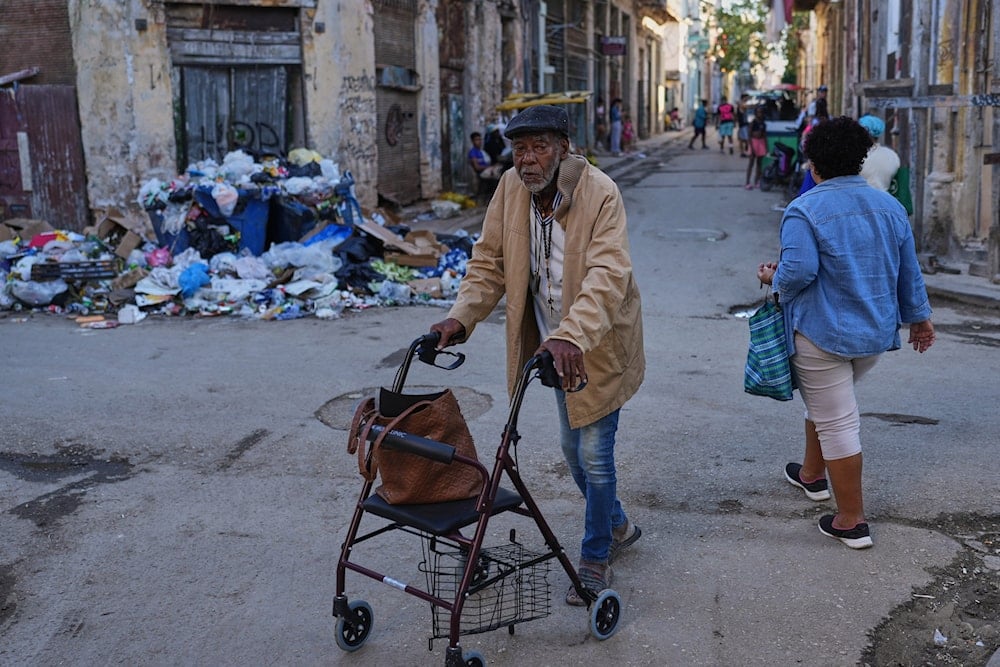
A man traverses a street in Old Havana, Monday, January 5, 2026 (AP)
Cuba’s tourism industry has ground to a near standstill as fuel shortages, flight suspensions, and tightening US sanctions force hotels to close and foreign operators to abandon the island.
Prime Minister Manuel Marrero said on Wednesday that 73% of the country’s hotels were no longer operating, describing the sector as being in a state of “almost total paralysis."
Around 25,000 employees have been left “in a vulnerable situation," while seven foreign hotel chains managing approximately half of Cuba’s available rooms have withdrawn from the market.
The collapse threatens one of the country’s most important sources of foreign currency. Before the latest crisis, tourism was Cuba’s second-largest generator of overseas revenue and provided employment to more than 300,000 people.
Foreign hotel operators withdraw
The sector came under greater pressure after Washington imposed sanctions in May on GAESA, the Cuban military-linked conglomerate that controls a significant portion of the island’s tourism infrastructure.
The restrictions increased the legal and financial risks facing international companies working with Cuban state entities, prompting hotel groups to terminate management agreements rather than risk exposure to US penalties.
Spanish hospitality company Meliá ended operations at all 34 of its Cuban hotels on Friday, bringing to an end a presence on the island dating back to 1990.
The properties had been operated through the company’s Portuguese subsidiary, Ilha Bela Gestao E Turismo.
Meliá said its departure was driven by mounting operational, legal, and financial obstacles. The company had already announced the previous month that it would stop managing 15 of its hotels before proceeding with a complete withdrawal.
The closures are part of a broader retreat by foreign businesses, including logistics and financial firms, as companies reassess the risks created by Washington’s escalating sanctions campaign.
Flights suspended as fuel supplies collapse
Cuba’s tourism downturn has also been intensified by an acute shortage of aviation fuel.
After Havana warned in February that supplies were running low, several airlines from Canada, Russia, and Europe suspended services to the island, sharply reducing the number of available flights.
Official statistics showed that visitor arrivals between January and June fell by 58% compared with the same period the previous year.
The impact is visible in Old Havana, where streets once crowded with international visitors have become increasingly empty.
“There is no tourism flow, there is no income, and no economy. The impact is huge,” said Teresa Carrillo, a 62-year-old resident of Havana.
US fuel pressure deepens energy crisis
The tourism shutdown forms part of a wider energy emergency that has disrupted transportation, electricity generation and daily life across Cuba.
Washington has effectively prevented fuel shipments from reaching the island for nearly six months, worsening shortages in an energy system already weakened by years of insufficient investment and longstanding trade restrictions.
Cuba’s oil supply was further disrupted after the United States took control of Venezuelan energy assets in late January, cutting Havana off from its principal source of imported crude.
The US administration subsequently threatened sanctions against other countries considering supplying oil to Cuba.
The shortage has contributed to at least five nationwide power outages this year, alongside frequent localized electricity cuts.
With fuel imports constrained, airlines withdrawing and foreign hotel groups ending operations, Cuba’s tourism industry has lost both the infrastructure and visitor flows required to sustain the sector, further depriving the economy of urgently needed foreign currency.
Read more: UN warns of 'potential life loss' in Cuba as US oil blockade tightens


