
Cuba slams US sanctions as 'coercive', 'collective punishment'
 3 Min Read
The United States has expanded sanctions on Cuba, targeting its energy sector and intensifying economic pressure that has worsened fuel shortages and nationwide blackouts.
-
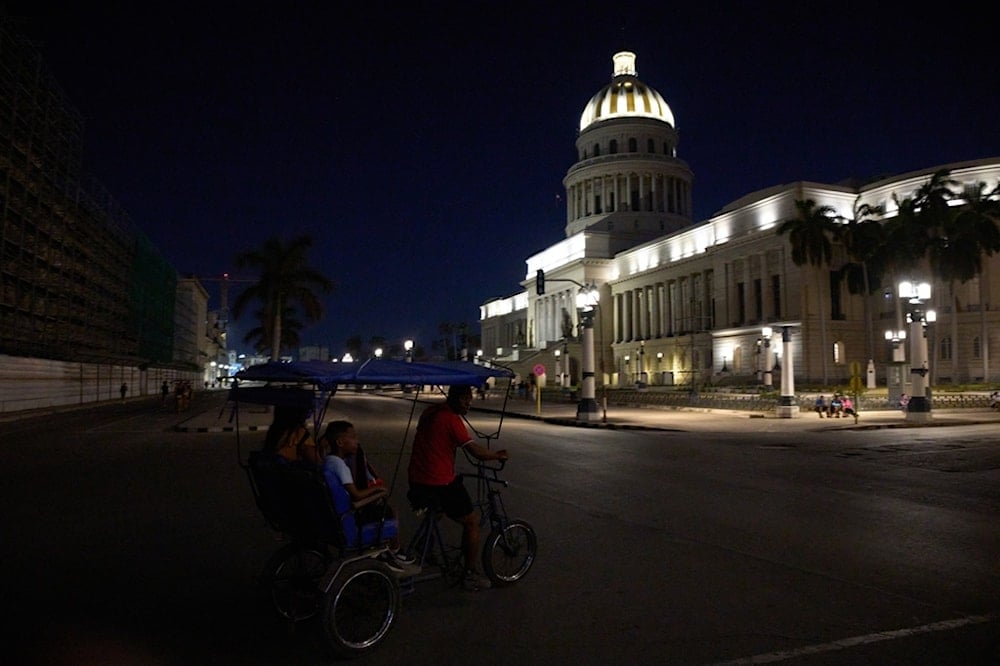
A bicycle taxi transports passengers past the Capitol in Havana, Wednesday, April 15, 2026 (AP)
Cuba has condemned a new escalation in US pressure after US President Donald Trump approved sweeping sanctions targeting core sectors of the island’s economy.
The executive order, signed on Friday, expands restrictions on individuals linked to Cuba’s energy, defense, financial, and security institutions.
Repudiable pero curioso y ridículo. El gobierno de EEUU se alarma y responde con nuevas medidas coercitivas unilaterales ilegales y abusivas contra Cuba, al desfile de más de medio millón de cubanos en La Habana por el #1DeMayo, encabezado por el General de Ejército Raúl Castro… pic.twitter.com/FisSHc1JVb
— Bruno Rodríguez P (@BrunoRguezP) May 1, 2026
Cuban Foreign Minister Bruno Rodríguez Parrilla denounced the move, stating it violates international law and directly harms civilians. Writing on X, he said the “unilateral coercive measures” breach the United Nations Charter and amount to “collective punishment against the Cuban people,” adding, “Our people do not cower.”
La nueva amenaza clara y directa de agresión militar, emitida por el presidente de #EEUU, tras reforzar de modo drástico el bloqueo económico, eleva la agresión contra #Cuba a niveles peligrosos, sin más pretexto que el deseo de satisfacer a élites minúsculas que le prometen… pic.twitter.com/b2cwSyg8et
— Bruno Rodríguez P (@BrunoRguezP) May 2, 2026
The latest sanctions come amid a deepening crisis widely attributed to US restrictions, particularly on energy supplies. Limits on fuel imports have triggered widespread blackouts affecting millions, while disrupting hospitals, public transportation, water systems, and schools. Cuba’s dependence on imported oil has made it especially vulnerable to these measures, with only limited shipments, such as those from Russia, managing to reach the island in recent months.
Sanctions deepen crisis
Beyond energy, the sanctions have had far-reaching economic and humanitarian consequences. Financial restrictions and trade barriers have constrained Cuba’s access to global markets, reducing foreign investment and driving up the cost of essential imports. Shortages of food and basic goods have intensified as supply chains are disrupted and purchasing power declines.
The healthcare system, long regarded as one of the country’s key pillars, has also come under strain. Restrictions on imports involving US components have contributed to shortages of medicines, medical equipment, and diagnostic supplies, delaying treatments and placing vulnerable populations at risk. Power outages linked to fuel shortages have further compounded the situation, affecting hospital operations and critical care services.
Public anger over these conditions was visible in Havana during International Workers' Day, when demonstrators gathered outside the US Embassy to denounce the blockade.
Havana. Thousands got up before dawn for the annual Mayday march, celebrating workers rights and defending the Cuban Revolution. This year the rallies were decentralised, to conserve transport fuel. pic.twitter.com/s46dI0wPDx
— tim anderson (@timand2037) May 1, 2026
In an attempt to internationalize economic pressure and isolate the island further, Washington has threatened to penalize third countries supplying oil to Cuba, warning of tariffs on their exports to the United States.
Tensions undermine dialogue
Despite earlier indications from President Miguel Díaz-Canel that dialogue with Washington was underway, the latest actions have raised doubts over any potential easing of tensions. Díaz-Canel criticized the measures as coercive, stating that the blockade inflicts harm through the “intimidating and arrogant behaviour of the world's greatest military power.”
Trump’s remarks later on Friday intensified concerns in Havana, after he suggested the United States could be “taking over” Cuba “almost immediately”. He added, “On the way back from Iran, we'll have one of our big - maybe the USS Abraham Lincoln aircraft carrier - the biggest in the world, we'll have that come in, stop about 100 yards offshore, and they'll say, 'Thank you very much. We give up'.”
For Cuban officials, such rhetoric reinforces long-standing claims that US policy is rooted in regime change, a position they trace back to the aftermath of the Cuban Revolution led by Fidel Castro. The economic embargo imposed in 1960 continues to define relations between the two countries, with Havana arguing that the current escalation represents not a departure, but an intensification of a sustained campaign to pressure and destabilize the Cuban state.
Read more: China: US cannot justify Cuba blockade with fabricated claims


