
100 Palestinian children killed in Gaza since ceasefire
 4 Min Read
UNICEF warns that freezing deaths highlight the collapse of shelter, healthcare, and child protection in Gaza, as damaged homes and blocked supplies leave families exposed to winter conditions.
-
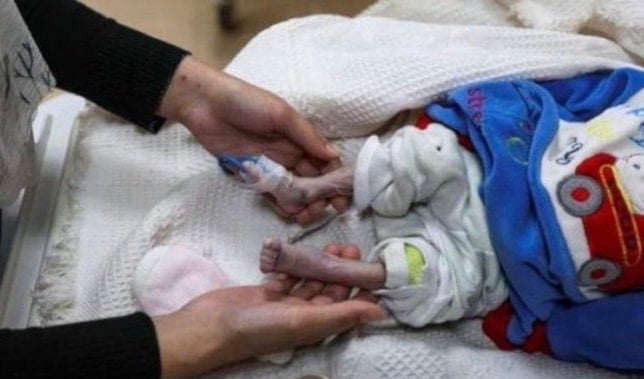
The tiny corpse of a Palestinian infant who died from hypothermia in Gaza (Social media/X)
Six Palestinian children have died from hypothermia in Gaza this winter, according to UNICEF, underscoring the worsening humanitarian conditions facing families amid ongoing restrictions and insecurity.
“We've had children die of hypothermia again in the last few days. So, we've now gone to six children who died of hypothermia just in this winter,” UNICEF spokesperson James Elder told journalists in Geneva on Tuesday, speaking via video link from Gaza.
Elder said more than 100 children have been killed since a ceasefire came into effect in October last year, highlighting the continued dangers for civilians, particularly children.
“That's roughly a girl or a boy killed here every day during a ceasefire,” he said, adding that “life in Gaza remains suffocating” and that “survival remains conditional.”
UNICEF data show that confirmed figures point to “60 boys and 40 girls killed in the Gaza Strip.” However, Elder stressed that “the actual number of Palestinian children killed is expected to be higher,” noting that the figures only include cases where sufficient information was available.
Causes of death and ongoing risks
According to Elder, the majority of child deaths recorded since the ceasefire began were the result of Israeli assaults.
“These children are killed from airstrikes, drone strikes, including suicide drones. They're killed from tank shelling. They're killed from live ammunition,” he stressed.
While the ceasefire has allowed for some limited humanitarian improvements, including expanded health, nutrition, water, and sanitation services, Elder said the overall situation for children remains dire.
“A ceasefire that slows the bombs is progress, but one that still buries children is not enough,” he stressed.
He called for the full implementation of the ceasefire, unimpeded humanitarian access, and accountability, stressing the need for “real safety” for Gaza’s children.
Education supplies still restricted
As some children begin returning to improvised tent schools, Elder said restrictions continue to block even the most basic supplies needed for education and psychological recovery.
“So, the most basic school supplies remain restricted. And I'm talking pencils, pens, and notebooks, and that goes as well for kids’ recreation,” he said. “We're talking about the most essential, critical materials for children to start to recover from trauma.”
He added that trauma counselors working with children are largely limited to breathing exercises and drawing as coping tools, but even those options are constrained by shortages.
Elder described seeing children reuse the same piece of paper repeatedly due to the lack of paper, crayons, and other simple materials. He said both recreational kits used for trauma recovery and basic education supplies remain blocked, despite repeated appeals.
“We keep pushing the denials keep coming,” he said.
Deadly winter weather and building collapses
Separately, Palestinian civil defense teams said severe winter weather has compounded the humanitarian crisis, with seven people killed in recent days due to partial collapses of structurally unsound buildings. Among the victims was a child who died from extreme cold.
Those deaths bring the total number of people killed by winter storms and cold weather since the start of the winter season to 31.
Civil defense officials warned that conditions have reached a critical point, as buildings damaged by Israeli bombardment no longer provide adequate shelter. Heavy rainfall, strong winds, and deteriorating conditions in temporary shelters have further increased the risks.
In a statement, the authorities placed legal and humanitarian responsibility on the international community, calling for immediate action to protect civilians, support relief efforts, and provide essential shelter to prevent further loss of life.


