
Meloni brands anti-Olympics protesters 'enemies of Italy'
 3 Min Read
Italian PM slams Olympics protesters as "enemies of Italy" amid demonstrations against gentrification, soaring rents, and environmental harm from Winter Games.
-
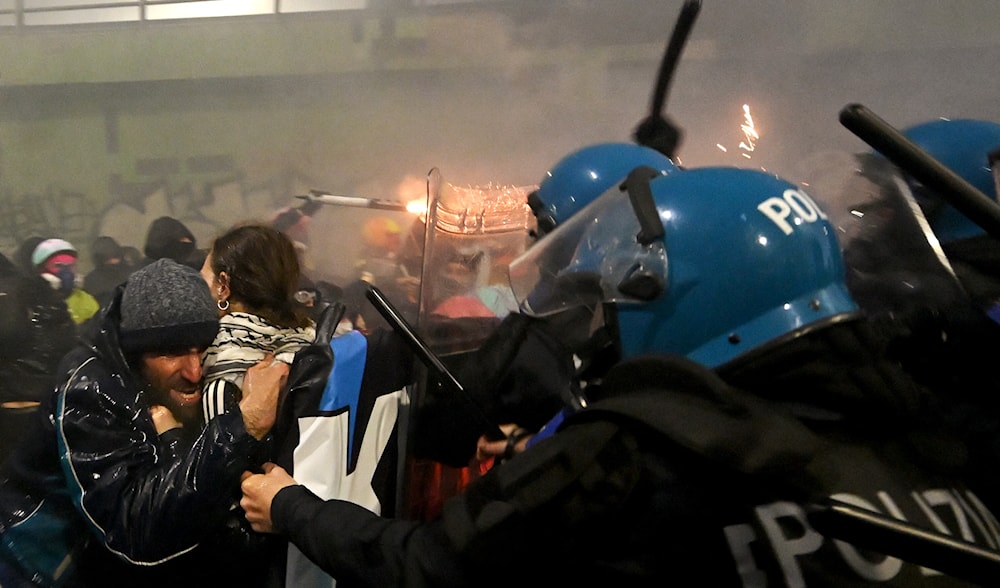
Demonstrators clash with police during a protest against the environmental, economic and social impact of the Milano-Cortina 2026 Winter Olympics Games, in Milan on February 7, 2026. (Photo by Piero Cruciatti/ AFP)
Italy's right-wing Prime Minister Giorgia Meloni has branded anti-Olympics demonstrators as "enemies of Italy" following violent clashes and railway sabotage that marred the opening weekend of the Milano-Cortina 2026 Winter Games.
The incidents expose deep divisions over hosting the international sporting event, which started on February 6 and will continue until February 22, with critics arguing the Games prioritize corporate interests over residents' well-being.
Saturday's protests drew approximately 10,000 people to Milan's streets, representing a broad coalition of housing advocates, environmental groups, student organizations, and grassroots unions operating under banners like the "Unsustainable Olympics Committee."
While most demonstrated peacefully, around 100 protesters broke away from the main march, hurling firecrackers, smoke bombs, and bottles at security forces before police deployed water cannons and detained six individuals.
View this post on Instagram
Railway sabotage compounds security concerns
The demonstrations coincided with three separate incidents of railway infrastructure damage near Bologna, causing delays exceeding two hours for high-speed and regional train services. Though no group has claimed responsibility, the timing suggests coordinated opposition to the Games.
Meloni expressed solidarity with law enforcement and Milan officials, condemning what she called "gangs of criminals" undermining Italy's international image.
The confrontations occurred amid heightened security measures, including the controversial deployment of US Immigration and Customs Enforcement officers, a decision that has angered activists who oppose involving an agency associated with aggressive immigration enforcement in Italian operations.
Financial, environmental grievances fuel opposition
Protest organizers have highlighted the Games' €1.7 billion operating budget, a €100 million increase from initial projections, which excludes major capital expenditures like Cortina d'Ampezzo's €118 million sliding center and Milan's nearly €300 million Santa Giulia ice hockey arena. Critics particularly denounce the bobsleigh track as wasteful public spending on a discipline practiced by minimal Italian athletes.
Housing advocacy groups argue the Olympics exacerbate Milan's affordability crisis, driven by a decade-long property boom since Expo 2015. They contend that tax incentives attracting wealthy residents, coupled with Olympic-related luxury developments and short-term rental conversions, have transformed Milan into an "unlivable city" marked by displacement and deepening inequality.
Ecological damage in fragile Alpine regions
Environmental campaigners also warn of irreversible damage to Alpine ecosystems, citing extensive deforestation for venue construction and the intensive artificial snowmaking required by warming temperatures. They argue these practices contradict Italy's climate commitments while undermining fragile mountain environments through excessive water and energy consumption.
Despite official framings of the Games as opportunities for regional development and tourism, with organizers emphasizing that private funding covers operational costs, critics maintain that public fiscal exposure remains substantial while revenues flow primarily to private organizing committees.


