
'Good news' on Iran-US agreement could come 'in next few hours': Rubio
 4 Min Read
Marco Rubio says US–Iran peace talks have made progress, hinting at a possible agreement on nuclear limits and Strait of Hormuz access within hours.
-
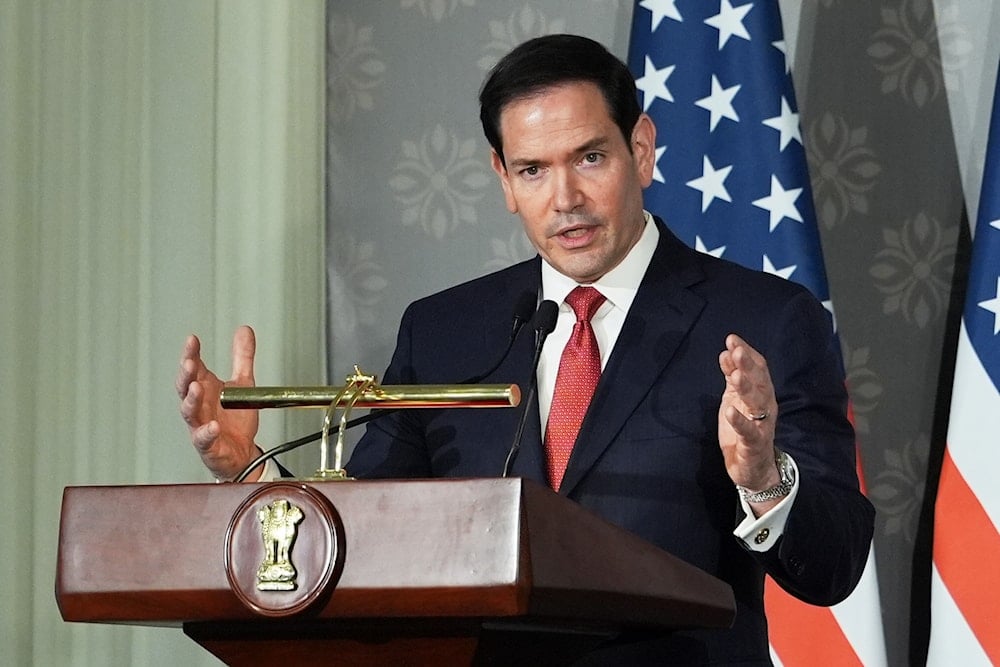
United States Secretary of State Marco Rubio speaks at a joint presser with India's Minister of External Affairs S. Jaishankar, unseen, following their talks in New Delhi, India, May 24, 2026 (AP)
Significant progress has been made in peace talks with Iran, US Secretary of State Marco Rubio said Tuesday, adding that the world could receive “good news" within hours, The Guardian reported.
Speaking to reporters in New Delhi during a diplomatic visit to India, Rubio struck a cautiously optimistic tone.
“I do think perhaps there is the possibility that in the next few hours the world will get some good news,” Rubio told the media. He cautioned, however, that the progress was not “final". Rubio reiterated that Iran can never possess a nuclear weapon and that the Strait of Hormuz must remain open to global marine traffic without Tehran charging tolls for safe passage.
“We have made some progress over the last 48 hours working with our partners in the Gulf region on an outline that could ultimately – if it succeeds – leave us not just with a completely open strait … and with addressing some of the key things that underpin what has been Iran’s nuclear weapons ambitions in the past,” Rubio said.
The secretary of state emphasized that reaching a durable agreement would require “full Iranian acceptance and then compliance,” adding that “future work” would be needed to finalize “the details".
“When you are talking about a nuclear programme, as an example, these are highly technical matters and ones that would probably need to be addressed over some period of time,” he said.
Iran has repeatedly asserted its independence from foreign pressure, refusing to accept dictates from the United States in nuclear negotiations. Foreign Ministry spokesman Esmaeil Baghaei stated unequivocally that "negotiation has no relation to dictation and coercion," and that genuine talks cannot involve "dictation, deception, extortion, or coercion."
Additionally, Foreign Minister Abbas Araghchi has made it clear that Iran will only embrace a nuclear deal "that meets the legitimate interests of our people," not one dictated by Washington. This insistence on mutual respect rather than unilateral demands has been a recurring theme in all official statements from Tehran.
Regarding nuclear weapons, Iran has never sought them, a position grounded in both policy and religious decree. Araghchi stated categorically that "we do not want to become owners of nuclear weapons and this is not our policy," describing Iran's atomic activities as strictly peaceful. The government maintains that this principled stance, backed by a fatwa from the late Iranian Leader Sayyed Ali Khamenei, remains unchanged despite US pressure.
Rubio dismisses claims agreement would boost Iran's nuclear program
Responding to criticism from senior Republicans over the emerging deal, Rubio dismissed suggestions that President Donald Trump would accept terms that strengthen Iran’s nuclear position.
“And the idea that somehow this president, given everything he has already proven he is willing to do, is going to somehow agree to a deal that ultimately winds up putting Iran in a stronger position when it comes to nuclear ambitions is absurd,” Rubio said.
“That is just not going to happen. But our preference is to address this through a diplomatic means and that is what we are endeavouring to do here.”
Officials welcome potential agreement
Meanwhile, UK Prime Minister Keir Starmer voiced support for the nearing agreement. In a post on X, Starmer wrote:
“I welcome the progress towards an agreement between the US and Iran. We need to see an agreement that brings the conflict to an end and reopens the strait of Hormuz, with unconditional and unrestricted freedom of navigation."
I welcome the progress towards an agreement between the US and Iran.
— Keir Starmer (@Keir_Starmer) May 24, 2026
We need to see an agreement that brings the conflict to an end and reopens the Strait of Hormuz, with unconditional and unrestricted freedom of navigation. It’s vital that Iran must never be allowed to develop…
"It’s vital that Iran must never be allowed to develop a nuclear weapon. My government will continue to do everything we can to protect British people from the impact of this conflict. We will work with our international partners to seize this moment and achieve a long-term diplomatic settlement.”
Similarly, European Commission President Ursula von der Leyen welcomed the progress on the talks between Tehran and Washington.
I welcome the progress towards an agreement between the US and Iran.
— Ursula von der Leyen (@vonderleyen) May 24, 2026
We need a deal that truly de-escalates the conflict, reopens the Strait of Hormuz and guarantees toll free full freedom of navigation.
Iran must not be allowed to develop a nuclear weapon.
It must also end…
"I welcome the progress towards an agreement between the US and Iran. We need a deal that truly de-escalates the conflict, reopens the Strait of Hormuz and guarantees toll-free full freedom of navigation. Iran must not be allowed to develop a nuclear weapon," von der Leyen wrote on X.


