
'Israel' orders $200m worth of aerial munitions from Elbit Systems
 3 Min Read
The Israeli War Ministry has signed a $200 million contract with Elbit Systems for aerial munitions as it seeks to resume its aggression in the region.
-
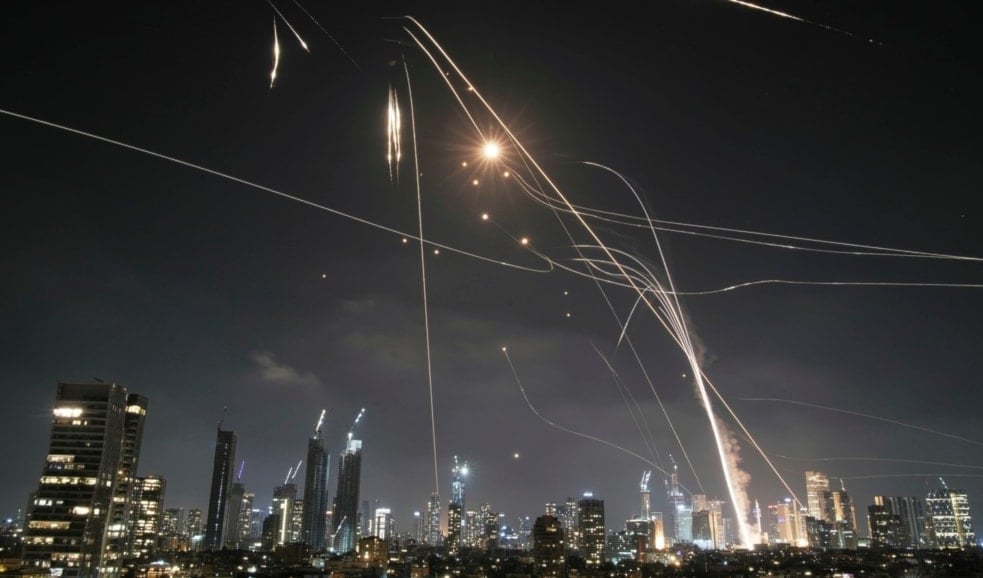
Israeli Iron Dome air system fires to intercept missiles over Tel Aviv, occupied Palestine, June 13, 2025. (AP)
The Israeli Ministry of War has announced a new military procurement agreement worth more than $200 million with Elbit Systems, in a move that further expands its stock of aerial munitions amid its ongoing aggression and continued escalation in the region.
The deal centers on the acquisition of aerial munitions intended for both near-term combat use and longer-term operational scenarios.
Major General Amir Baram, director general of the War Ministry, framed the procurement as part of a broader strategy to strengthen the occupation’s military apparatus and defense industry base.
He claimed that these measures aim to build sustained capacity for the Israeli occupation forces to carry out a wide range of military offensives, relying on domestically produced weapons systems, advanced military technology, and secured supply chains.
Reduced military aid
The development comes as the Israeli occupation continues to expand its domestic weapons production while simultaneously relying on extensive military support from allies to sustain its ongoing aggressions in the region.
However, reliance on the United States for military aid has increasingly become uncertain, particularly as the Israeli occupation continues its escalatory and repeated offensives across the region, including in Gaza, Lebanon, and Iran. This pattern of sustained aggression has contributed to growing political and public pressure in the US, prompting shifts in attitudes toward unconditional weapons transfers.
On Wednesday, 40 of 47 Democratic senators voted to block a proposed military sale to "Israel", a level of opposition far higher than what similar measures have typically faced in the past. The vote signaled the most striking evidence yet of the party’s rapid movement toward a more confrontational posture, a trend that both supporters and critics of "Israel" say is still evolving.
Interceptor shortages hit Israeli stockpiles
At the same time, "Israel" seeks to boost domestic production in light of significant shortages in weapons, particularly interceptors, which have been extensively used over three years since it launched the aggression on the region.
In mid-March, "Israel" informed the United States that its reserves of ballistic missile interceptors are nearing "critically low" levels as the war on Iran intensifies, according to US officials cited by Semafor.
Israeli authorities reportedly warned Washington that sustained Iranian missile attacks are placing increasing pressure on the entity's air defense network, particularly the systems designed to intercept long-range ballistic missiles. The Israeli occupation is believed to have entered the current war already short on some interceptor supplies after expending significant quantities during last year's aggression.
The Israeli air defense architecture relies on several systems operating at different ranges. While Iron Dome is designed primarily to intercept short-range rockets, long-range threats are countered by systems such as Arrow, which can intercept ballistic missiles outside the atmosphere. These interceptors are technologically sophisticated but extremely expensive and produced in limited quantities. Analysts estimate that each Arrow interceptor can cost several million dollars and requires lengthy manufacturing cycles.
Read more: Undetectable: Israeli military braces for more Hezbollah FPV drones


