
'War is not a future prospect': Students reject German military bill
 3 Min Read
Thousands of school students across Germany protested a new military service bill that introduces mandatory screenings and possible conscription.
-
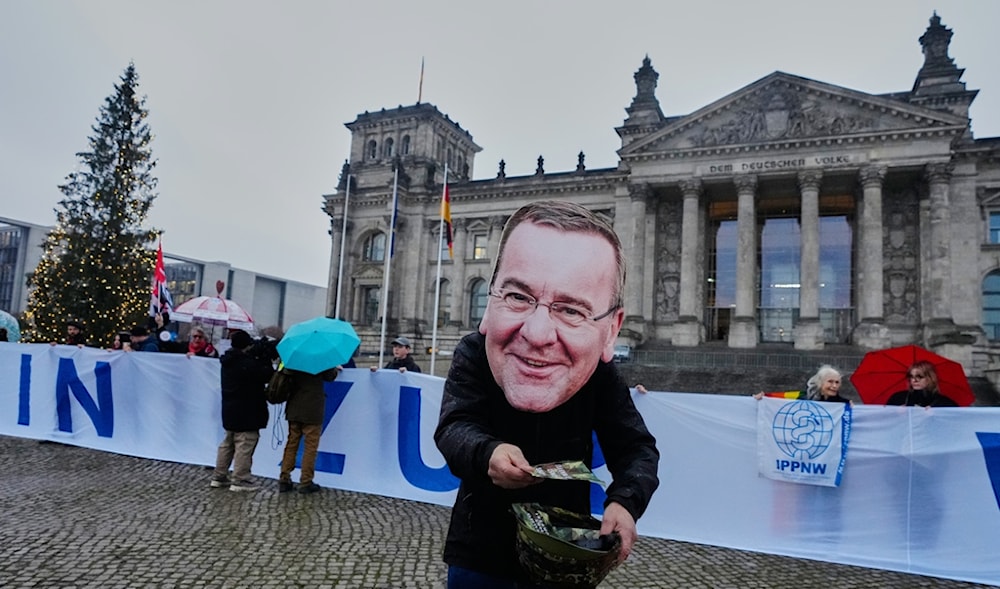
A demonstration with the mask of German Defence Minister Boris Pistorius attends a protest against the planned possibility of compulsory service in front of the German parliament in Berlin, Germany , Friday, Dec. 5, 2025 (AP)
Thousands of school students in Germany took to the streets on Friday to protest a newly passed bill aimed at modernizing military service, which could reintroduce aspects of compulsory conscription. Demonstrations occurred in more than 70 cities, signaling widespread youth opposition to the government's militarization efforts.
Earlier in the day, Germany’s federal parliament adopted the bill in a 323–272 vote, with one abstention. The legislation introduces several measures, including mandatory medical screenings for all 18-year-old males and the possibility of being selected through a draft process to serve in the armed forces, if additional manpower is needed.
The law is expected to come into force in early 2026 and applies to young men born after December 31, 2007. Women will have the option to participate by completing a voluntary survey.
The vote reflects a political climate in which governments across the continent are funneling unprecedented resources into defense, reviving debates once thought settled after the Cold War.
Thousands of students across Germany skipped school Friday to protest a new military service reform passed by parliament.
— Clash Report (@clashreport) December 5, 2025
The law requires all 18-year-old men to complete a questionnaire about their fitness and willingness to serve, while women can answer voluntarily.… pic.twitter.com/oFVbLZJD62
Students rally: No to war
Protests erupted shortly after the bill passed. In Berlin, over 1,000 students marched from the Kreuzberg District to the city center, according to Berliner Morgenpost. Another 2,000 were expected to join by the evening.
In Hamburg, around 1,500 students gathered in front of the university, NDR reported. Demonstrations also took place in Stuttgart, Rostock, Nuremberg, Leipzig, and dozens of other municipalities.
The protests were organized by Schulstreik gegen Wehrpflicht (School Strike Against Compulsory Military Duty), which denounced the bill and its implications for youth.
“We do not want to be locked in barracks for six months of our lives, taught drill, obedience, and how to kill. War is not a future prospect. It destroys the foundations of our lives,” the group stated on its website.
Though German law prohibits students from skipping school for protests, many schools have previously made exceptions for climate strike actions, indicating a possible precedent for this movement.
Key provisions of the bill
The bill is modeled after Sweden’s conscription system and combines voluntarism with new incentives for enlistees. It mandates that eligible youth submit data regarding their height, weight, and personal information.
Germany has been aiming to grow the Bundeswehr to 203,000 troops since 2018. However, as of March, troop numbers remained around 182,000 despite increased recruitment efforts.
NATO guidelines envision Germany fielding 460,000 personnel, 260,000 active soldiers, and 200,000 reservists, yet the Bundeswehr currently operates with around 182,000 in active duty and approximately 49,000 in the reserves. Years of understaffing and equipment shortages have widened the gap between Berlin’s obligations and its actual capabilities.
Defense Minister Boris Pistorius urged lawmakers to approve the reform, claiming it is a “decisive step for our ability to defend ourselves.” He reminded MPs, “Our allies are looking to us,” framing the buildup as a necessary response to Europe’s shifting security landscape. Pistorius also warned that if recruitment levels remain inadequate, parliament would eventually need to consider “at least a partial reintroduction of conscription.”
Read more: Europe is driving the continent toward war: Putin


