
'We are not withdrawing': Katz on Israeli forces in southern Lebanon
 3 Min Read
Israeli Defense Minister Israel Katz claims Israeli forces will remain in the security zone in southern Lebanon and rejected any withdrawal, even under US pressure.
-
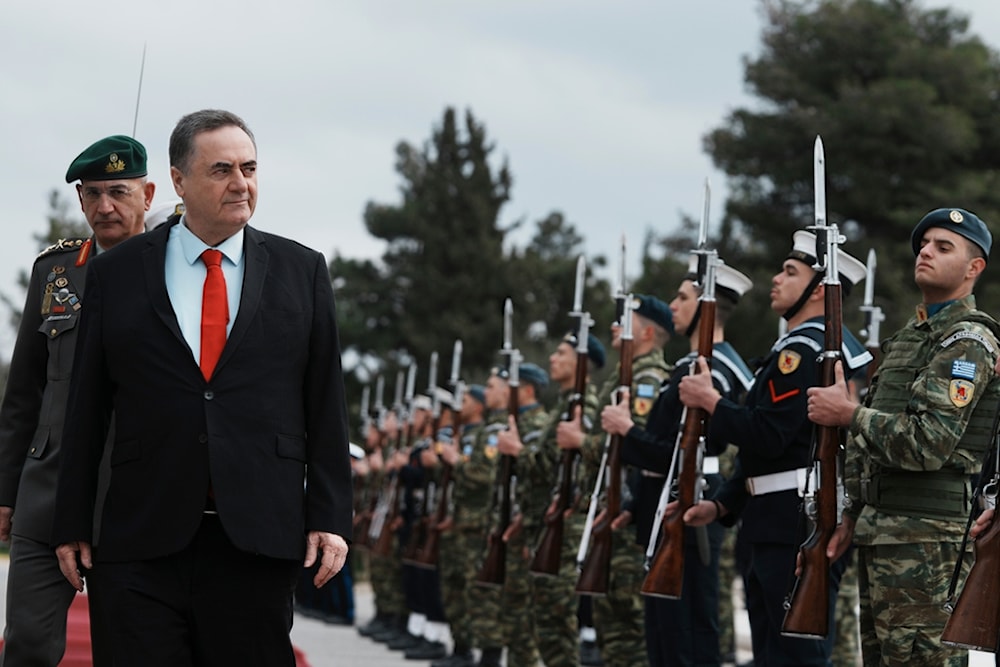
Israeli War Minister Israel Katz reviews the honor guard with his Greek counterpart Nikos Dendias, not pictured, before their meeting in Athens, Greece, Tuesday, Jan. 20, 2026. (AP Photo/Thanassis Stavrakis)
Israeli War Minister Israel Katz said on Wednesday that Israeli occupation forces would remain in the security zone established in southern Lebanon, even if the United States were to demand a withdrawal.
Speaking at the Muni Expo conference for local officials in Tel Aviv, Katz said approximately 200,000 Lebanese residents displaced from the area would not be allowed to return to their homes, publicly admitting to ethnic cleansing.
"Because what happened in the past in security zones, where there was also a civilian population [present], was roadside bombs and attacks against the soldiers, and therefore we will not allow that," Katz said.
"We are not withdrawing," he added.
Read more: Hezbollah fighting at the border: What does that mean?
Israeli forces' 'hands tied in Lebanon'
Meanwhile, former Israeli Prime Minister Naftali Bennett accused Prime Minister Benjamin Netanyahu and the war minister of misleading the public about the Israeli military's operational freedom in Lebanon.
Bennett said Israeli soldiers in Lebanon faced severe operational restrictions despite official claims that they enjoyed freedom of action. Citing conversations with soldiers and commanders, he said that Hezbollah fighters were rebuilding infrastructure, rearming, and re-establishing their presence while Israeli troops were barred from engaging them.
According to Channel 12's correspondent, Bennett said, "When Netanyahu and Israel Katz announced at 11:00 p.m. yesterday that the Israeli army enjoys freedom of action in Lebanon, they lied. That is simply not true. The reality is that our sons' hands in Lebanon are tied."
Bennett revealed that he had been in direct contact with Israeli occupation forces on the ground, stating, "I spoke until 2:00 a.m. with soldiers and commanders who are currently in Lebanon or who left the country within the past 24 hours."
He went on to describe the situation on the ground, saying that Israeli soldiers are witnessing Hezbollah fighters re-establishing their presence, repairing infrastructure, rearming, and resuming their activities. Despite this, he said, Israeli troops are prohibited from opening fire on them.
He added that Hezbollah fighters are openly observing Israeli soldiers through binoculars, yet troops are not permitted to engage them.
The former premier also criticized a cumbersome military approval process that delayed responses to perceived threats and claimed that the Israeli Air Force had ceased providing support for ground operations. He called the situation "an abdication of responsibility" and urged the political and military leadership to remove restrictions on troops operating in Lebanon.
Israeli media have similarly debated the issue, with Haaretz warning that continued occupation of Lebanese territory risks deepening tensions with Washington, while a withdrawal could bolster Hezbollah's standing in Lebanon.
Read more: Highest ever in 'Israel': Cost of wars in region reaches $228bln


